Top10VPN is editorially independent. We may earn commissions if you buy a VPN via our links.
The Cost of a VPN Service


The Short Answer
After analyzing dozens of VPN services, we’ve calculated that the average cost of a VPN on a multi-year plan is $3.87 per month ($46.44 per year). Rolling month-to-month plans are significantly more expensive, averaging $11.15 per month ($133.80 per year).

Many of our readers ask us: what is the average cost a VPN? They obviously want to know, to help them better understand if a particular VPN is worth getting.
The cost of a VPN varies greatly based on the quality of the service, the additional features it offers, and the subscription length.
On a monthly basis, rolling month-to-month plans usually cost considerably more than multi-year subscriptions.
We’ve analyzed the pricing plans of over 30 popular subscription-based VPN services to work out the average cost of a VPN, both on a pay-monthly as well as on a longer-term basis.
Importantly, we’ve taken the published prices on providers’ checkouts at the time of writing, and ignored exclusive coupons, re-engagement offers, and other temporary discounts that would’ve otherwise skewed the data.
Why Trust Us?
We’re fully independent and have been reviewing VPNs since 2016. Our advice is based on our own testing results and is unaffected by financial incentives. Learn who we are and how we test VPNs.
| VPNs Tested | 61 |
| Total Hours of Testing | 30,000+ |
| Combined Years of Experience | 50+ |
Cost Analysis and Comparison
Summary: The Average Cost of a VPN
- Pay-Monthly Plans: $11.15
- Longer-term Plans: $3.87/month (65% saving)
As we always say, a high price isn’t always a good indicator of quality in the VPN market.
Some of the most affordable VPNs out there, like Private Internet Access and Surfshark, perform much better than more expensive services, like Astrill and TorGuard.
The table below lists the month-to-month prices, and the cheapest pricing plans, offered by over 30 popular VPN companies:
As you can see, there’s a big difference between the pay-monthly and the cheapest possible price you can get from a VPN provider.
Just like most other subscription services, the shorter the plan period, the more you’ll pay each month.
Of the dozens of VPNs we’ve reviewed, month-to-month prices typically range between $9.00 and $15.00, and average out at $11.15.
The chart below illustrates the pay-monthly price of 15 highly-rated VPN services:

Generally speaking, prices fall significantly when you sign up to a multi-year plan (typically two or three years), dropping as low as $1.11 per month.
On average, these cheaper longer-term plans cost $3.87 per month — a 65% saving compared to the average month-to-month price of $11.15.
A word of warning: it’s really important that you check the renewal terms of a multi-year plan as some renew at a much higher price. If you want to play it safe, turn off ‘Automatic Renewals’ in your account immediately after signing up.
Factors Affecting the Cost of a VPN
It’s quite shocking to see how much VPN prices can vary, not just between providers, but also within the same service based on the plan you choose. Below are the key factors that influence the cost of a VPN.
Length of Subscription
Like with most subscription services, the longer you commit to a VPN, the lower the cost.
You can see how much the length of subscription impacts the cost of a VPN in the table below:
| VPN Service | Pay-Monthly Price | Cheapest Price per Month | Cost Saving |
|---|---|---|---|
| ExpressVPN | $12.99 | $2.79 | 79% |
| NordVPN | $12.99 | $3.39 | 74% |
| PIA VPN | $11.99 | $2.03 | 83% |
| Surfshark | $15.45 | $1.99 | 87% |
| IPVanish | $12.99 | $2.19 | 83% |
As you can see, longer subscriptions lead to substantial savings each month, with some providers offering discounts of over 80%.
Server Network
In general, VPNs with higher prices tend to offer a larger number of server locations across more countries.
This is due to the costs associated with purchasing, maintaining, and renting servers worldwide.
To cover these expenses and maintain a high-quality service, VPN services often need to charge higher subscription fees.
You can see this in the table below:
| VPN Service | Countries with Servers | Pay-Monthly Price |
|---|---|---|
| Mullvad | 50 | $5.50 |
| Windscribe | 69 | $9.00 |
| PrivateVPN | 62 | $9.90 |
| NordVPN | 127 | $12.99 |
| ExpressVPN | 109 | $12.99 |
| Surfshark | 100 | $15.45 |
As you can see, there’s a noticeable correlation between the number of countries with servers and the VPN price.
For instance, ExpressVPN costs roughly twice as much as Mullvad, but it offers servers in over twice the number of countries.
Number of Devices Covered
Some VPN services change their pricing based on how many devices you want to use the VPN with.
As an example, TorGuard has a different price for 8, 12, and 30 device subscriptions. The price varies by as much as 50%, depending on which one you pick.
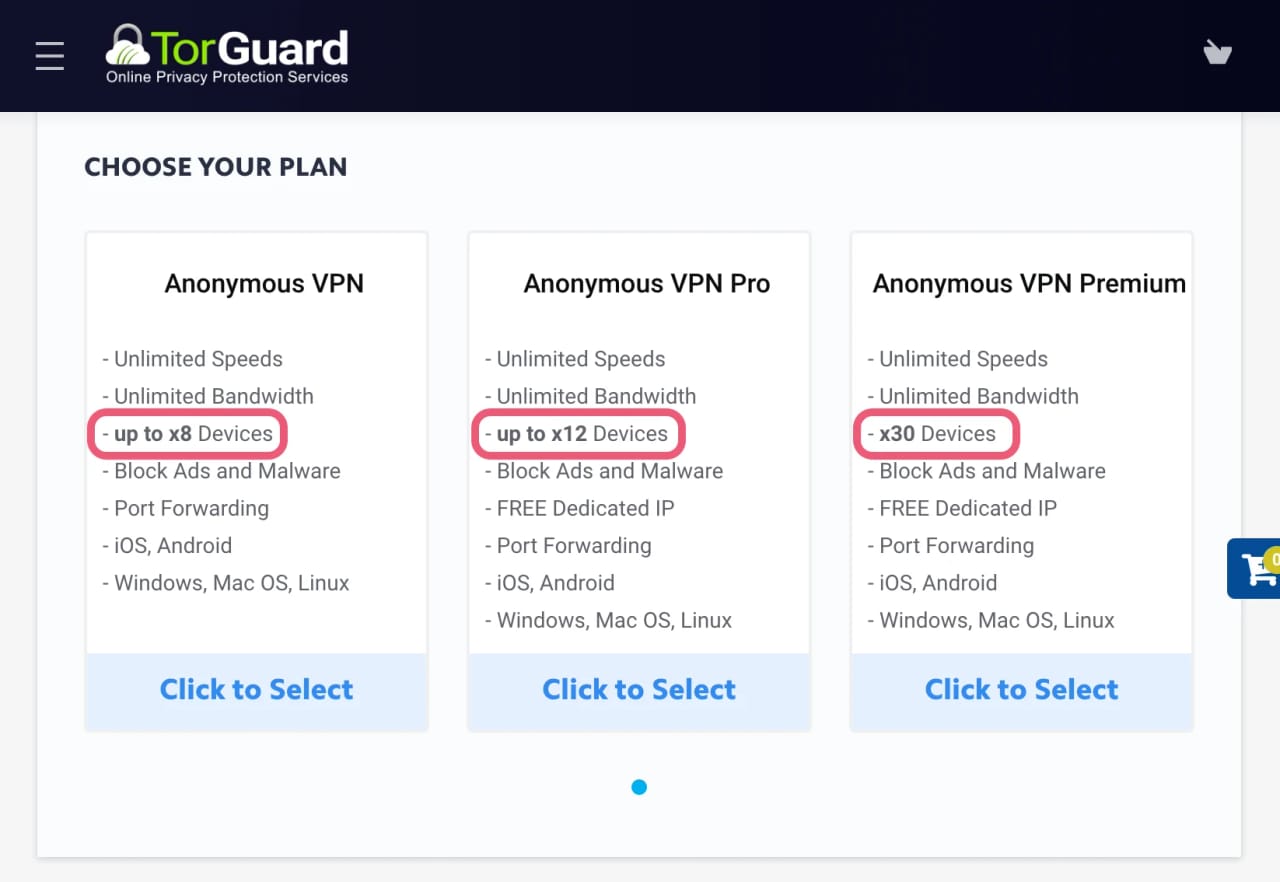
TorGuard has different pricing plans depending on how many simultaneous connections you want.
If you want to use a VPN on multiple devices, it’s better to use a cheap VPN with no device limit whatsoever, like Private Internet Access or Surfshark.
Features
Additional features like dedicated IP and malware blocking typically come at an extra cost.
If you want these add-ons, VPNs like CyberGhost and Windscribe charge an extra fee on top of your subscription plan.
Moreover, companies like IVPN, only offer additional features like multi-hop servers with their more expensive IVPN Pro plan, not their standard plan.
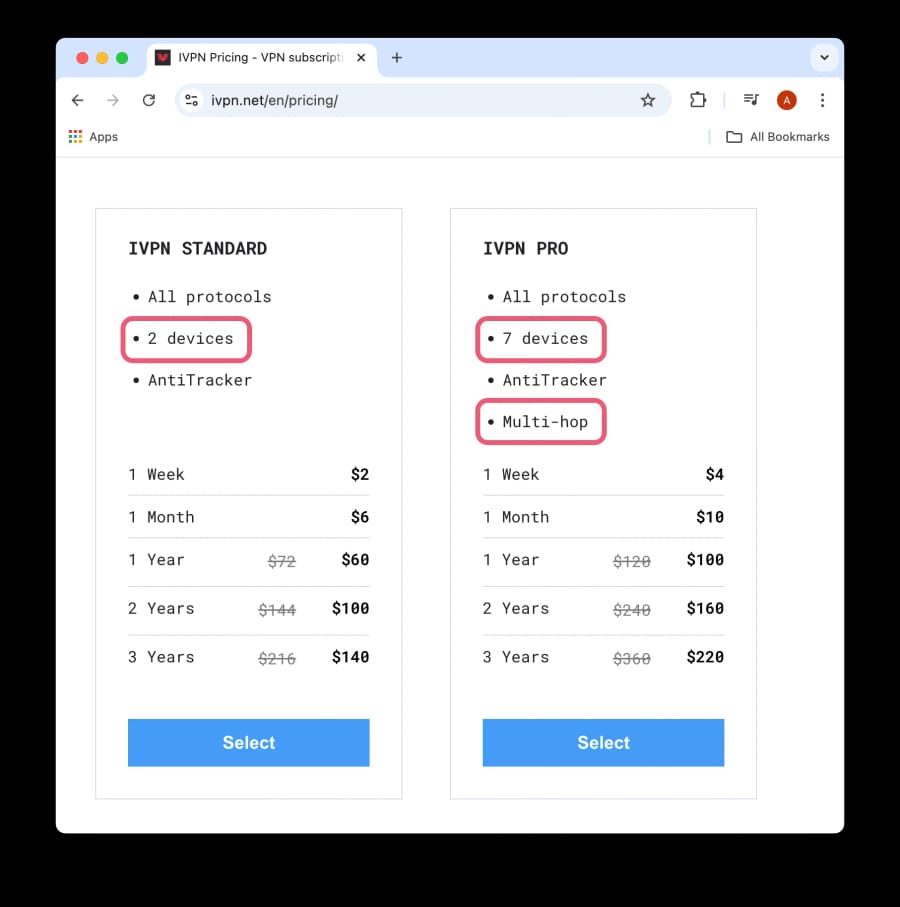
IVPN has a 2-device limit on its standard plan and its multi-hop feature is only available with its pro plan.
Types of VPN Pricing Plans
Understanding the different types of VPN pricing plans available to you is crucial when comparing costs across various providers.
VPNs typically offer a range of plans that vary in subscription length, features, and additional services.
Below, we’ll break down the most common VPN pricing models to help you navigate your options and find the best for you.
Standard Plans
Subscription-based VPN services offer a wide range of features, better security, and faster speeds than free alternatives.
They are typically far more effective at unblocking streaming services like Netflix, Disney+, HBO Max, and BBC iPlayer.
Most VPN services offer different pricing tiers based on the length of your subscription, with discount for committing to longer term plans.
You can typically choose between a month-to-month plan, annual plan, or multi-year plan. Some services offer 6-month subscriptions, but they’re rare.
Hidden Costs
While many paid VPN services advertise a low price, there are often hidden costs that can significantly increase the total price.
Being aware of these can help you avoid unexpected charges.
Here are some common hidden costs you might encounter when using a paid VPN service:
- Higher Renewal Rates: Many VPNs charge you a higher price once your initial subscription period is up. For example, the $81.36 two-year NordVPN plan renews at a much higher price of $139.08 per year.
- Automatic Renewal: VPNs, like other subscriptions, will auto-renew without notifying you first. We recommend cancelling the VPN subscription immediately after signing up, as you’ll still have access until the end of your billing period.
- Dedicated IP Addresses: A VPN’s base subscription won’t allow you to access a single IP address that is not shared with other users. These are available as an add-on, typically costing as much as $10.00 per month.
- Core Features Behind Paywalls: Some VPNs reserve key features like ad-blocking or multi-hop connections for higher-tier subscriptions. What seems like a standard feature might require upgrading to a more expensive plan.
Lifetime Subscriptions
Lifetime VPN subscriptions allow you to pay just once for lifetime access to the product.
The problem is that these deals are incredibly rare, and no high-quality VPN offers one. Of the 61 VPNs we’ve reviewed, only FastestVPN has a lifetime subscription plan.
Moreover, the term “lifetime” applies to the lifespan of the VPN service, not your own. If the VPN ceases operation, you will lose access without any refund.
Free Tiers
Free VPNs are extremely popular because they don’t require any upfront cost. But, most of these free services come with significant limitations, including:
- Lacking Features: Useful features like multi-hop, obfuscation, static IP addresses, or streaming servers are usually not available with free VPNs.
- Limited Bandwidth: Most free VPNs impose strict data limits, usually capping users at around 10GB or less. This makes them unsuitable for data-intensive activities like streaming, gaming, or torrenting.
- Fewer Servers: Free VPNs typically only offer a handful of server locations, and some don’t let you choose a server location at all.
- Security Risks: Unsafe free VPNs monetize their service by displaying annoying in-app ads, or sell user data, which defeats the purpose of a privacy app.
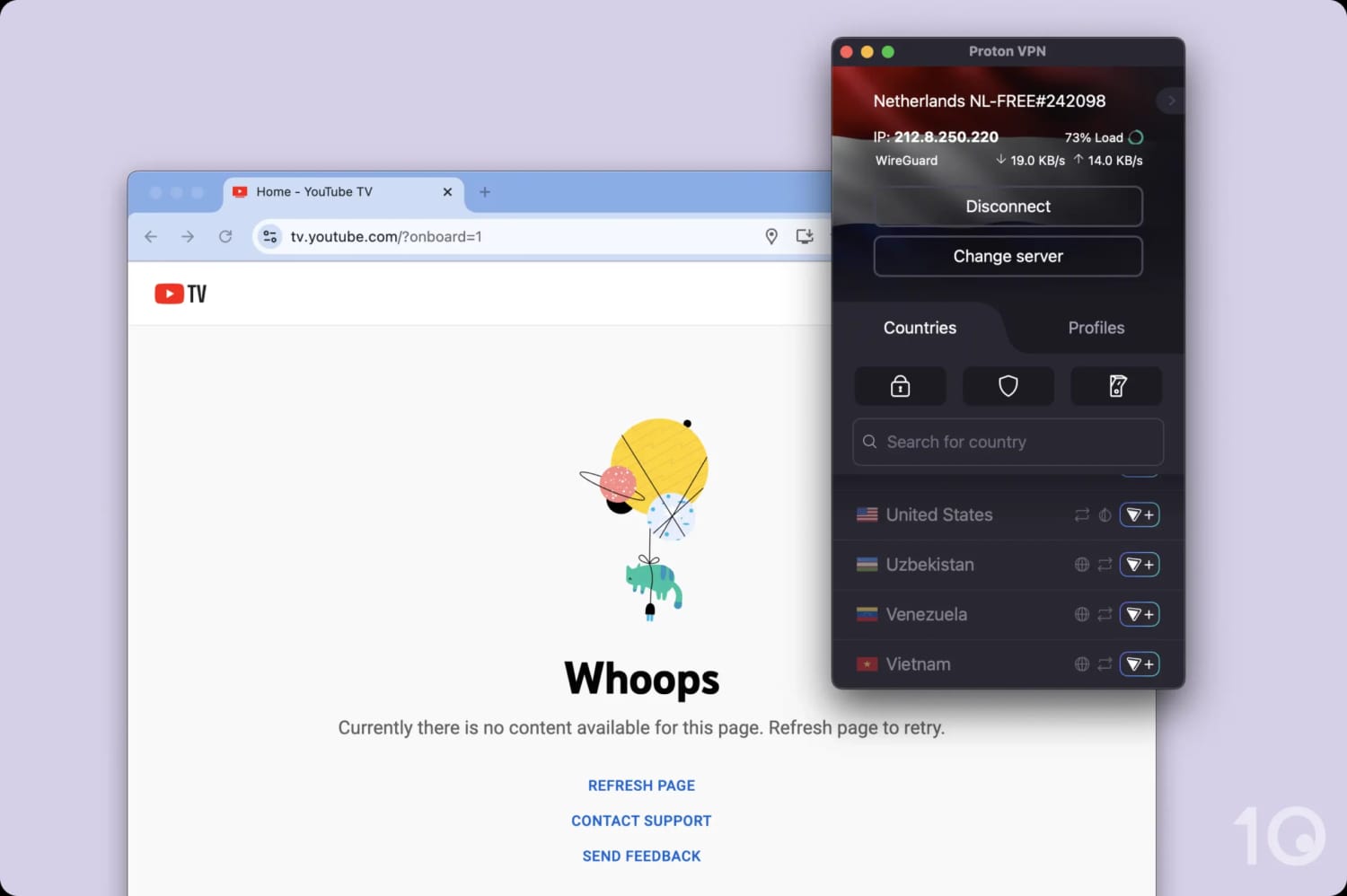
Unlike its paid variant, Proton VPN Free doesn’t let you choose a server location, making it useless for streaming.
Types of Free VPNs
When looking for a free VPN, you’ll typically come across two categories:
- Free Version of a Paid VPN: These are typically far more secure than solely free VPNs because they’re a way for paid VPNs to attract new customers. These will almost always have a data cap.
- Solely Free VPNs: This type of VPN is typically the most dangerous and insecure. They attract users with promises of no data cap so they can log excessive amounts of data, like your IP address and browsing activity. They often fail to encrypt traffic, leak your sensitive data, and include malware or in-app ads.