Top10VPN is editorially independent. Buying a VPN through our links supports our work.
The Best VPNs for Android TV
Follow us:
Simon Migliano
Simon Migliano is a recognized world expert in VPNs. He's tested hundreds of apps and his research has been featured on the BBC, The New York Times, and more. Read full bio
IPVanish is the best VPN for Android TV, with a fast, secure app and excellent streaming. For a free option, I’d recommend PrivadoVPN, although it’s limited to 10GB per month. After extensive testing on Android TV devices, these are my top picks:
While there are Android TV apps for every popular streaming service, you’re limited to the content available in your regional library.
To bypass these geo-restrictions, you can use a virtual private network (VPN). By connecting to a VPN server in another country, you can trick apps into thinking you’re accessing them from that location and stream geo-blocked content.
Not every VPN can do this, though, especially on Android TV. Out of 59 VPNs I’ve tested, only 16 have a native Android TV app.
When I put those 16 Android TV VPN apps through their paces on the living room set, only four cleared our bar on streaming access, speed, and app usability alike.
Never mind what you might read elsewhere, I can confirm that these Android TV VPNs are also compatible with Google TV devices. Google TV is simply a different user interface built on top of Android TV.
My findings are based on running every one of these apps on our Sony Bravia 4K OLED, Nvidia Shield TV Pro, Onn 4K Pro, and Google TV Streamer.
Following our latest tests, IPVanish is now my top-rated VPN for Android TV, thanks to its much-improved access to geo-blocked apps and the strength of its Android TV app.
Why Trust Us?
We’re fully independent and have been reviewing VPNs since 2016. Our ratings are based on our own testing results and are unaffected by financial incentives. Learn who we are and how we test VPNs.
VPNs Tested
59
Total Hours of Testing
30,000+
Combined Years of Experience
50+
VPNs with a Native App for Android TV
A good VPN service for Android TV must have developed a native app for the platform.
That doesn’t mean just an Android app that happens to run on an Android TV, but one built specifically for larger screens.
Surprisingly few VPN services offer one: only 16 of the 59 VPNs I’ve reviewed, to be precise.
Here’s the list of VPNs that have an Android or Google TV app:
CyberGhost
ExpressVPN
Hide.me
Hotspot Shield
IPVanish
NordVPN
Norton VPN
PrivadoVPN
Private Internet Access
PrivateVPN
Proton VPN
PureVPN
Surfshark
Windscribe
VyprVPN
X-VPN
VPN Comparison Table
All the VPNs I recommend below have a dedicated Android TV app for easy setup, have reliably accessed geo-blocked streaming apps over a long period of time, and offer a selection of strong security and privacy features.
You can quickly compare my picks in the table below:
IPVanish is an excellent choice if you’re using an Android TV or an Android TV box.
To access Kodi and IPTV streams safely, the VPN uses secure encryption and protocols that encrypt any traffic flowing through its no-logs servers.
IPVanish has also dramatically improved its access to region-locked apps, and now works well with most major streaming services.
IPVanish’s Android TV app is suited for large screens.
Android TV App
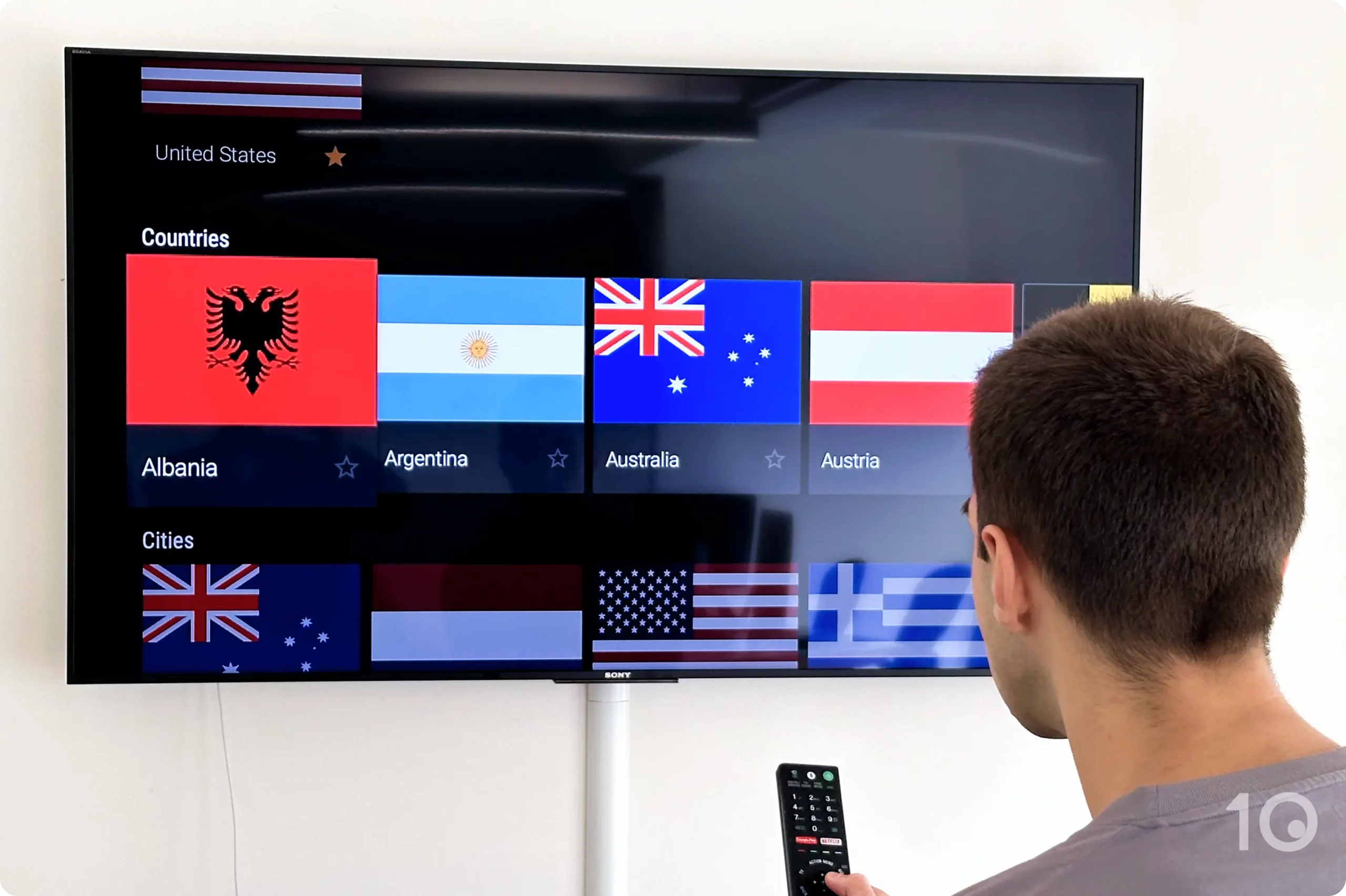
IPVanish’s UI is tailor-made for privacy-seeking streamers.
The map interface does take up a lot of space, and isn’t for everyone, but the stark green color scheme against the pure black background looked excellent on our Sony OLED.
Having a map element is an interesting decision, since the service’s VPN app for Apple TV doesn’t feature it.
It doesn’t get in the way, though. The home screen puts the nearest, fastest server one press away, and the bottom-left icon opens the full server list, the two things I actually want from a TV app, both on the first screen.
Countries are listed alphabetically, and you can favorite your preferred locations so they sit at the top next time.
Disappointingly, unlike competitors that simplify the login process using QR codes, IPVanish makes you type your credentials in with the TV remote. Tapping out an email address one character at a time on a directional pad is a slow, joyless way to start a movie night.
Streaming
IPVanish works very well for streaming, but I didn’t find it as effective as ExpressVPN once I started looking beyond the biggest services.
The VPN’s access has improved massively over the last few years, and it now streams 17 Netflix regional libraries, HBO Max, Disney+, BBC iPlayer, Prime Video and many more apps.
Encouragingly, I saw the same performance on our Onn 4K Pro, Nvidia Shield and Google TV Streamer as I did on our Sony Bravia, this isn’t a VPN that only behaves itself on flagship hardware.
Where it does struggle is with geo-blocked apps from non-English-speaking countries, such as Germany and Spain. I also had issues getting it to work with Australia’s Kayo Sports.
Speed
IPVanish is one of the fastest VPNs out of the 59 that I regularly test with my team.
On average, we recorded a download speed loss of just 4% on nearby VPN server locations, and a slowdown of 12% while connected further afield.
That second figure is the one that matters on a TV, and it’s why long-haul connections sustained 4K without me having to even think about it.
Privacy & Security
IPVanish’s security and privacy performance results were superb.
On its Android TV app, you have the choice of encrypting traffic using ChaCha20 with WireGuard or AES-256 with OpenVPN, both of which are open-source and safe.
It’s also the only VPN on this list that commits to a strict no-logs policy rather than a narrower “no identifiable data” one, and that commitment has been confirmed by an independent audit.
Like its Fire TV VPN app, the kill switch lives on a separate app and for a good reason: Android TV boxes have memory constraints that can abruptly shut down heavier apps.
By hosting the kill switch on a lighter standalone app, the risk of sudden IP address leaks drops, even when your Android TV’s memory is maxed out.
Yes, it’s more time-consuming to set up, but once installed you can control it from the main VPN app and forget about it.
Pricing & Free Access
IPVanish offers competitive pricing plans, with a best monthly price of $2.39/mo over 24 months.
Month-to-month plans cost $14.99, which is considerably cheaper than Surfshark’s, although they don’t come with the 30-day money-back guarantee.
There’s also a 7-day free trial available through mobile app stores.
RAM-based (diskless) servers that don't log activity
Blocks ads & trackers
Built-in obfuscation & rotating IP technology
2-year plan more expensive than Surfshark's
Pricing Plans
$14.99/mo
$4.99/mo over 15 months
$2.99/mo over 28 months
Money-Back Guarantee
30 Days
Servers
13,360
Countries with Servers
113
Logging Policy
No Identifiable Data
Simultaneous Connections
10
Support
24/7 Live Chat
Compatible with
Windows
Mac
iOS
Android
Linux
Amazon Fire TV
Android TV
Apple TV
Router
Chrome
ExpressVPN is an excellent all-around VPN for Google TV, and it unblocked more geo-restricted streaming apps than anything else I tested. It was also the quickest of my picks on nearby servers.
I found its Android TV app to be more streamlined than IPVanish’s, and better suited to VPN beginners. It has fewer advanced settings, though, which is why IPVanish edges it in our app rating and why more demanding users may prefer it.
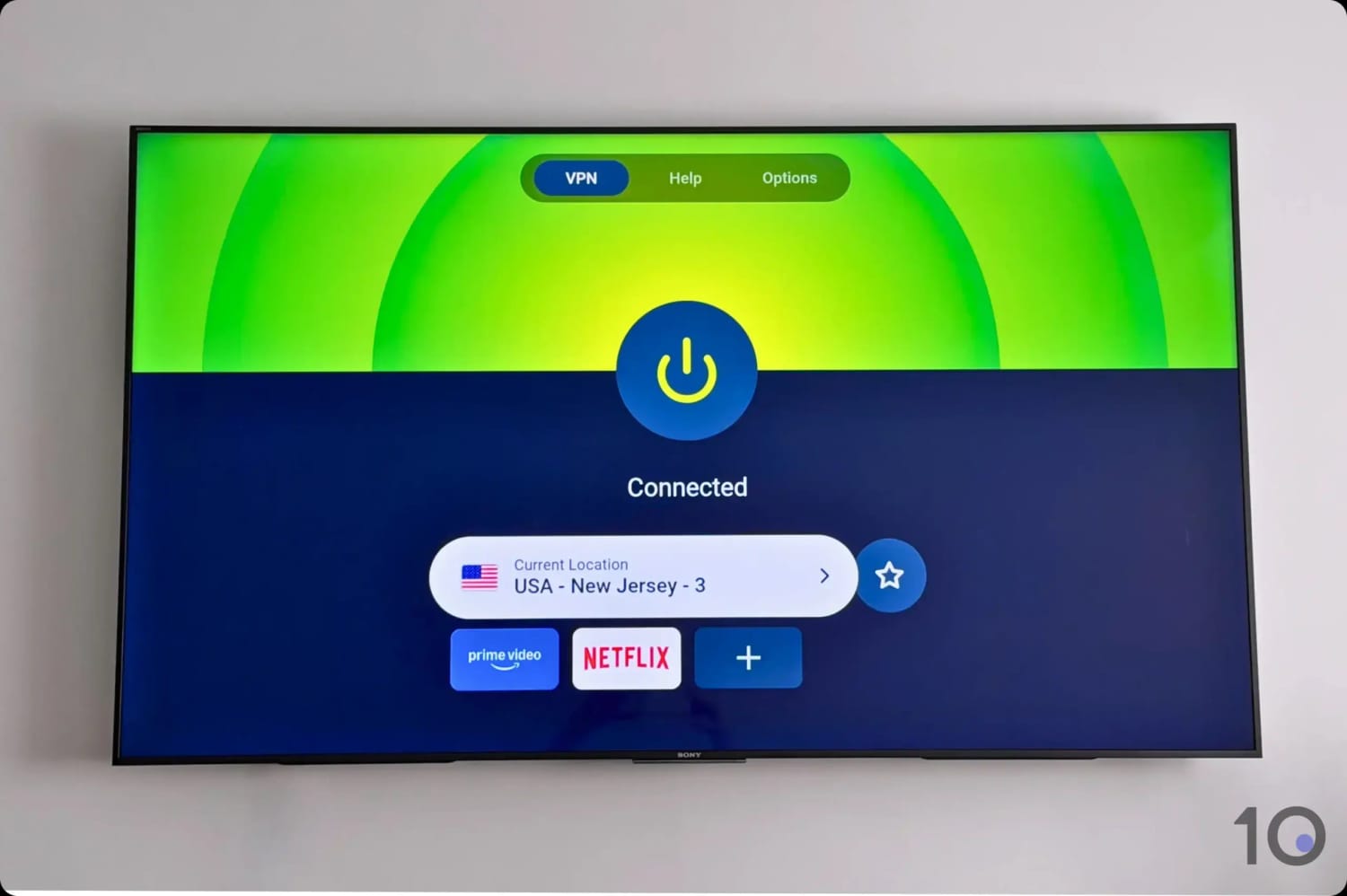
ExpressVPN’s streamlined app for Android TV.
Android TV App
ExpressVPN’s dedicated app for Android TV is the most approachable of the lot. If you’ve never used a VPN before, this is the one I’d sit you in front of.
I’ve previously criticized the app for not being optimized for larger screens and for not making it clear which UI element was selected at any time. I’m pleased to say those complaints are long gone.
The new Android TV app is well-designed, with large buttons and text that are easier to read from across the room.
You can log in using the on-screen QR code or through your smartphone. It’s so easy and takes just seconds. Many other VPNs force you to enter your account details manually, and that’s a real chore on a TV remote.
However, there’s no option to use the app in different color modes, unlike the desktop and mobile apps.
What I particularly loved is the ability to pin shortcuts to my favorite streaming apps on the ExpressVPN home screen. It’s now the first thing I set up on a new install.
That shortcut row saved me a trip back to the launcher every time I changed server location, which is genuinely useful on Android TV, since the OS has no quick app-switching feature of its own.
Streaming
ExpressVPN is the best VPN you can get for streaming. Our tests found that it can access most geo-restricted streaming apps, using servers from 113 countries.
With it, I watched my favorite international content from 18 different Netflix regions, as well as on Disney+, HBO Max, BBC iPlayer, and many more.
Connected to ExpressVPN servers using its proprietary Lightway protocol, we’ve always recorded speeds fast enough for streaming in the highest resolution.
For most streaming apps, you need a download speed of 5Mbps or higher to stream content in Full HD (1080p) or 15Mbps or higher for 4K content.
With an average speed reduction of 2% locally and 15% connecting internationally, you won’t notice any real difference in daily use, as long as you’re on a fast internet line. Nearby, it’s the quickest VPN here; over long distances, IPVanish pulls slightly ahead.
Privacy & Security
ExpressVPN is a highly secure and private VPN, encrypting all traffic using AES-256 or ChaCha20 encryption depending on the VPN protocol the app automatically selects.
The company also enforces a private logging policy that has been independently audited several times.
Its Android TV app also includes a range of technical features, including split tunneling and an ad and tracker blocker.
One thing to watch: the kill switch, called Network Protection, is inactive on first launch, unlike in ExpressVPN’s other apps. Turn it on from the Settings menu straight away.
Pricing & Free Access
ExpressVPN used to be one of the more expensive VPNs on the market, but it’s now priced more affordably. At its cheapest, it will now set you back $2.99/mo over 28 months.
You can also sign up for a 3-day free trial if you create an account through your Android TV’s Google Play Store. Once you’ve created your new account, you can then use it on your other devices, too.
Navigating the app requires a lot of remote clicking
More expensive than IPVanish
Pricing Plans
$16.45/mo
$3.39/mo over 15 months
$2.49/mo over 27 months
Money-Back Guarantee
30 Days
Servers
4,500
Countries with Servers
100
Logging Policy
No Identifiable Data
Simultaneous Connections
Unlimited
Support
24/7 Live Chat
Compatible with
Windows
Mac
iOS
Android
Linux
Amazon Fire TV
Android TV
Apple TV
Router
Chrome
Surfshark is a very affordable VPN for Android TV, if you’re willing to commit to a multi-year plan.
It offers a dedicated app that’s simple to use on all Android and Google TV devices, although it’s not as beginner-friendly and it unblocks fewer streaming apps than ExpressVPN.
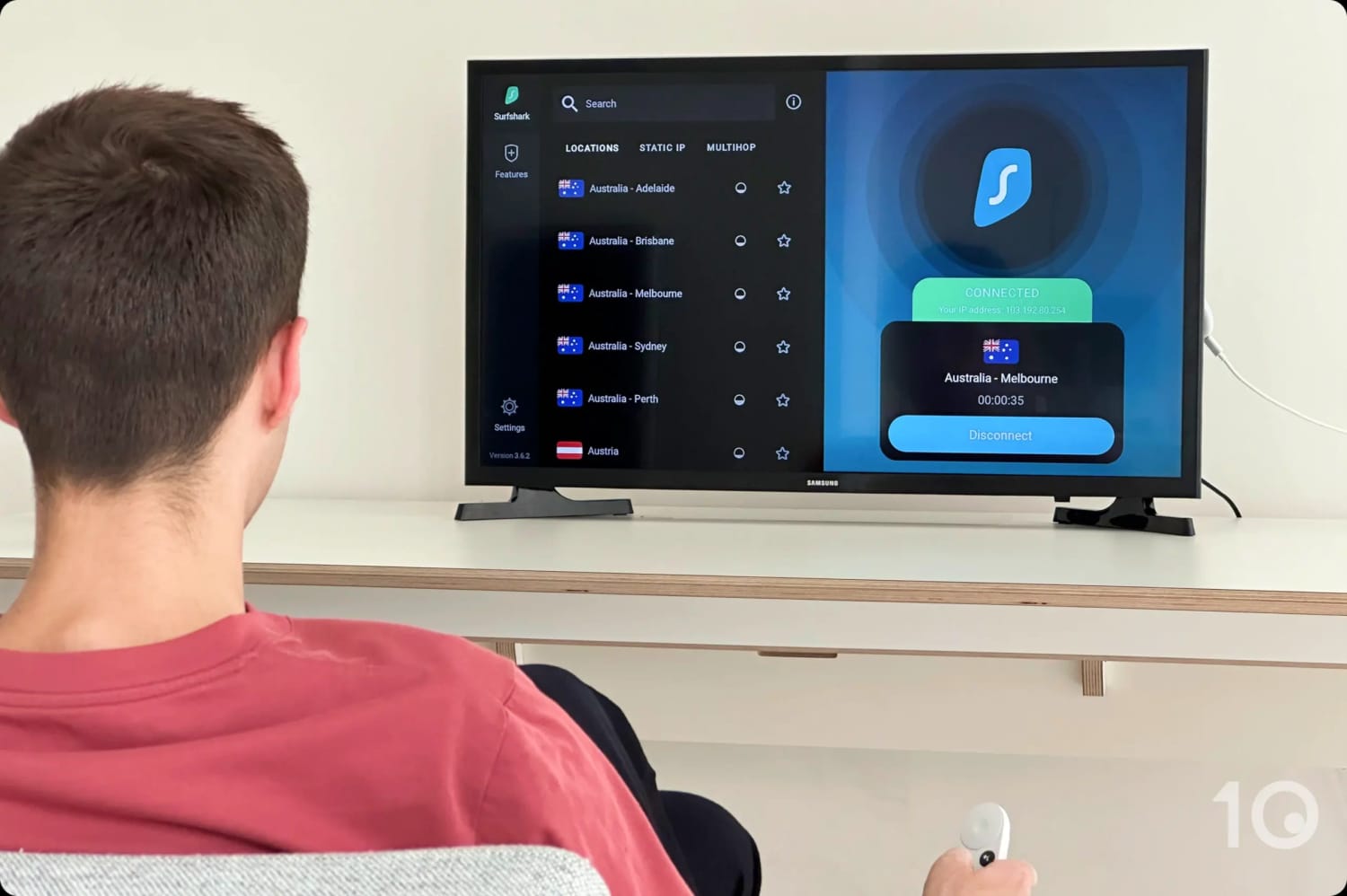
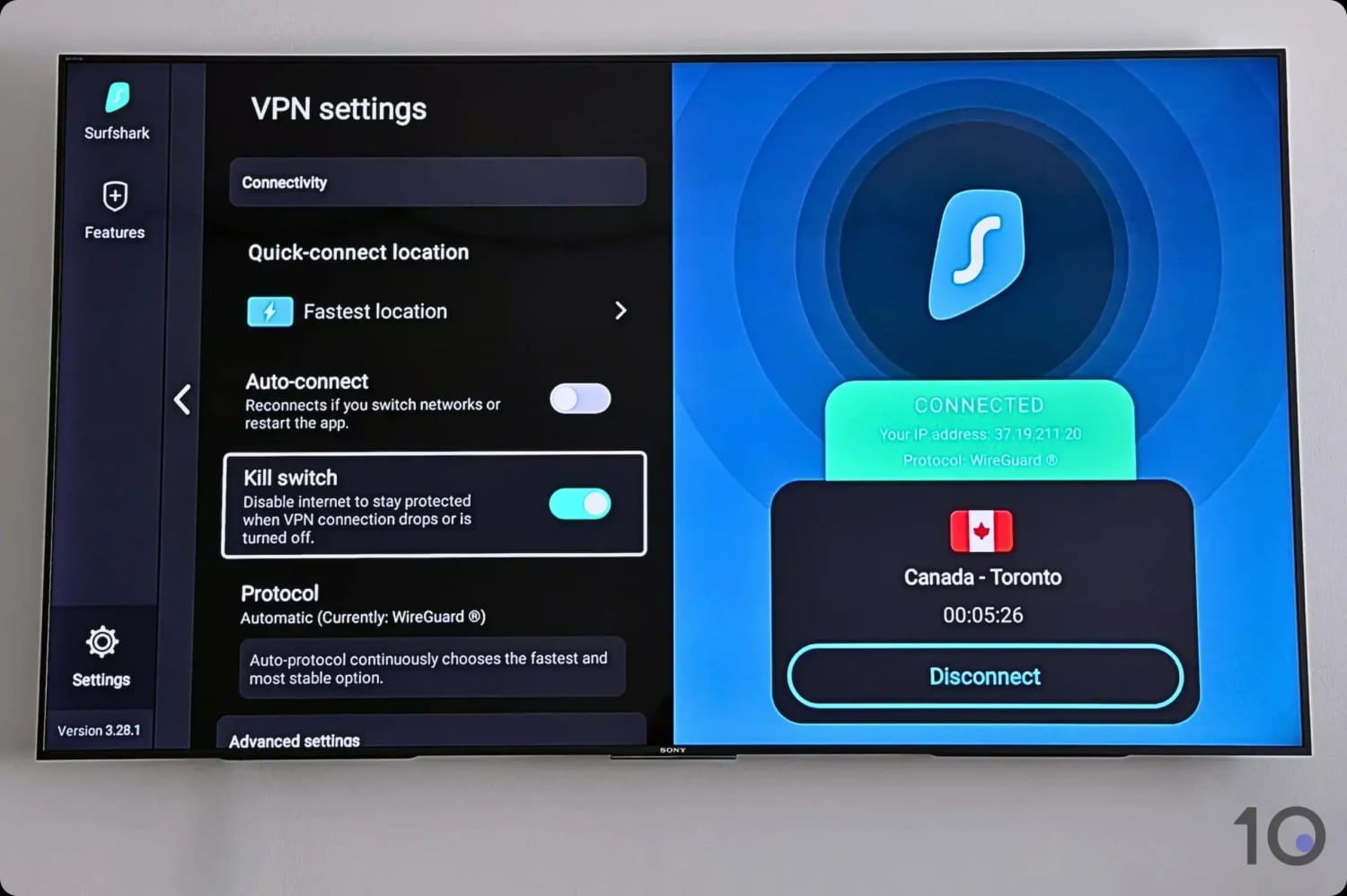
Using Surfshark on a Google TV device.
Android TV App
Surfshark provides a dedicated TV app from Google Play, so I was able to quickly download it directly onto my Android TV.
Just like with ExpressVPN, logging in was easy: I scanned a QR code with my phone and was done.
The left half of the screen lets you pick a server location and the right half shows your connection status, all without leaving the home screen.
I actually prefer this to VPN apps like ExpressVPN’s that make you click through to a separate screen to change location.
The catch is how much scrolling it takes to get anywhere, which quickly became frustrating on our TV remote.
The two options at the top of the screen, Fastest location and Nearest country, are the worst offenders: they perform the same function and always connected me to the exact same server. Dropping one of them would free up space and save a button press.
Surfshark’s app was also noticeably slower to establish a connection. It hung for long enough that I registered the delay compared with IPVanish and ExpressVPN.
Streaming
Surfshark consistently unblocked the major streaming apps, including US Netflix, Prime Video, HBO Max, and Disney+.
It also offers servers in 100 countries, so you’ll almost certainly find a compatible IP address for the platform you want to access.
That being said, Surfshark unblocks fewer Netflix regions (10), and with fewer US server locations it’s less suitable for streaming local US TV broadcasts.
Speed
For such a popular VPN service, Surfshark’s speed performance was underwhelming compared to IPVanish and ExpressVPN.
We recorded an average download speed loss of 17% when connected to servers in other countries, which is slower than ExpressVPN’s 15%.
That said, Surfshark was always fast enough to access geo-blocked content in high resolution and without buffering. You should see the same, as long as your baseline internet speed is above 30Mbps.
Privacy & Security
Just like its rivals, Surfshark also comes with all the privacy and security essentials to protect your Kodi and IPTV streaming.
I was able to switch between secure, trusted protocols like WireGuard with ChaCha20 encryption and OpenVPN with AES-256 encryption.
Automatic protocol selection is the default, and I’d recommend sticking with it for better performance.
Adjusting Surfshark’s settings in its Android TV app.
Like my other top-rated Google TV VPNs, the Surfshark app lets you enable its ad and tracker blocker (called CleanWeb), as well as split tunneling (called Bypass VPN).
You’ll find both tools in the Features icon near the top left corner of the app.
As with ExpressVPN, the kill switch isn’t active by default, so toggle it on via the Settings icon in the bottom-left corner before you start streaming.
Pricing & Free Access
Surfshark provides excellent value on a long-term basis, costing just $2.49/mo over 27 months.
However, it’s a lot more expensive if you choose to pay monthly, at a steep $16.45 each month.
After working through the free VPNs in the Google Play Store, I was disappointed to find only six with a dedicated Android TV app: PrivadoVPN, Proton VPN, Windscribe, Hotspot Shield, Hide.me, and X-VPN.
Of these, PrivadoVPN was the only one that let me connect to servers in 11 countries, unblock US Netflix, and maintain fast speeds across every server.
Over years of use, PrivadoVPN keeps coming out as the best free VPN for Android TV.
It’s the only completely free service that gives you a genuinely pleasant dedicated app that works with US Netflix.
The major downside is the 10GB monthly data cap, which is enough for occasional viewing but not much more.
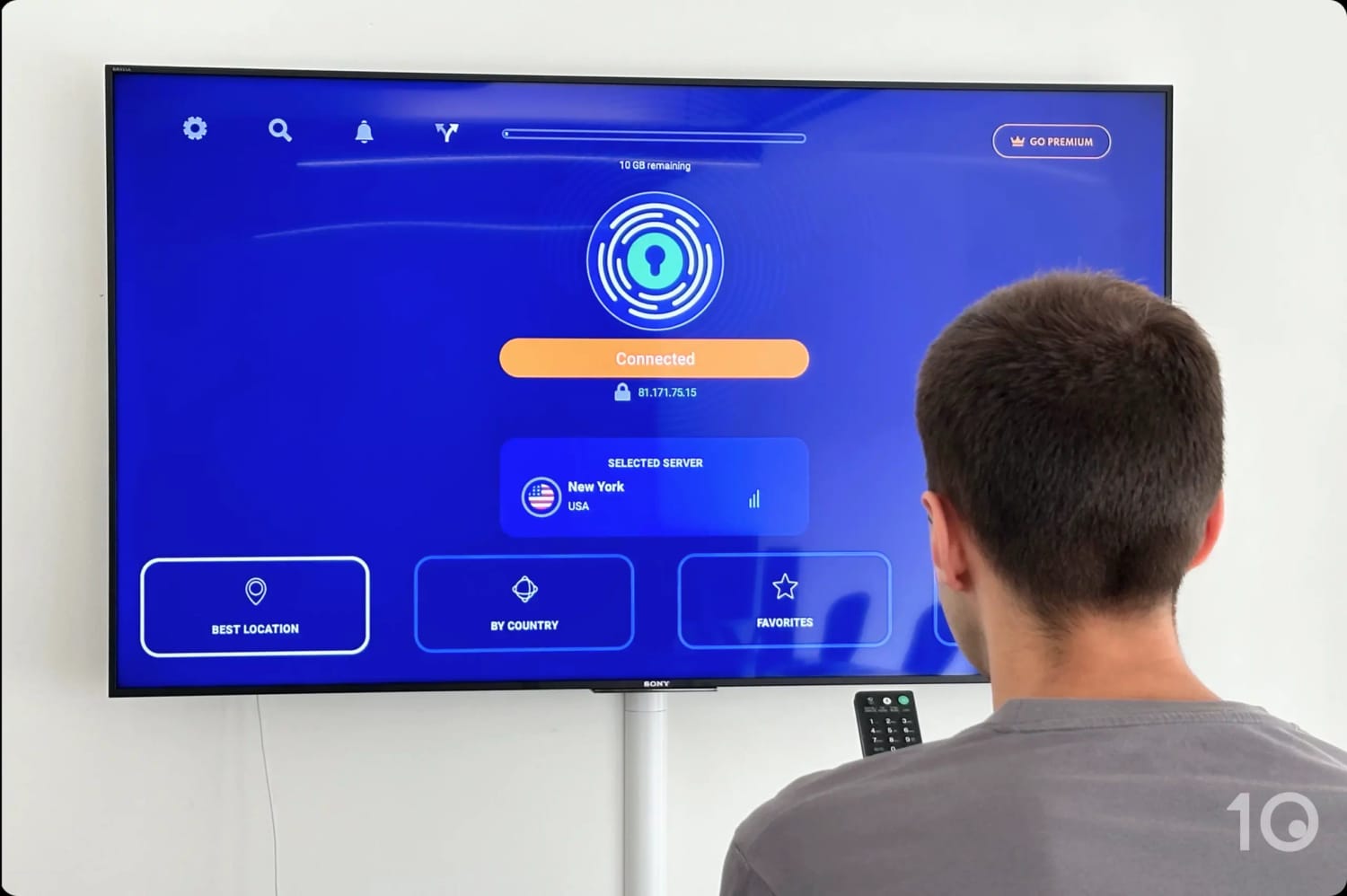
PrivadoVPN’s Android TV app is better designed than other free VPNs.
Android TV App
PrivadoVPN is one of only a few 100% free VPNs that offers a dedicated app for Google and Android TV devices.
The app is simple but well designed and easy to use. Rather than making you scroll the full server list every time, it lets you connect by proximity or pull up your favorites.
Like ExpressVPN, it supports shortcuts to streaming apps on the home screen. I pinned Netflix so I could drop straight into the new regional library the moment a server switch went through.
It also supports split tunneling via the Smart Route feature. A single toggle decides whether system apps are included or excluded, which cuts the list you have to scroll through down to something manageable.
Streaming
PrivadoVPN’s free app unblocks far fewer streaming platforms than the other VPNs on my list.
Unlike IPVanish, ExpressVPN, and many other paid options, I couldn’t get BBC iPlayer, ESPN+, or YouTube TV to play while connected to a free PrivadoVPN server.
It fares much better than other free VPNs, though. It worked particularly well with US Netflix, where Windscribe and Proton VPN’s free services didn’t.
PrivadoVPN’s free US servers also unblock Disney+, HBO Max, Prime Video, and Peacock.
The biggest drawback of using PrivadoVPN is that 10GB monthly data cap.
Other well-known free VPNs like Windscribe and Hide.me cap you at the same figure, but it’s worth being clear about what 10GB buys you: I managed roughly four hours of HD streaming before my allowance ran dry. That’s two films a month.
Speed
Since its launch in 2019, PrivadoVPN has remained one of the most reliably quick free VPNs.
In broad terms, expect PrivadoVPN’s free app to cost you around 3% of your speed on short-distance connections and 8% on international ones.
It’s faster than many of the leading free VPNs. For example, its average global download speed is 91Mbps faster than Hide.me’s free VPN and 7Mbps faster than TunnelBear’s.
Using it on our Sony TV, I never ran into buffering or a drop in resolution. The data cap ended my session long before the speed ever did.
Privacy & Security
For a free VPN, PrivadoVPN is sufficiently private and secure. It doesn’t log any sensitive user data and it’s based in the privacy-friendly jurisdiction of Iceland.
By contrast, many of the popular free VPNs listed in the Google TV Play Store, like X-VPN, log personally-identifiable data.
My one major qualm with PrivadoVPN’s free app is that the kill switch is reserved for paying customers.
A kill switch is an essential security component of a VPN and should be available to free users too.
PrivadoVPN also doesn’t offer an ad and tracker blocker, nor advanced features like multi-hop or RAM-only servers.
There’s no getting away from it: your internet activity is less protected on PrivadoVPN’s free service than it is on any of the premium alternatives above.
Pricing & Free Access
PrivadoVPN is completely free and only asks for an email address and password. You don’t need to hand over any payment details.
My VPN recommendations are based on years of personal use, backed by a testing methodology my team and I developed specifically for Android TV devices.
I know how frustrating it is to use a VPN on Android TV with a poorly-designed TV app, or to install one only to find it doesn’t work with your favourite streaming services. That’s why I give the most weight to a VPN’s Android TV app and unblocking ability in my testing.
You can quickly see my testing criteria and how much each category contributes to a VPN’s overall Android TV rating in the chart below.
I also assess how much each VPN slows your connection, its privacy protections, and the strength of its security features.
Below, I explain how I test each category and how much it contributes to a VPN’s overall Android TV rating.
1. Android TV App (30%)
Test Conducted: I used each VPN’s Android TV app and documented my experience. This included evaluating ease of access to desired server locations and the presence of additional features, like streaming service shortcuts. I also noted whether each app offered a kill switch and other functional features.
Why It’s Important: A user-friendly VPN app allows for simple and quick setup, even while using a cumbersome TV remote.
Optimal Result: An app that’s available from Google Play, allows you to log in via a QR code, is intuitive and simple to navigate, and includes a kill switch and split tunneling.
2. Streaming (30%)
Test Conducted: Along with my testing team, we tried to access 120 streaming services while connected to the VPN’s servers from around the world. These tests are always ongoing to assess the VPN’s reliability.
Why It’s Important: This is essential for accessing geo-blocked streaming content on a TV from anywhere in the world.
Optimal Result: A VPN that consistently unblocks more than 10 Netflix libraries, Disney+, Hulu, Max, BBC iPlayer, and all other popular streaming apps.
3. Speed (20%)
Test Conducted: My testing team and I used our self-hosted speed testing tool to determine the connection speed loss of each VPN while connected to servers in eight countries.
Why It’s Important: Fast speeds are necessary to watch geo-restricted videos in Full HD or 4K without buffering. This factor is particularly significant on Google TV, where technical limitations of the device, such as lower RAM, can influence performance. For example, our Sony Bravia set has only 1GB of RAM, compared to 16GB on our test laptops and 6GB on our test smartphones, leading to slightly reduced speeds.
Optimal Result: A connection speed loss below 10% on nearby VPN servers, and 20% over longer distances.
4. Privacy (10%)
Test Conducted: I read through each VPN’s privacy policy from top to bottom to understand the data they collect and for how long they retain it. I also checked for privacy-enhancing features and performed a series of IP address and DNS leaks.
Why It’s Important: To ensure you don’t sacrifice your online privacy when using a VPN to access streaming apps on Google TV. Many VPNs, especially free ones, log and sell user data to make money.
Optimal Result: A clear no-logs policy that’s been audited and proven in the real world, alongside encrypted and diskless VPN servers that have a proven track record of safeguarding user data.
5. Security (10%)
Test Conducted: I examined each VPN’s security standards, including the encryption strength, the choice of protocols, and the effectiveness of its kill switch.
Why It’s Important: Strong security standards in place will prevent your ISP and copyright trolls from monitoring your streaming activity.
Optimal Result: No IP or DNS data leaks, a reliable kill switch, and correct implementation of the latest security standards.
How to Install & Use a VPN on Android TV
As long as a VPN service has a dedicated app for Android TV, it’s simple to set up and use.
Search for the VPN’s name in Google Play, install it, sign up or log in, and pick the server you want to connect to.
Here’s a video demonstrating how easy it is to install a VPN on an Android TV.
We’ve outlined the key steps from the video in the instructions below.
Instructions: How to Set Up a VPN on an Android TV
Choose a VPN with a native Android TV app: See the full list here.
Search for the VPN in Google Play: Scroll to the Apps tab at the top of the screen and enter the name of the VPN in the field labeled Search for apps and games. If your remote control has a Google Assistant button, I found it quicker to hold it and say the name of the VPN out loud.
Download the VPN onto your Android TV device: Press the Install button and wait for the download to complete. Then, press Open.
Log in using your account credentials: Many of the best VPNs will allow you to scan a QR code with your phone, saving you from typing your email and password on the TV remote.
Go to your VPN’s settings and enable the kill switch: This will prevent your real IP address from being exposed if the VPN connection suddenly drops. With IPVanish, the kill switch lives in a separate app, so install that first and then control it from the main app.
Connect to the VPN server location you want to appear in: For instance, connect to a UK server to watch BBC iPlayer from abroad. Click your remote’s OK button when the country is selected.
Launch your streaming app and start watching.
If you want to install a VPN on a Chromecast that’s running Google TV, this video shows you exactly what you need to do.
EXPERT ADVICE: When your VPN’s kill switch is on and you disconnect from a VPN server, your entire device’s internet connection will be interrupted. If you don’t want that happening every time you turn the VPN off, you’ll have to leave the kill switch deactivated.
What Can You Do with a VPN on Android TV?
1. Download Apps from Other Countries
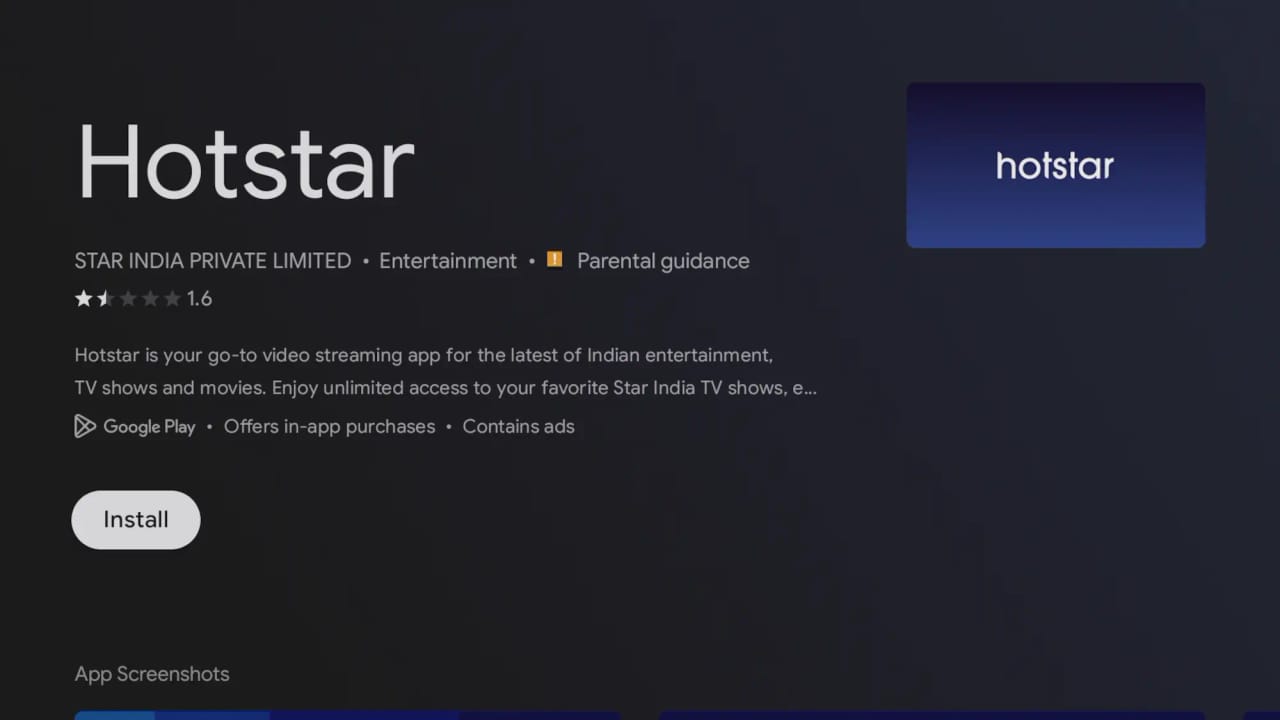
The most impressive thing I can do with a VPN on Android TV is download region-specific apps just by changing my IP address.
On the Play Store on Android, you have to go through the cumbersome process of changing your account region to achieve the same thing.
I downloaded JioHotstar with a US Google account by using a VPN.
Better still, all those apps stayed in my library after I disconnected from the VPN, unlike on Fire TV, where the device only displays apps from your current region.
2. Stream Geo-Restricted Content
Without a VPN, you’ll only be able to access content that’s available in your location. This is because streaming services geo-block content to honor the licensing agreements they have with rights holders.
By changing your IP address using a VPN, you can appear to be in a different location in the world. You can then access international libraries of streaming apps you already have access to, like Netflix, or access ones that are only available in one or a few countries, like HBO Max.
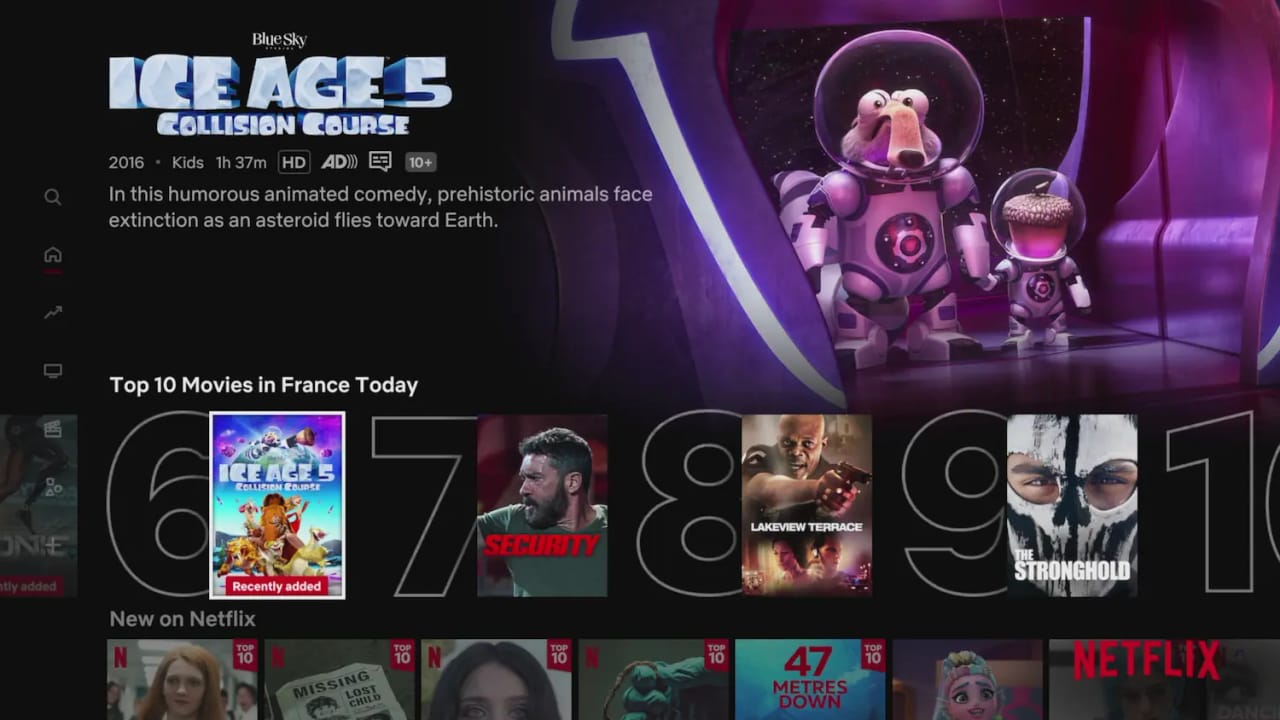
I accessed the French Netflix library on Google TV using a VPN.
3. Hide Kodi Activity from Your ISP
If you use an Android TV box for Kodi, you’re unfortunately likely to run into add-ons that host copyrighted content. Stream that on your regular connection and your ISP can monitor your activity and pass it on to law enforcement.
Connect to a VPN server, you can conceal all your network activity from your ISP, which keeps your viewing habits on Kodi private and unmonitored.
The Risk of Using Generic Android TV Boxes
Generic Android TV boxes, typically sold on Amazon and AliExpress for under $50, often come with preloaded malware.
The BadBox botnet, uncovered by Human Security, was found running on hundreds of thousands of these devices.
Buy a reputable Android TV device from a vetted manufacturer like Sony, Nvidia, Google, or Onn instead.
Popular VPNs That Didn’t Meet Our Criteria
We reviewed 59 VPNs with our Android TV devices. Of the 16 with a dedicated app for the platform, most fell short on streaming access, speed, or how workable the app was with a remote in hand.
Below is a selection of popular VPNs I don’t recommend for use on Google TV devices:
VPN services that didn’t make my recommendations list.
VPN Service
Why I Don’t Recommend It for Android TV
CyberGhost
Works with 8 fewer Netflix libraries than ExpressVPN
NordVPN
Android TV app interface is less user-friendly than alternatives
Norton VPN
Doesn’t unblock a lot of geo-locked content on Netflix and Disney+
Private Internet Access
Works with 6 fewer Netflix libraries than Surfshark & 14 fewer than ExpressVPN
PrivateVPN
Difficult to see which UI element is selected at any time
Have to manually enter account details using the remote
Hide.me (Free)
Doesn’t work with streaming apps
Slow download speeds
Hotspot Shield Basic
Logs personally-identifiable user data
Proton VPN (Free)
Didn’t work with any streaming services
Can’t manually select a server location
Windscribe (Free)
Frustrating to use on Android TV due to the magnified interface
Doesn’t work with US Netflix
Cumbersome login process
Data Cap Penalty
I apply the following penalties to the VPN’s overall Google TV rating based on its data cap:
Unlimited bandwidth: No deduction from the overall rating
10GB per month: -20% from the overall rating
500MB per day: -25% from the overall rating
5GB per month: -30% from the overall rating
1GB or 2GB per month: -35% from the overall rating
200MB per day: -40% from the overall rating
500MB per month: -50% from the overall rating
FAQs
Can I Use a Mobile VPN App on Android TV?
Google Play on Android TV only surfaces apps that developers have explicitly marked as TV-compatible, so mobile Android VPN apps usually won’t appear in TV search at all.
The fallback is sideloading the VPN’s APK file, but it’s a lengthier process and the result isn’t worth it: mobile VPN apps assume touch input, which makes them awkward to navigate with a TV remote.
I’d strongly recommend sticking to a native VPN app for Android TV.