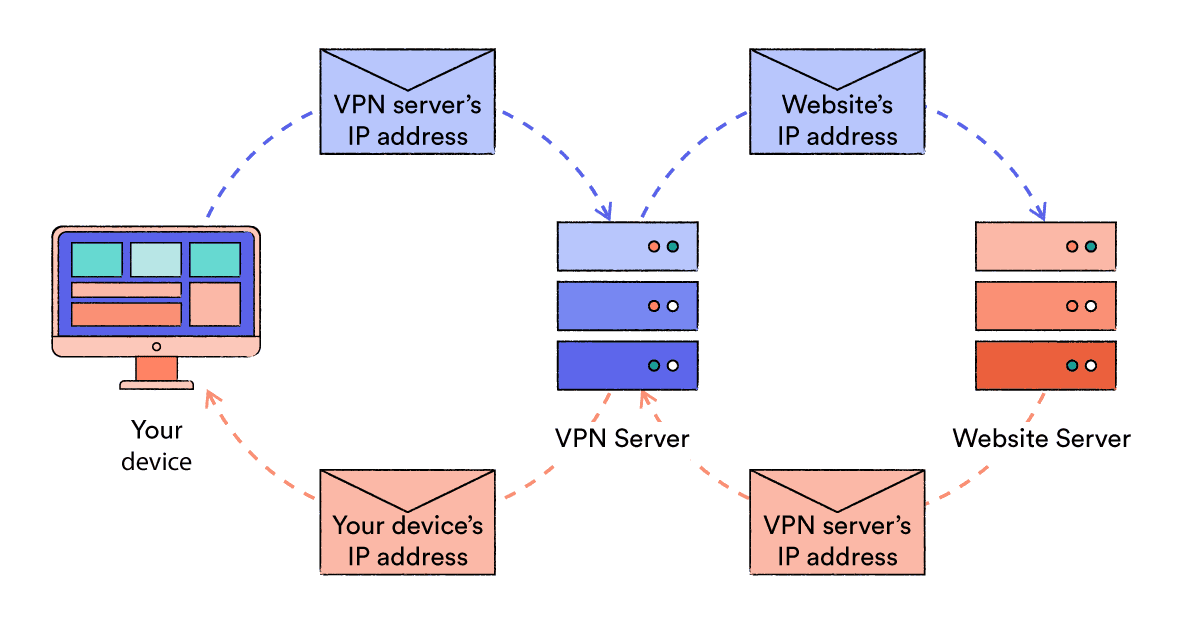
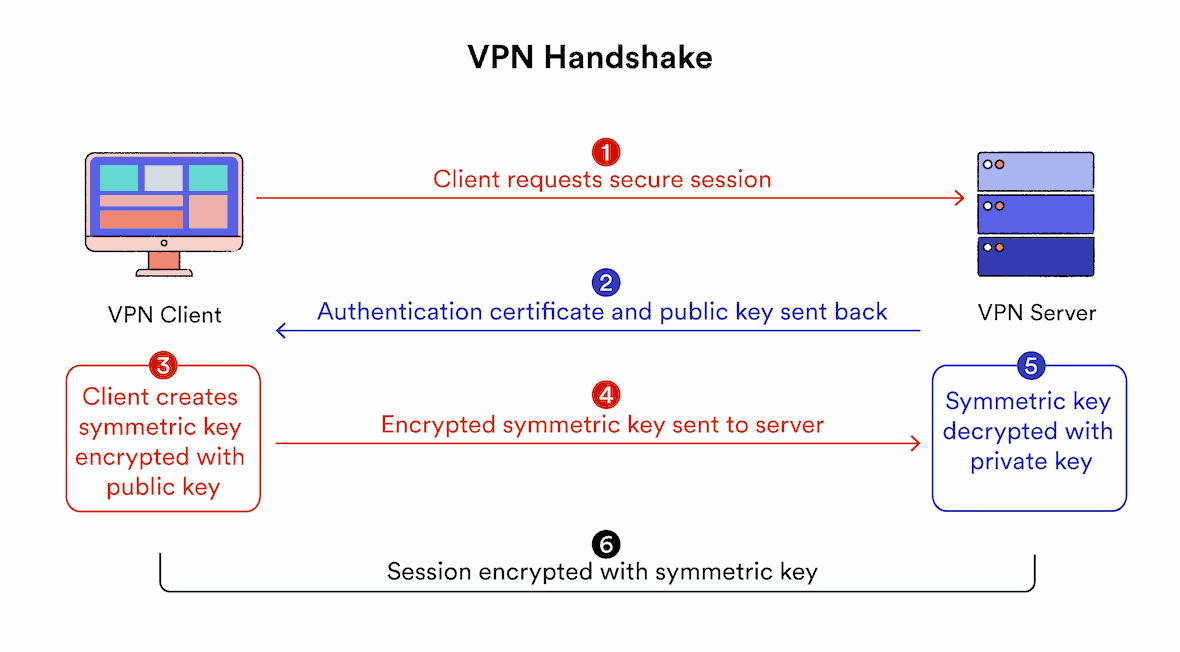
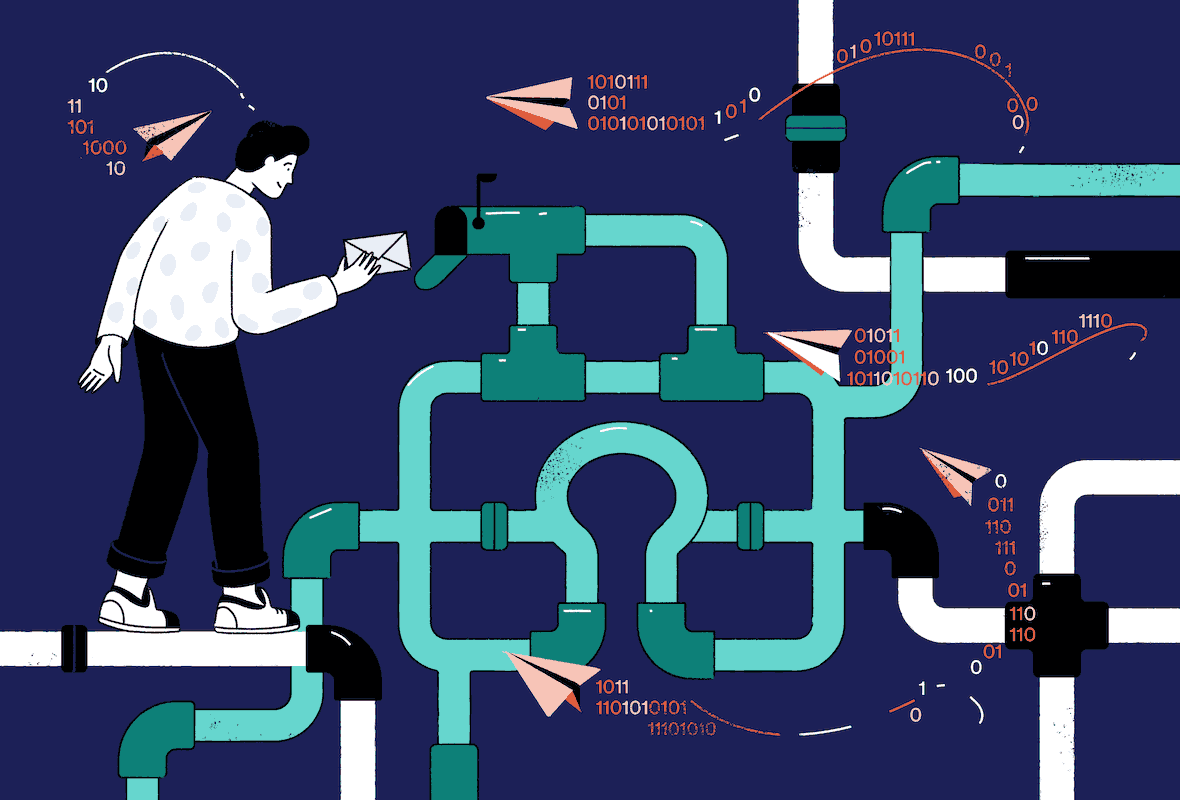
Encryption transforms plaintext data into a secret code, unreadable to anyone without the key to decrypt it. In a VPN, that’s what conceals your browsing activity on the leg between your device and the VPN server, protecting you from various forms of surveillance.
The work is done by a cipher: a mathematical algorithm (i.e. a set of rules) that encrypts and decrypts data, often paired with a specific key length.
Very few apps let you choose your own cipher – Private Internet Access is one of the exceptions:
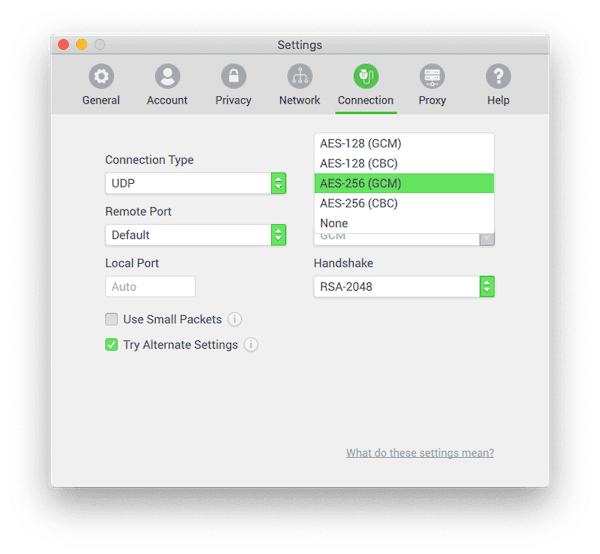
The key itself is a string of characters used to scramble the data. Only someone holding the same key can unscramble it.
Longer key lengths generally offer more security. For example, AES-256 is considered stronger than AES-128.
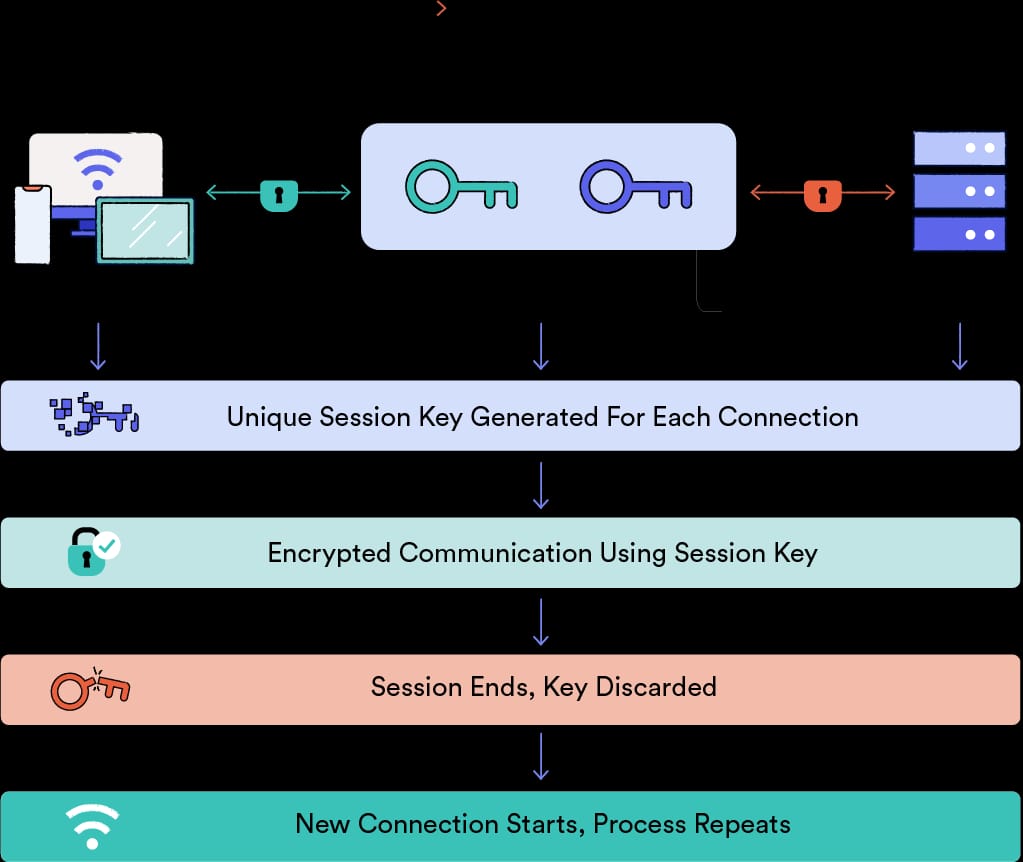
Some VPN protocols use static keys, designed for long-term use, while others use ephemeral keys that expire after a single session or transaction.
Here’s how encryption ciphers work:
- The cipher uses a key to encrypt the data before sending it.
- The same or a related key is used to decrypt the data at the receiving end.
- Only those with the correct key can decrypt and read the information.
Which cipher a VPN uses often comes down to how its developers prioritized security over performance, since stronger ciphers demand more processing power. Newer ciphers also emerge over time, and the better services adopt them. How quickly a provider does so tells you a lot about how much attention it pays to its apps.
The most commonly used ciphers in VPN services are:
- Advanced Encryption Standard (AES)
- Gold standard for online encryption
- Available in 128-bit, 192-bit, and 256-bit key-lengths
- AES-256 preferred for stronger protection, and considered resistant to known quantum attacks
- Blowfish
- Designed in 1993, largely replaced by AES-256
- 128-bit key length (32 to 448 bits possible)
- Has known weaknesses
- Still turns up as a fallback in older OpenVPN configurations; I treat its presence as a red flag
- ChaCha20
- Newer cipher, now very widely adopted
- 256-bit key length
- Comparable security to AES-256
- Noticeably faster performance, especially on mobile devices
- Camellia
- Developed in 2000
- Security and speed comparable to AES
- Not certified by NIST
- Rarely offered by VPN services
Encryption modes determine how a cipher like AES is actually applied to your data. They matter more than most people realize, affecting both privacy and performance. Here are the most common modes used in VPNs:
- CBC (Cipher Block Chaining)
- Traditional mode
- Creates chain of dependent blocks
- Can be slower than newer modes
- Requires additional security measures
- GCM (Galois/Counter Mode)
- Provides encryption and authentication
- Faster than CBC
- Considered very secure
- Widely used in modern VPNs
- CTR (Counter)
- Turns block cipher into stream cipher
- Fast and allows parallel processing
- Doesn’t provide authentication alone
- ChaCha20 uses the same counter-based construction
- OCB (Offset Codebook Mode)
- Provides authenticated encryption in single pass
- Very efficient
- Limited adoption due to patent concerns
Other modes are best avoided in VPNs. ECB (Electronic Codebook) in particular is too simple to be secure, while CFB (Cipher Feedback) and OFB are both outdated and easy to misconfigure. Any mode without integrity checks should also be avoided, unless it’s paired with a separate authentication mechanism.
Most top-tier VPNs now pair AES with GCM, or the ChaCha20-Poly1305 combination, as both strike a good balance between security and performance. These are the combinations I look for whenever I review a VPN.