

Top10VPN is editorially independent. Buying a VPN through our links supports our work.
How to Watch Blackout NHL Games with a VPN
Follow us:
Simon Migliano
Simon Migliano is a recognized world expert in VPNs. He's tested hundreds of apps and his research has been featured on the BBC, The New York Times, and more. Read full bio
The easiest way to watch blacked-out NHL games is to use a VPN with one of three streaming services: NHL Power Play on ESPN, Disney+ Premium in Latin America, or NHL.TV on DAZN.
ExpressVPN is the only VPN that got into all three services, while Surfshark is the better pick for Disney+ and for beating ESPN’s blackouts on Android, thanks to its GPS spoofer.
Connect to the right VPN location for your streaming service:
NHL Power Play on ESPN: Connect to a US server in a state where neither team is based (see my NHL blackout map).
Disney+ Premium: Log into your Disney+ account, connect to a VPN location in Latin America, then refresh the page. Only the Premium plan includes ESPN’s live sports.
NHL.TV on DAZN: Connect to a server location where NHL.TV is available and sign up. Avoid Austria, Germany, Switzerland, and the UK, where some live games are blacked out.
Start streaming.
Warning about NHL.TV: NHL.TV blocks VPNs very aggressively and even ExpressVPN worked inconsistently for me. If you only want one subscription, I’d choose NHL Power Play or Disney+ Premium.
NHL streaming options keep changing, and this season’s blackout rules have changed more than ever.
The league has expanded to an 84-game schedule for the first time since 1993-94, so there are 1,344 regular-season games to follow.
Depending on the out-of-market game you want, you have three options this season: NHL Power Play on ESPN, Disney+ Premium in Latin America, and NHL.TV on DAZN.
If you want to watch every NHL game without cable, including nationally exclusive games, the Stanley Cup Playoffs and the Final, you’ll need Disney+ Premium or NHL.TV.
Whichever you choose, you’ll need a reliable VPN. The best VPNs let you change your IP location so that you appear to be outside the blackout area.
The problem is that most VPNs can’t beat these services, NHL.TV especially. Out of 59 VPNs I tested, only two made my list.
Why Trust Us?
We’re fully independent and have been reviewing VPNs since 2016. Our advice is based on our own testing results and is unaffected by financial incentives. Learn who we are and how we test VPNs.
VPNs Tested
59
Total Hours of Testing
30,000+
Combined Years of Experience
50+
Which NHL Platform Should I Use?
Choosing between ESPN, Disney+ Premium and NHL.TV comes down to the games you want, the device you watch on, and how much hassle you’ll put up with.
Here’s how the three compare:
Table comparing NHL Power Play on ESPN, Disney+ Premium (Latin America), and NHL.TV.
NHL Power Play on ESPN
Disney+ Premium (Latin America)
NHL.TV on DAZN
Number of Games
1,050+ out-of-market games, plus 47 ESPN streaming exclusives (no local teams, no TNT games)
Full regular season, Stanley Cup Playoffs and Final
All 1,344 regular-season games, plus the Stanley Cup Playoffs and Final
Live Playoffs & Final
No (replays only)
Yes
Yes
Blackouts
Local teams, based on your IP address
None encountered in my tests
Some live games in Austria, Germany, Switzerland and the UK
VPN Reliability
Good
Good
Poor, even with ExpressVPN
Checks GPS on Mobile
Yes, on Android
No
No
Pre-roll Ads
Yes
No
No
Maximum Resolution
4K on selected ESPN events only
Plan supports up to 4K HDR
HD
Multiview
Up to 4 games at once, chosen by ESPN
No
Up to 4 games at once (Ultimate plan)
Cost
$13.99/mo or $139.99/yr on ESPN Select (ESPN Unlimited is $31.99/mo)
Nothing extra if you already pay for Disney+ Premium ($18.99/mo or $189.99/yr in the US)
From ~$19.99/mo or $109.99/season on Standard (Ultimate is $24.99/mo or $124.99/season)
Personally, I’d choose NHL Power Play or Disney+ Premium. Across hundreds of tests, both were dependable with a VPN.
NHL.TV is the most complete package on paper, with every game of the season, but it has become very hard to stream with a VPN. Even ExpressVPN failed to access it regularly, which is why I’ve put it last.
One more thing worth knowing about ESPN: the $13.99 Select plan covers NHL Power Play and ESPN’s 47 streaming-only games, but not the 53 games on the ESPN and ABC channels. Those require an ESPN Unlimited plan or a TV provider login.
How to Beat NHL Blackouts with a VPN
A blackout is triggered by where the streaming service thinks you are. A VPN fixes that by giving you an IP address somewhere else, so ESPN, Disney+ and DAZN see the server’s location rather than yours.
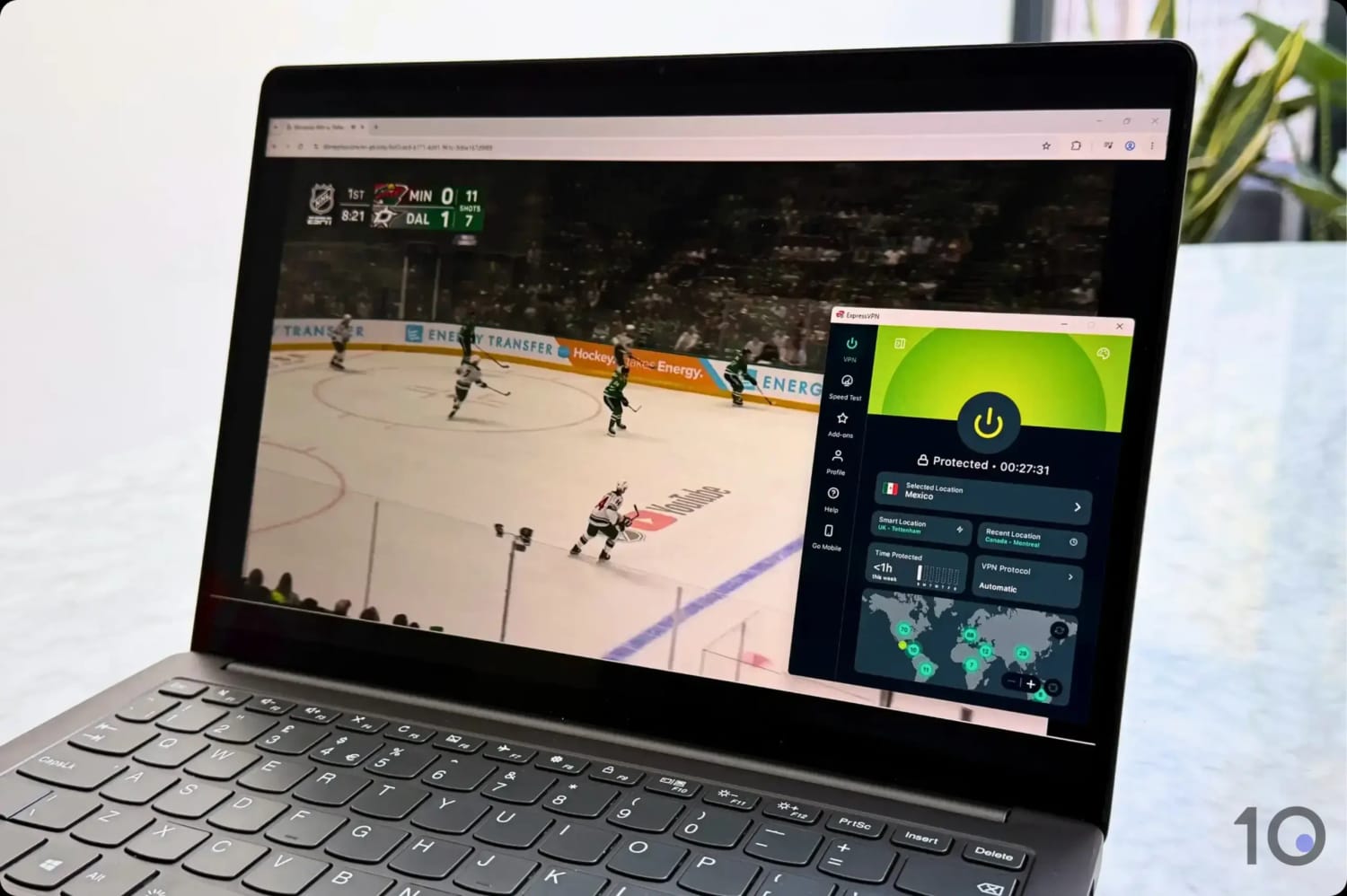
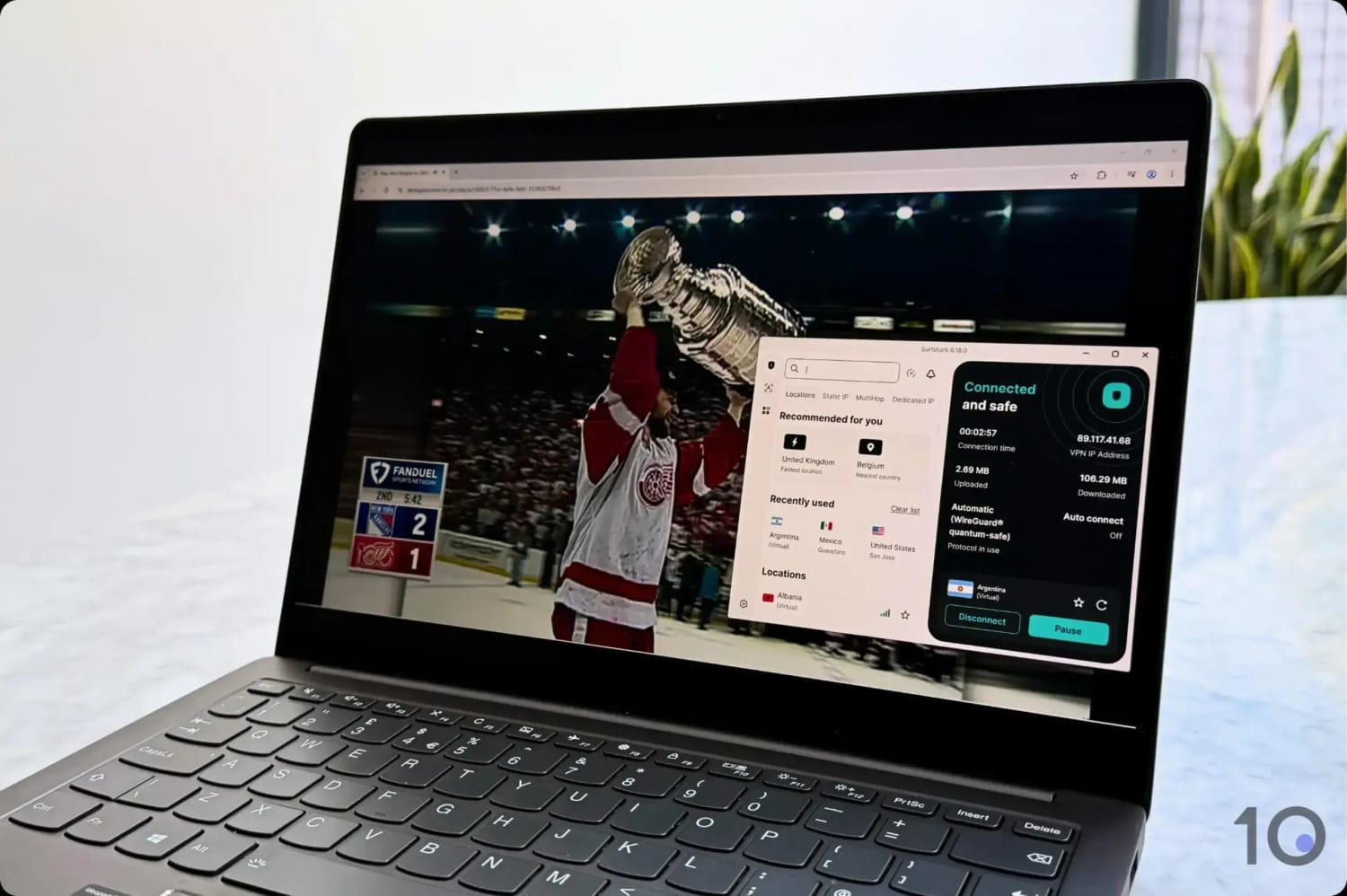
Streaming the NHL on Disney+ Premium in Mexico.
What changes between the three services is where you need to appear:
NHL Power Play on ESPN: a US state outside the blackout areas of both teams playing. ESPN says it works out your location from your IP address, although I found its Android app also checks your GPS.
Disney+ Premium: a Latin American country where Disney+ carries the NHL. I connect to Mexico for the fastest speeds.
NHL.TV on DAZN: a country where NHL.TV is available that doesn’t black out live games. I’d start with Ireland, and avoid Austria, Germany, Switzerland and the UK.
Disney+ is the least hassle of the three, because you don’t need a new account. Disney+ decides which library you see from your IP address, not your billing country, so your existing US or Canadian Premium subscription will show you Latin America’s catalog, ESPN’s live NHL games included, as soon as you connect to a Mexican server.
NHL.TV is the most hassle, because you do need a new account registered in the country you’ve chosen, and DAZN runs a VPN check at signup, at payment and at playback. Use a DAZN-compatible VPN like ExpressVPN, and expect to switch servers more than once.
The steps below cover every major device. Pick your device, then follow the instructions for your service.
PC & Mac
A web browser is the most reliable way to watch, because it’s the easiest place to fix location problems.
Subscribe to a VPN that works with your chosen service. I recommend ExpressVPN or Surfshark. Download and install the app from the VPN’s website.
Log into your streaming account first, before connecting. This matters most on Disney+, whose VPN checks are strictest at sign-in. Skip this step for NHL.TV, since you’ll be creating that account from scratch.
Connect to the right location. Choose a server in the US state or country listed above. If your VPN lets you pick a city, choose a large one, as those servers are usually faster.
Clear your cookies, or open a private browsing window. Old cookies can still give away your real location.
Open your streaming service:
ESPN: go to espn.com/watch, sign in or subscribe to ESPN Select, then open the NHL Power Play section.
Disney+: go to disneyplus.com. You should now see the Latin American home screen, with ESPN’s live channels. Your plan needs to be Premium, as Standard doesn’t include ESPN’s live sports.
NHL.TV on DAZN: go to dazn.com, create an account, and choose NHL.TV Standard or Ultimate. Ultimate adds Multiview and more devices.
Advice: If your browser asks to use your location, click Block. Sharing your real location can override the VPN.
Android
For ESPN, I recommend faking your phone’s GPS location as well as your IP address, because the ESPN app checks both. Surfshark is the VPN to use here, as it has a GPS override setting built in:
Subscribe to Surfshark and install the app from Google Play.
Turn on Developer Options on your phone. Go to Settings > About phone and tap Build number seven times, until you see “You are now a developer”.
Turn on GPS override in Surfshark. Open the app’s settings and switch on Override GPS location. Surfshark will walk you through the rest of the setup.
Make Surfshark your mock location app. Go to Settings > System > Developer options > Select mock location app and choose Surfshark. The menu path varies slightly by phone.
Connect to a US server outside the blackout area.
Clear the ESPN app’s cache. Go to Settings > Apps > ESPN > Storage and tap Clear cache to wipe the location it saved earlier.
Open ESPN, go to NHL Power Play, and start streaming.
For Disney+ or NHL.TV, you only need to change your IP address:
Sign into the app before you connect to the VPN, then close it fully.
Connect your VPN to the right country.
Reopen the app, find your game, and start streaming. If the app still shows your old region, clear its cache and try again.
Advice: Watch on Wi-Fi rather than mobile data where possible, as mobile networks can give away your real location.
iOS
Apple blocks apps from faking your GPS location, so there’s no iPhone equivalent of Surfshark’s GPS override.
For ESPN:
Install your VPN from the App Store and connect to a US server outside the blackout area.
Stop ESPN from using your location. Go to Settings > Privacy & Security > Location Services > ESPN and choose Never.
Delete and reinstall the ESPN app so it forgets the location it saved, then sign in.
Open NHL Power Play and start your game. If it’s still blacked out, watch on a laptop or an Android device instead.
For Disney+ or NHL.TV:
Sign in on the website in Safari first, not in the app. Subscribing through the App Store bills through your Apple ID’s country, which can cause problems with a new NHL.TV account.
Connect your VPN to the right country.
Open the Disney+ or DAZN app, sign in, and start streaming.
TV
How you set this up on the big screen depends on whether your TV or streaming stick can run a VPN app.
Fire TV Stick, Android TV, Google TV and Apple TV can all run VPN apps, although Apple TV needs tvOS 17 or later:
Install your VPN’s app from the device’s app store and sign in.
Connect to the right location for your service.
Open the ESPN, Disney+ or DAZN app and start streaming. If it still shows your real location, clear the app’s data in your device settings, or reinstall it.
Roku, Samsung, LG and other smart TVs can’t run VPN apps. You have two options:
Set up the VPN on your router. Everything on your network then uses the VPN, your TV included. Most leading VPNs have router setup guides, though you’ll need a compatible router.
Mirror your screen from a device that’s on the VPN, such as a laptop connected by HDMI, or an iPhone using AirPlay. Don’t cast from a phone app to a Chromecast: the Chromecast fetches the stream itself over your normal connection, bypassing the VPN.
Still Having Issues?
If your stream is still blocked, work through these fixes:
Clear your cookies and cache, or reinstall the app. All three services remember your location from earlier sessions.
Switch to a different server in the same state or country. Streaming services block VPN IP addresses as they detect them, and a fresh server usually solves it.
Check your location suits the game. On ESPN, make sure neither team is local to the server you picked. On NHL.TV, make sure you aren’t connected to Austria, Germany, Switzerland or the UK.
Rejected at the DAZN payment screen? That’s DAZN’s second VPN check, and it’s stricter than the one on streams. Switch to another server in the same country and try the payment again before giving up on that country.
Turn on your VPN’s leak protection, so your real IP address doesn’t leak alongside the VPN’s.
Don’t stream in more places than your plan allows. NHL.TV’s Standard plan covers 2 devices on one internet connection, and Ultimate covers 5 devices across two IP addresses. Go beyond that and your stream gets cut off.
The Best VPNs for Watching the NHL
The table below compares my two picks, ExpressVPN and Surfshark, for streaming access, speed, server network, and price.
Works smoothly with NHL Power Play & Disney+ in Latin America
Servers in all 50 states to beat local ESPN blackouts
Fast & steady speeds across any distance
Highly intuitive apps for popular devices
Smart DNS for US & UK access
Best bet for NHL.TV (not guaranteed)
No built-in GPS spoofer on Android
Free trial is less flexible than Surfshark's
Pricing Plans
$14.99/mo
$4.99/mo over 15 months
$2.99/mo over 28 months
Money-Back Guarantee
30 Days
Servers
13,360
Countries with Servers
113
US States
50
Simultaneous Connections
10
Support
24/7 Live Chat
Compatible with
Windows
Mac
iOS
Android
Linux
Amazon Fire TV
Android TV
Apple TV
Router
Chrome
ExpressVPN is the best all-round VPN for streaming the NHL. It’s fast, it’s the easiest to use of any VPN I’ve tested, and it’s the only one of my picks that gets into all three streaming services.
It was flawless with NHL Power Play and Disney+ Premium in Latin America, which are the two platforms I’d steer most people towards anyway. With NHL.TV it was a different story, and I’ll be blunt about that below.
Its weak spots are minor by comparison: there’s no GPS spoofer for ESPN’s Android app, the free trial is three days and mobile-only, and the long-term plan costs a little more than Surfshark’s.
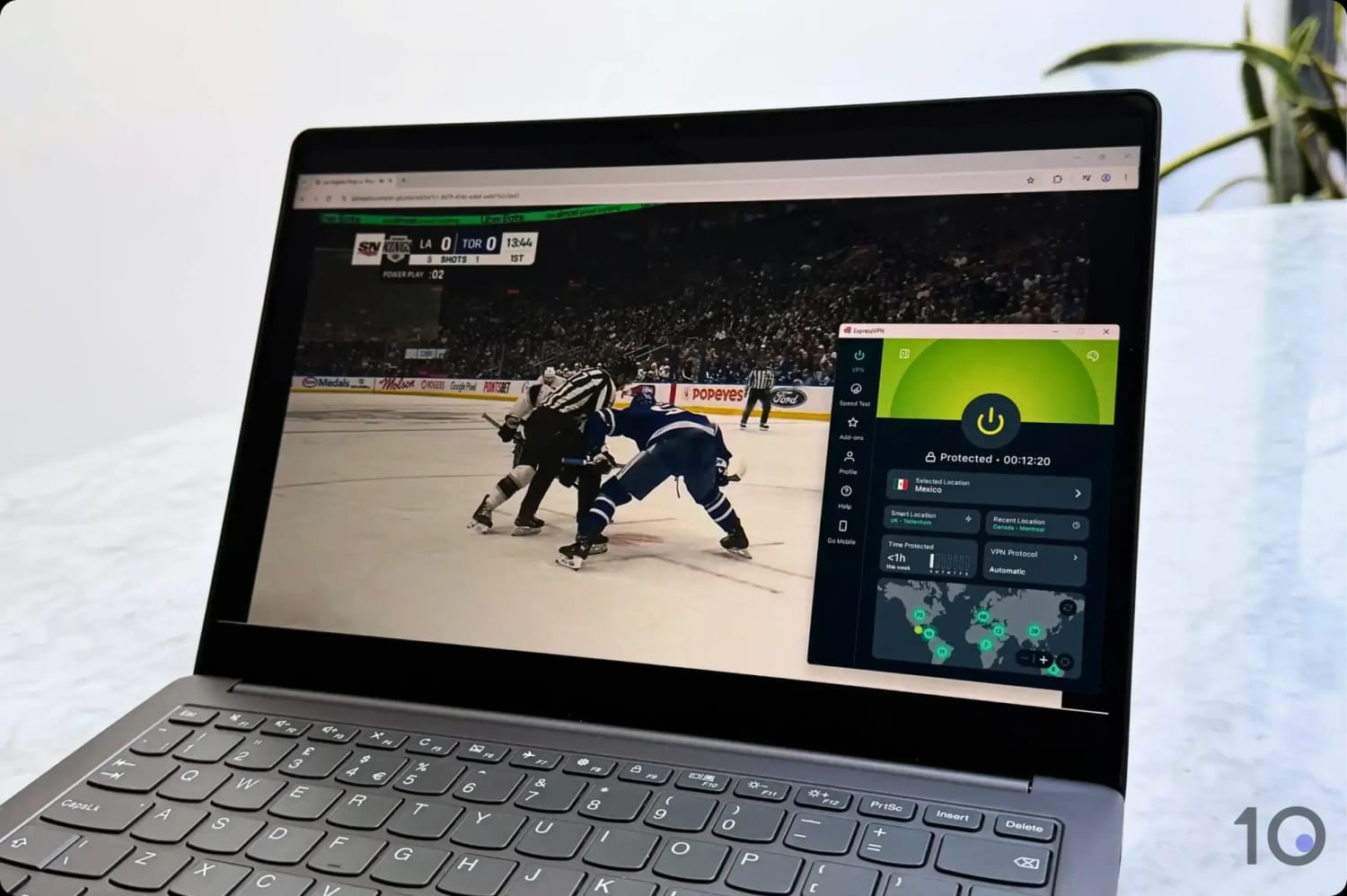
ExpressVPN streamed games instantly on Disney+ Mexico.
Reliable for ESPN & Disney+, Hit-and-Miss on NHL.TV
Let me deal with NHL.TV first, because no other guide seems willing to.
ExpressVPN is the most effective VPN I’ve found for DAZN, which hosts NHL.TV, and it still wasn’t consistent. A server that streamed a game one night would be blocked the next, and the account and payment checks kept me out more than once.
If NHL.TV is the only reason you’re buying a VPN, go in with your eyes open, pay monthly, and use ExpressVPN’s 30-day refund policy if it doesn’t hold up for you.
The picture is far better everywhere else. Across hundreds of tests, ExpressVPN worked every time with NHL Power Play and with Disney+ Premium in Mexico and Argentina.
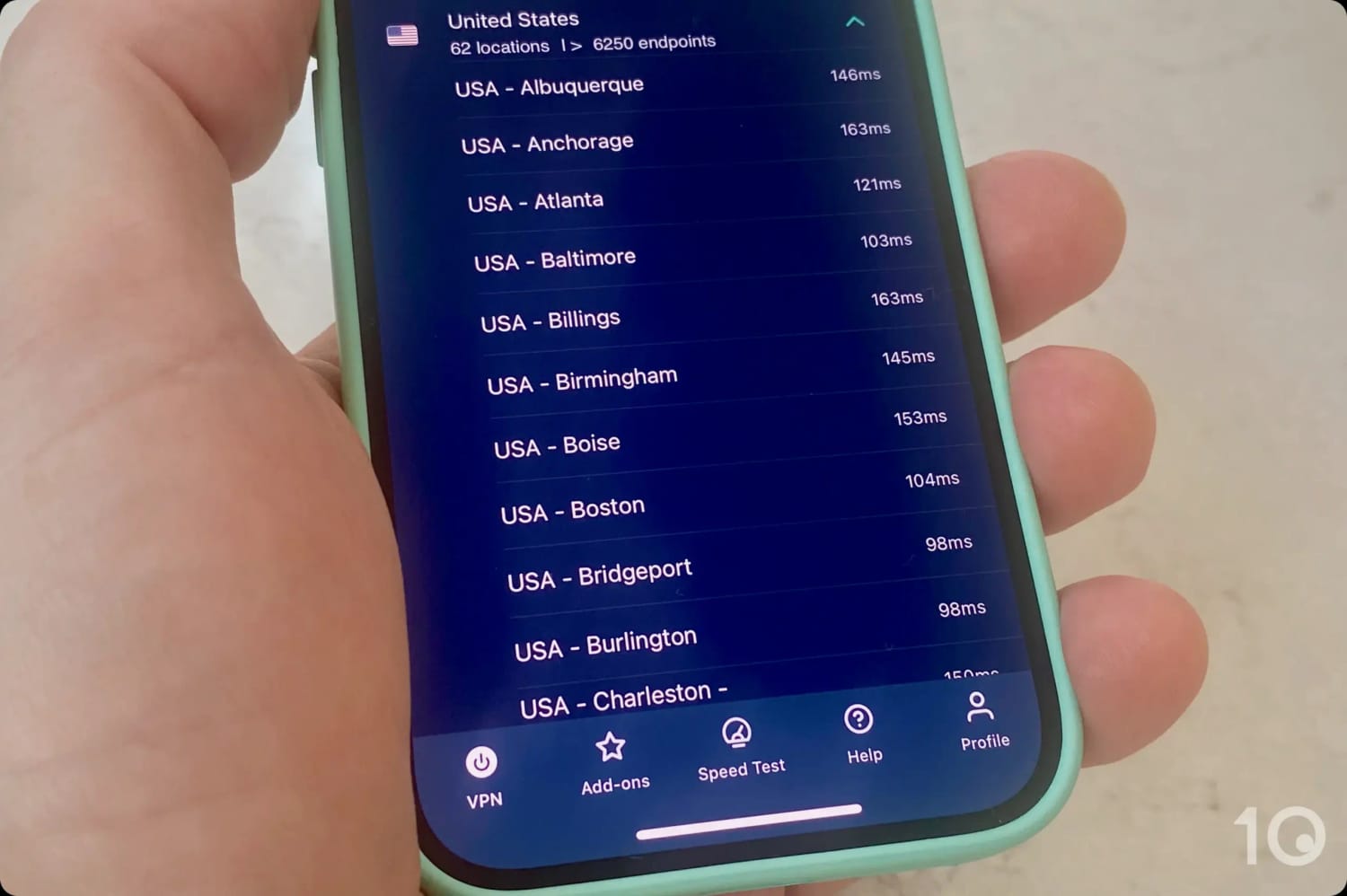
ExpressVPN’s US servers are easy to find in the app.
Its 56 US locations make it easy to find a city outside both teams’ blackout areas, which matters more this season with 84 games per team.
Its 400+ servers across Latin America also mean you can switch your Disney+ region in seconds from the US or Canada.
Enjoyable NHL Streaming Experience
Unblocking a live NHL stream is only half the job. A VPN also has to hold its speed for three hours, across the distances the NHL’s geo-restrictions force you into.
ExpressVPN is one of very few VPNs that manages consistent speeds across its entire network.
Connecting to a nearby US state, I lost just 2% of my internet speed, compared to Surfshark’s 4%. Across my international tests, my speed dropped by 15% on average, and it stayed steady from puck drop to final buzzer.
Connection times are ExpressVPN’s other advantage over Surfshark, and an underrated one. Every server I tried connected in under three seconds, on desktop, mobile and TV devices alike.
When you’re switching locations two minutes before the game starts, that makes a bigger difference than you’d think.
Surfshark isn’t as fast as ExpressVPN, but it has two advantages that will matter to plenty of NHL fans.
The first is its built-in GPS spoofer, which beats ESPN’s mobile blackouts on Android. ExpressVPN has no equivalent.
The second is price: Surfshark costs less over the long term and offers a 7-day free trial straight from its website, with no app store sign-up needed.
Where Surfshark falls down is NHL.TV: its DAZN access is unreliable even by the low standards of that platform, and its speeds trail ExpressVPN’s over long distances.
Surfshark’s Argentina server accessed NHL streams smoothly on Disney+.
Beats ESPN GPS Blocks on Android
ESPN’s mobile app uses your GPS location as well as your IP address to enforce blackouts. If the two don’t match, your game stays blocked.
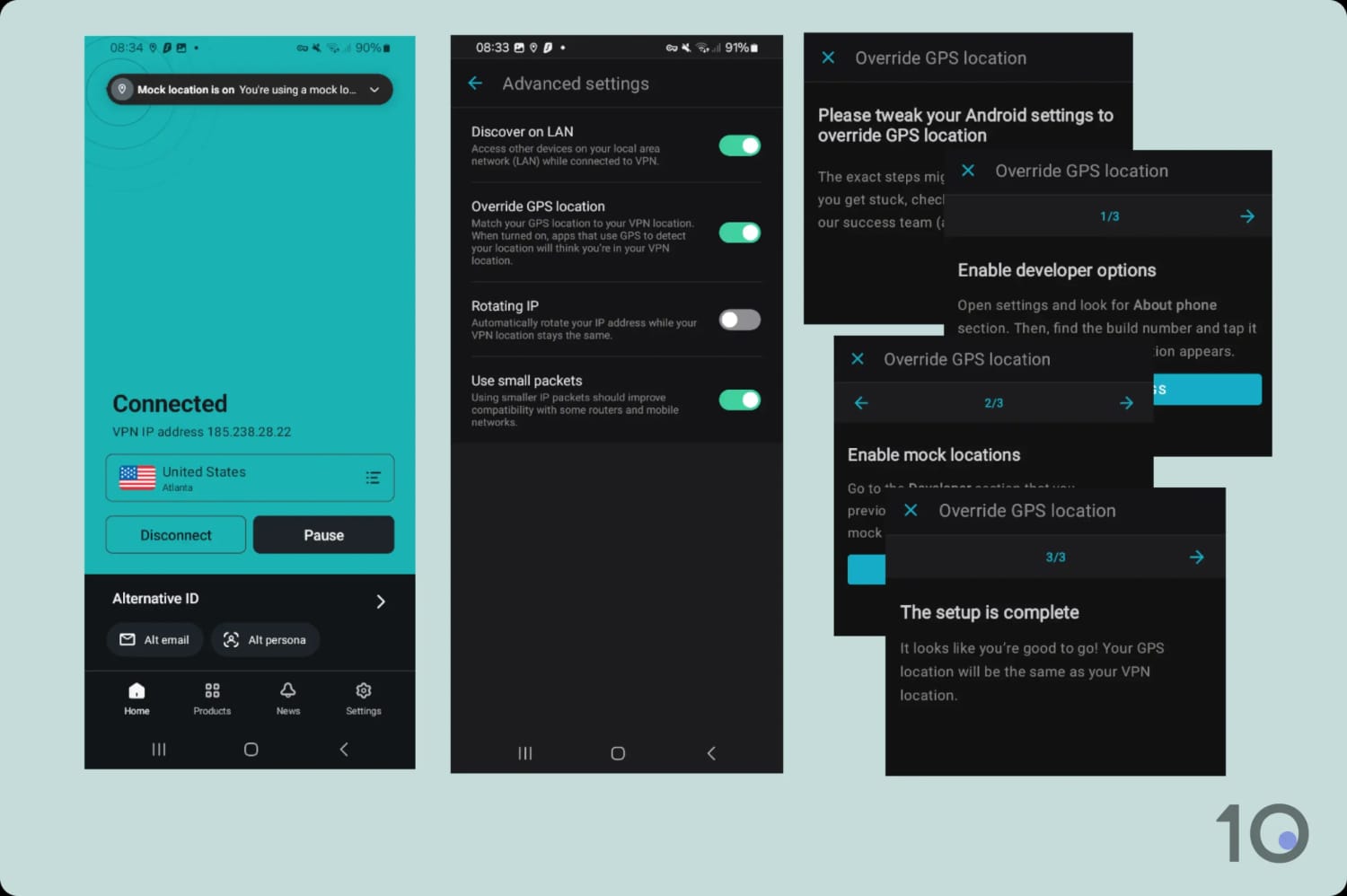
I got around this using Surfshark’s Override GPS location setting, which lines up your Android device’s GPS coordinates with the VPN server you’re connected to.
Setting up Surfshark’s Override GPS location.
Setup takes a few minutes and involves a few steps, which Surfshark explains in detail. Once it’s done, your IP address and your GPS data both point to the same city, and the blackout lifts.
Surfshark covers 32 fewer US cities than ExpressVPN, so you have fewer options to choose from, but its coverage is still wide enough to find a city outside most blackout areas.
Very Affordable with a 7-Day Free Trial
Surfshark is priced very competitively on its longer plans, at $2.49/mo over 27 months against ExpressVPN’s $2.99/mo over 28 months, a saving of 20%.
You can also try Surfshark’s 7-day free trial through its website, which rolls into a 30-day money-back guarantee for up to 37 days of risk-free use.
There are two drawbacks I noticed in testing, though.
The first is speed. Surfshark trailed ExpressVPN both locally and internationally. It was never bad, but it was slow enough to cause occasional blurriness on a long stream.
The second is connection times, particularly on mobile. Where ExpressVPN latches onto a server within three seconds, Surfshark often took over five, and on my phone I sometimes waited more than ten.
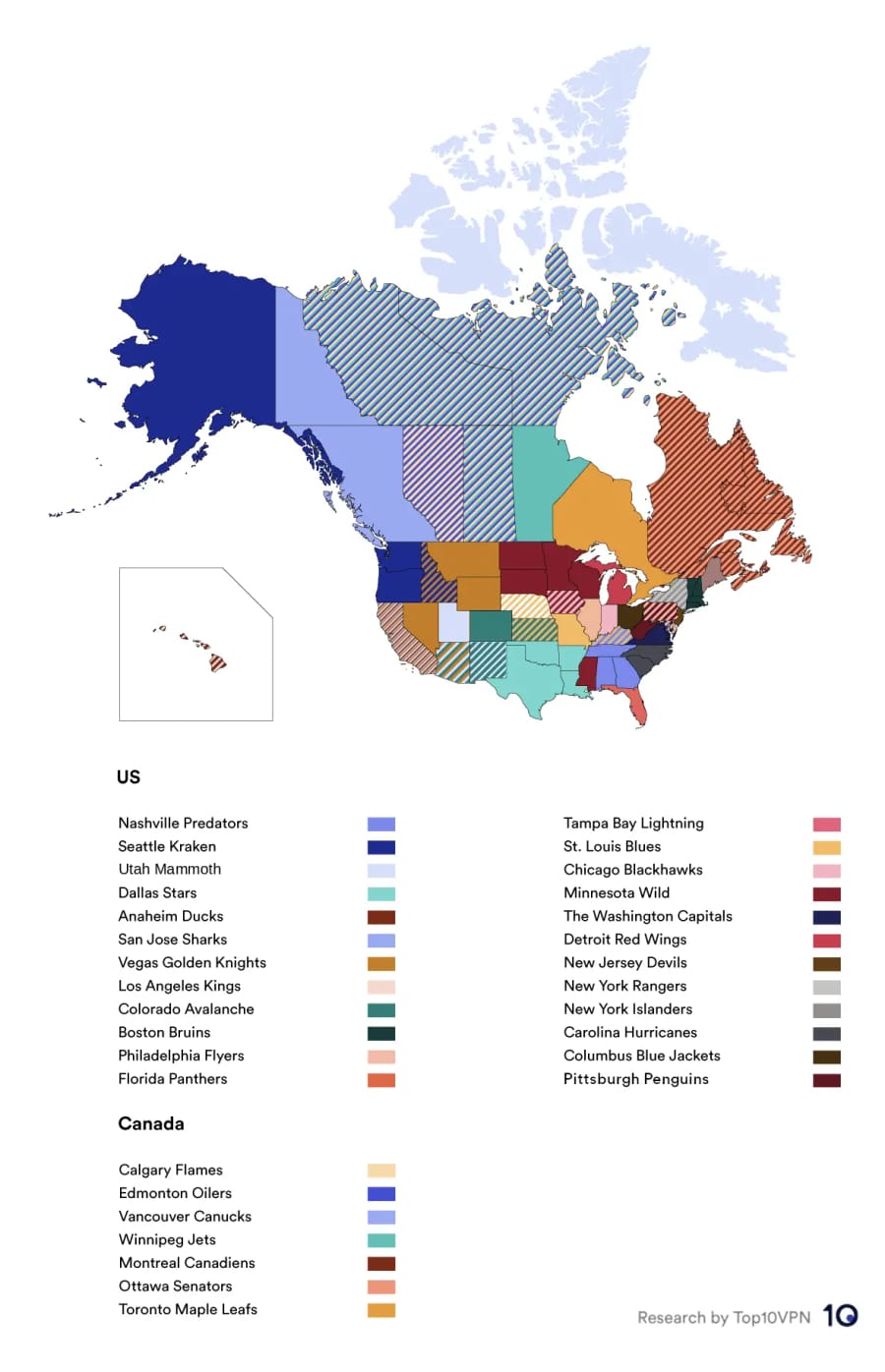
If you’re streaming through NHL Power Play, this map shows which teams are blacked out where, and which IP location you’ll need to get around it.
Some blackout regions cover entire states, so you can be blocked from your team’s games even if you live hundreds of miles away. In some states, several teams are blacked out at once.
The biggest change this season is in the Southwest. The Arizona Coyotes are now the Utah Mammoth, and their blackout territory is wide: as well as Utah, it covers Arizona and New Mexico. Games air locally on Scripps-owned Utah 16 and stream on Mammoth+.
Arizona is now the most restricted state on the map, with the Mammoth, Vegas Golden Knights and Colorado Avalanche all blacked out there. The Dallas Stars, meanwhile, are no longer blacked out in New Mexico, and the Golden Knights are no longer blacked out in Utah.
Blackout areas don’t always follow state lines, so if your state borders another team’s territory, check your exact address with the NHL’s Broadcast Area Lookup tool before you pick a VPN server.
If you’re inside your team’s blackout region, connect to a VPN server in the nearest location outside the boundary for the best streaming speeds.
NHL VPN Testing Methodology
I tested 59 VPNs to find the most effective at bypassing NHL blackouts. These are the criteria I used:
Access to NHL streaming services: to qualify, a VPN has to work with ESPN in the US and Disney+ in Latin America, and give you the best possible chance with NHL.TV outside the US and Canada.
Number of US servers: beating local blackouts on ESPN means having servers in as many US states as possible.
International servers: accessing Disney+ and NHL.TV means plenty of servers in Latin America and Europe.
Speed: fast, stable speeds are essential for streaming a full game in HD without buffering.
Device compatibility: user-friendly apps for popular devices, including Firestick and Apple TV. I also look for router support, a Smart DNS proxy, and built-in GPS spoofing on Android.
FAQs
Why Does the NHL Black Out Games?
The NHL sells each team’s games twice: nationally to ESPN and TNT, and locally to a broadcaster in that team’s home market. Both pay for exclusivity, so streaming services have to block games wherever someone else holds the rights.
Those local deals were upended this season. FanDuel Sports Network’s parent company went out of business in April 2026, leaving seven teams without a broadcaster. Five have since found new homes, including the LA Kings on Angels Broadcast Television and Nashville on Scripps Sports, while the Minnesota Wild and St. Louis Blues still hadn’t named one a week before the opener.
None of that changes the blackouts themselves. Your local team’s games are still blocked on NHL Power Play, whoever is showing them.
Nationally exclusive games are a different thing. They aren’t blacked out, just tied to one broadcaster: TNT’s games are on TNT, truTV and HBO Max, and ESPN’s are on the ESPN app or ABC.
Is the Stanley Cup Final on NHL.TV & Disney+?
In the US, this season’s Final is exclusive to TNT. Outside North America, both Disney+ in Latin America and NHL.TV on DAZN carry the Stanley Cup Final in full.
NHL Power Play doesn’t show playoff games live, only replays after they’ve aired.
Is It Legal to Watch Blacked-Out NHL Games with a VPN?
Yes. There’s no law against changing your IP location, and you’re paying for the games either way. It does breach each service’s terms of use, which is why they try to detect and block VPN connections.
Will ESPN, Disney+ or DAZN Ban Me for Using a VPN?
All three prohibit VPNs in their terms of use, but in my experience the usual outcome is a blocked stream rather than a banned account. I’ve been testing VPNs with these services for years without losing an account.
I'm in Canada. Do Your Workarounds Work for Me?
Disney+ does, and it’s the one I’d suggest. Log into your Canadian Disney+ Premium account, connect to a Mexican server, and you’ll get the same Latin American coverage as everyone else.
NHL.TV is harder, because Canada is one of the countries where it isn’t sold, so you can’t use a Canadian account. You’d need to create a new account from a country where NHL.TV is available.
National rights in Canada now sit with Rogers under a 12-year deal, with Amazon Prime Video showing Wednesday night games.