





Top10VPN is editorially independent. Buying a VPN through our links supports our work.
The Best No-Logs VPNs
Follow us:
Simon Migliano
Simon Migliano is a recognized world expert in VPNs. He's tested hundreds of apps and his research has been featured on the BBC, The New York Times, and more. Read full bio
Every VPN calls itself “no-logs” but many can’t prove it. Even worse, almost 40% of the VPNs we’ve reviewed log either connection timestamps, your real IP address, or both.
When a VPN says it’s no-logs it should mean one thing: it doesn’t track or keep records of your online activity.
I don’t take such a claim at face value, and neither should you. A logging policy is just words until it’s tested: by an independent auditor, by a court order, or a server seizure.
I’ve spent years pulling apart VPN privacy policies, and only a handful survive real scrutiny.
And you know what else? A no-logs VPN won’t make you invisible, and it won’t undo the fact that you signed up with an email and a card.
But using the right no-logs VPN service is the single most effective way to keep your browsing out of the hands of ISPs, advertisers, and governments.
🔄 Recent Updates
Expanded the guide to five picks and added a new chapter on some of the surveillance laws that make a no-logs VPN genuinely important.
Why Trust Us?
We’re fully independent and have been reviewing VPNs since 2016. Our advice is based on our own testing results and is unaffected by financial incentives. Learn who we are and how we test VPNs.
VPNs Tested
59
Total Hours of Testing
30,000+
Combined Years of Experience
50+
What Is a No-Logs VPN?
A no-logs VPN is a service that doesn’t record what you do while you’re connected.
No browsing history, no originating IP address, no record of which sites you visited or files you downloaded.
The catch is that “logs” is a slippery word, and providers exploit that. To cut through it, I split VPN logs into three types:
Activity logs. The websites you visit, the apps you use, your DNS queries, the files you download. This is the data that can identify you. A genuine no-logs VPN keeps none of it.
Connection logs. Metadata about your sessions: timestamps, data transferred, your originating IP, the server you used. Some is harmless in aggregate; your real IP tied to a timestamp is not.
Aggregated logs. Anonymized, pooled data that can’t be traced back to any individual, such as total server load. This is fine, and most reputable VPNs keep some.
The VPN service you want keeps zero usage logs and, at most, minimal connection data that can’t be linked back to you. Anything more, and it isn’t really a no-logs VPN.
The Best No-Logs VPNs Compared & Reviewed
Out of the 59 VPNs my team and I have tested, these five have the strongest, most thoroughly proven no-logs credentials.
I’ve ranked them purely on privacy merit: how little they collect, whether they’ve been audited, and whether they’ve survived a real-world test.
True no-logs policy: no session, connection, or server data
Proven twice in the real world
Entirely RAM-only server network
Open-source applications
Extensive range of advanced privacy settings
Very affordable, starting at $2.19/mo
US jurisdiction (Five Eyes member)
Not the easiest to use for beginners
Pricing Plans
$11.99/mo
$7.50/mo over 6 months
$2.19/mo over 26 months
Money-Back Guarantee
30 Days
Countries with Servers
91
Servers
18,651
Logging Policy
No Logs
Jurisdiction
US (Five Eyes Member)
Simultaneous Connections
Unlimited
Support
24/7 Live Chat
Compatible with
Windows
Mac
iOS
Android
Linux
Amazon Fire TV
Android TV
Apple TV
Router
Chrome
Private Internet Access is the VPN I use when privacy is the whole point, and it’s my pick if budget matters.
Of the five VPNs I recommend, it’s the only one that pairs a genuine zero-logs policy with both the lowest price and unlimited simultaneous connections.
Where ExpressVPN keeps a little anonymous data, and Mullvad costs significantly more, PIA logs nothing and still starts at $2.19/mo.
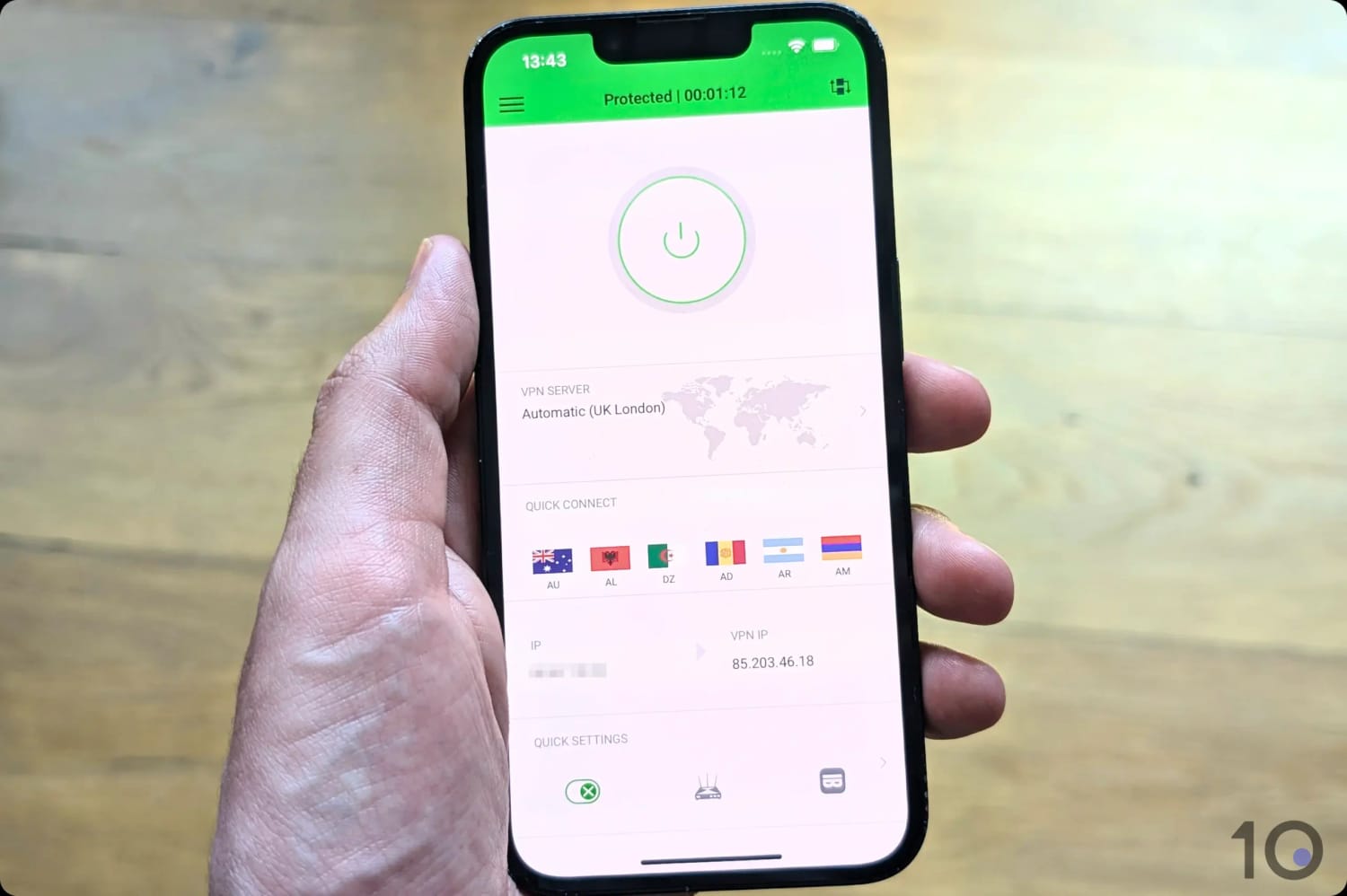
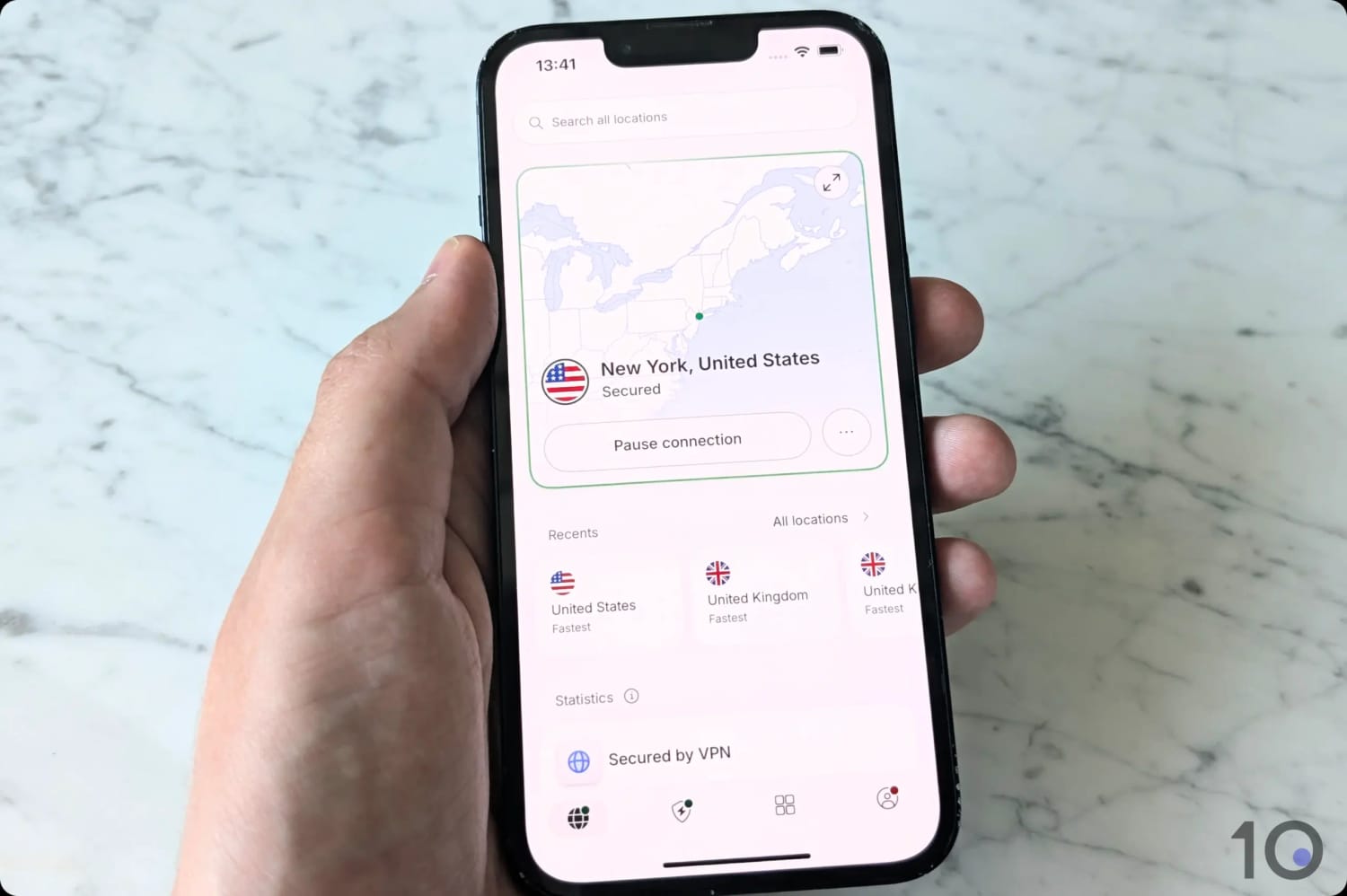
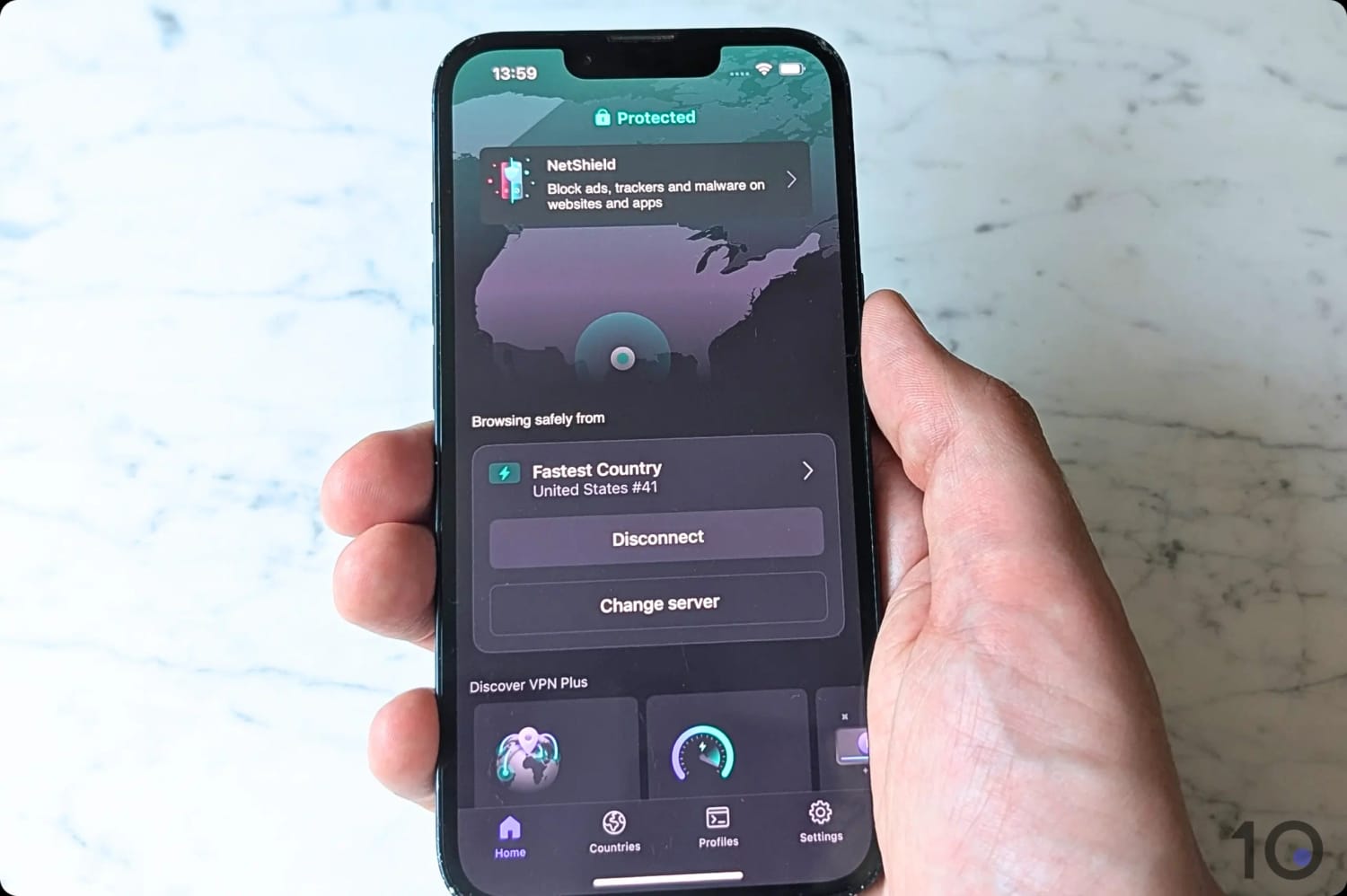
PIA’s app for iPhone.
True Zero-Logs Policy Proven Twice
PIA’s policy is the real thing. It doesn’t retain any session, connection, or server data, and I’ve watched that hold up under real pressure.
It had nothing to give the FBI during a 2016 court case. And when Russian authorities seized one of its servers that same year, they walked away with nothing too.
PIA’s no-logs policy is backed by a fully RAM-only network that wipes on every reboot, a Deloitte audit, and open-source apps anyone can inspect.
The one honest knock is jurisdiction: PIA is based in the US, inside Five Eyes, which is why it scores a 4.5/10 on that single factor.
In practice I’m not troubled by it, because a company can’t hand over data it never collected in the first place.
If you’re still slightly concerned by this, sign up with a throwaway email address and pay in crypto using Bitpay.
Endlessly Configurable & Unbeatable Value
This is the VPN for people who like to tinker. It exposes more settings than any other app in this guide.
You can switch encryption levels, change protocol, and layer on MACE, its built-in ad and tracker blocker.
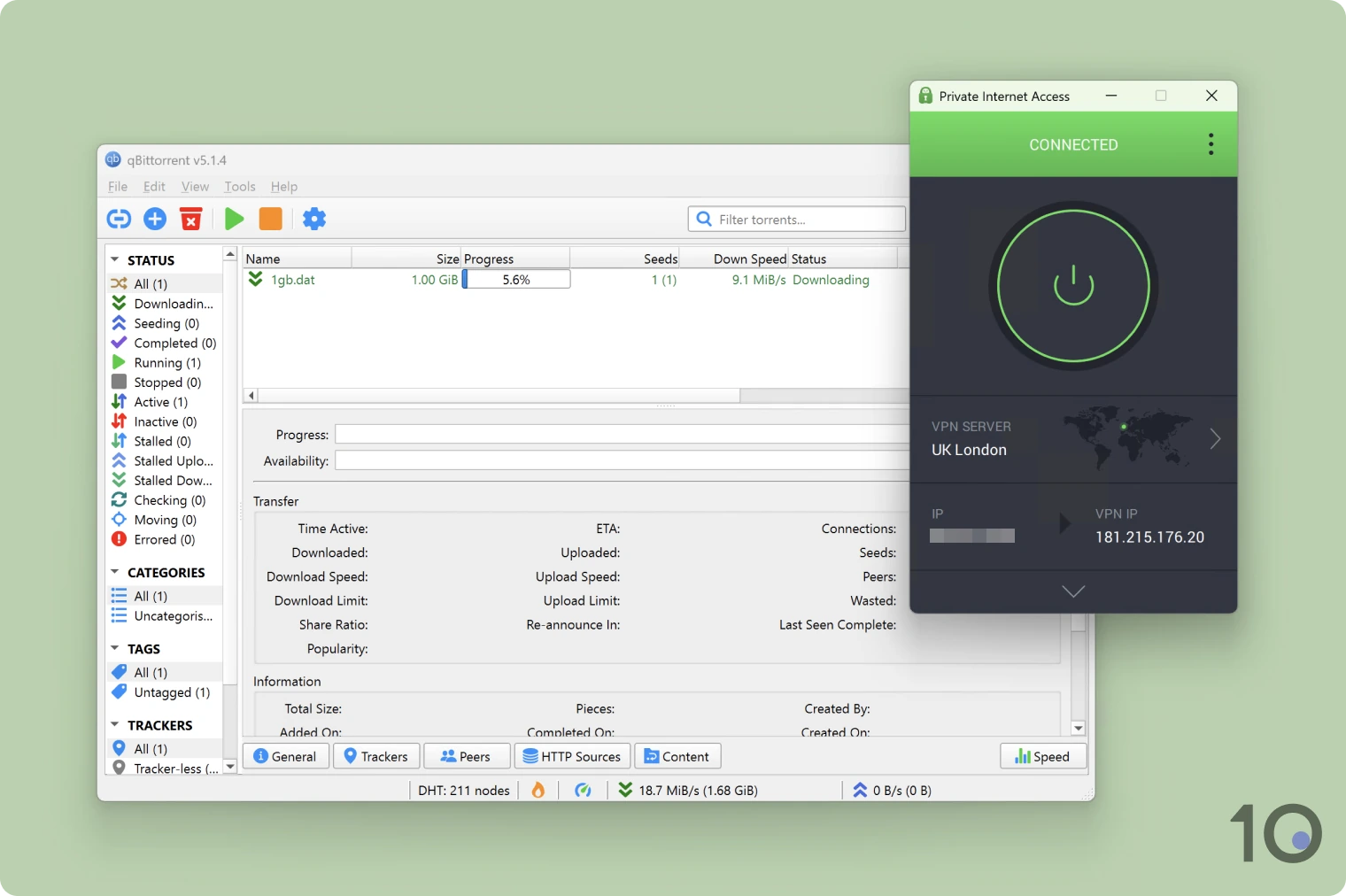
It’s also my favorite VPN to torrent with. P2P works on every server, and in testing I pulled down large files in very little time.
PIA performed extremely well in our torrenting tests.
One subscription covers unlimited devices, which none of my other picks can match, so it protects an entire household at once.
The trade-off is a bit of a learning curve, especially if you’re a VPN newbie. The sheer volume of options is probably too much for a beginner user who I’d steer towards a more plug-and-play option like ExpressVPN.
But at only $2.19/mo over 26 months for a proven zero-logs VPN with no device limit, PIA’s value is undeniable.
Based in the privacy-friendly British Virgin Islands
More expensive than PIA VPN
No multi-hop servers
Retains some anonymous data
Pricing Plans
$14.99/mo
$4.99/mo over 15 months
$3.19/mo over 28 months
Money-Back Guarantee
30 Days (Paused)
Countries with Servers
113
Servers
13,360
Logging Policy
No Identifiable Data
Jurisdiction
British Virgin Islands (Privacy Haven)
Simultaneous Connections
10
Support
24/7 Live Chat
Compatible with
Windows
Mac
iOS
Android
Linux
Amazon Fire TV
Android TV
Apple TV
Router
Chrome
ExpressVPN is the no-logs VPN I recommend to anyone who doesn’t want to think about any of this.
PIA is cheaper and Mullvad is more private on paper, but neither is this easy to live with day to day.
ExpressVPN gets the privacy fundamentals right, then hides the complexity of protecting you online behind the simplest apps in the business. It’s the pick I’d hand to my parents.
ExpressVPN’s apps are incredibly easy to use.
Audited & Proven No-Logs Policy
ExpressVPN’s TrustedServer technology runs the entire network in RAM, so every reboot wipes the slate. Long-term logging is physically impossible.
That design was validated the hard way in 2017, when Turkish investigators seized an ExpressVPN server and recovered no logs at all.
So why did I score its privacy policy a 7.5/10? Because ExpressVPN keeps a little anonymous connection data, namely aggregate bandwidth and the date of your last connection.
I always favor a true zero-logs policy like PIA’s, but the key point here is that none of this data is enough to identify you.
The service’s British Virgin Islands jurisdiction is an added bonus, with no data-retention laws and no ties to any data-sharing alliances.
The Easiest Private VPN to Use
User experience is where ExpressVPN really earns its place in my list: the apps are effortless, and its Lightway protocol connects almost instantly to any server location.
All ExpressVPN’s apps are designed very similarly, with an intuitive user interface designed to protect you in seconds.
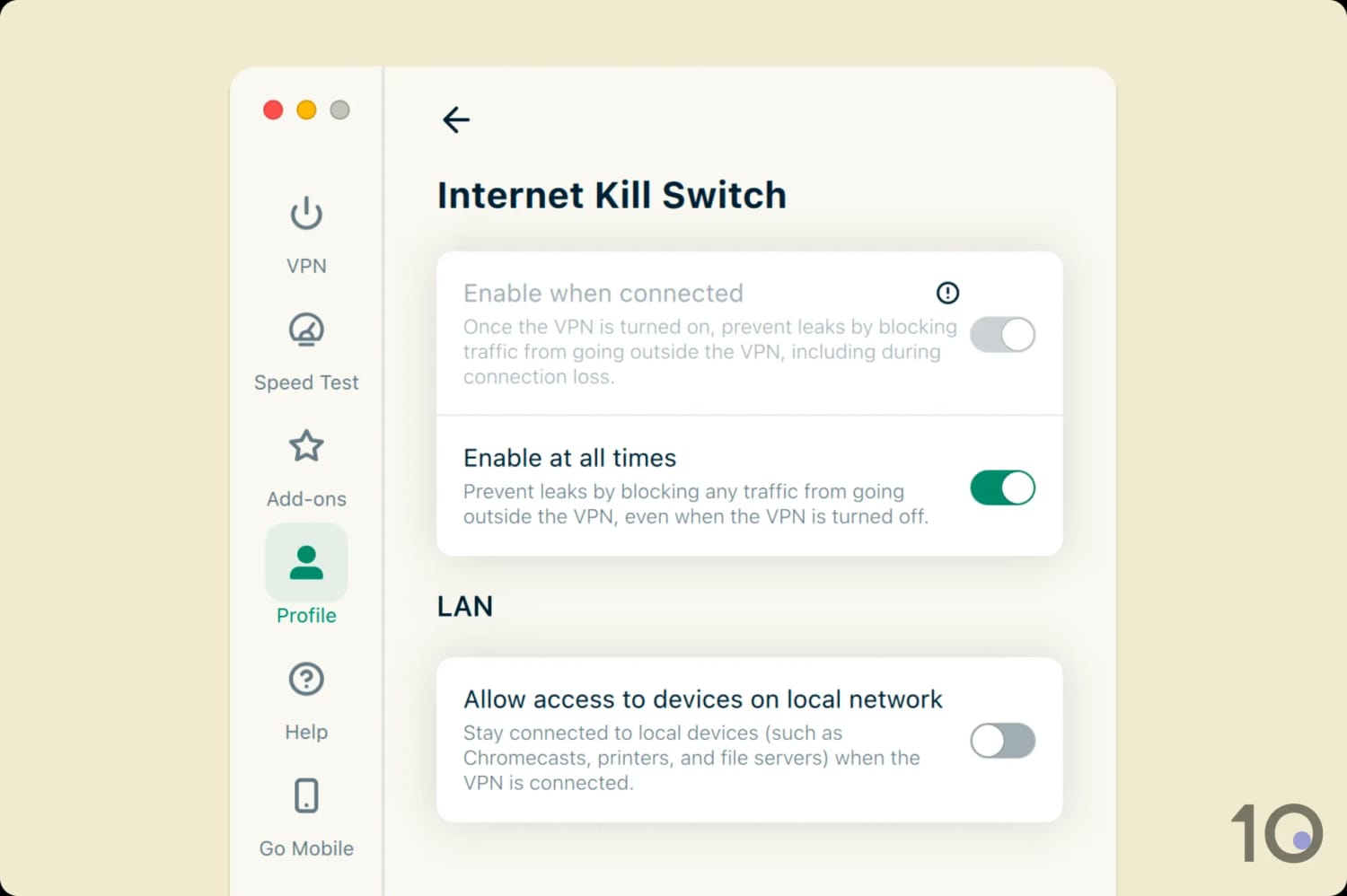
There are very few settings to enable or adjust, including the VPN kill switch, which is enabled by default.
ExpressVPN provides both a standard and a permanent kill switch.
I really liked ExpressVPN’s ShuffleIP technology, which rotates your IP address every time you connect to a different website. It all happens in the background and it’s something none of my other picks have.
ExpressVPN is also the best all-rounder VPN for everyday use, and truly excellent for streaming. In testing it unblocked 18 Netflix regions and popular services like BBC iPlayer, Disney+, HBO Max, and Prime Video.
Mullvad is the VPN I’d tell you to use if you want to be as close to a ghost as a VPN allows.
Every other pick here knows who you are, at least by email. Mullvad is built so that it simply doesn’t.
If you believe privacy shouldn’t require handing over anything remotely connected to you, like your email address, then this is the VPN to choose.
But keep in mind that Mullvad has a smaller server network, it doesn’t work with many streaming platforms, and it’s device compatibility is underwhelming.
We checked for any UK and Ireland server locations.
The Only VPN That Doesn't Need an Email
Sign up and you’re handed a random 16-digit account number. That’s your entire identity: no email, no name, no profile.
There’s no auto-renewing subscription, so Mullvad has no reason to store your card, either. You can even pay in crypto, or literally mail cash in an envelope alongside your account number.
In all my years of testing, I’ve never seen a service go out of its way to collect so little.
That design was put to the ultimate test in May 2023, when Swedish police raided Mullvad’s Gothenburg office for user data. They left with nothing, because there was nothing to find.
Built for Privacy, Not for Streaming
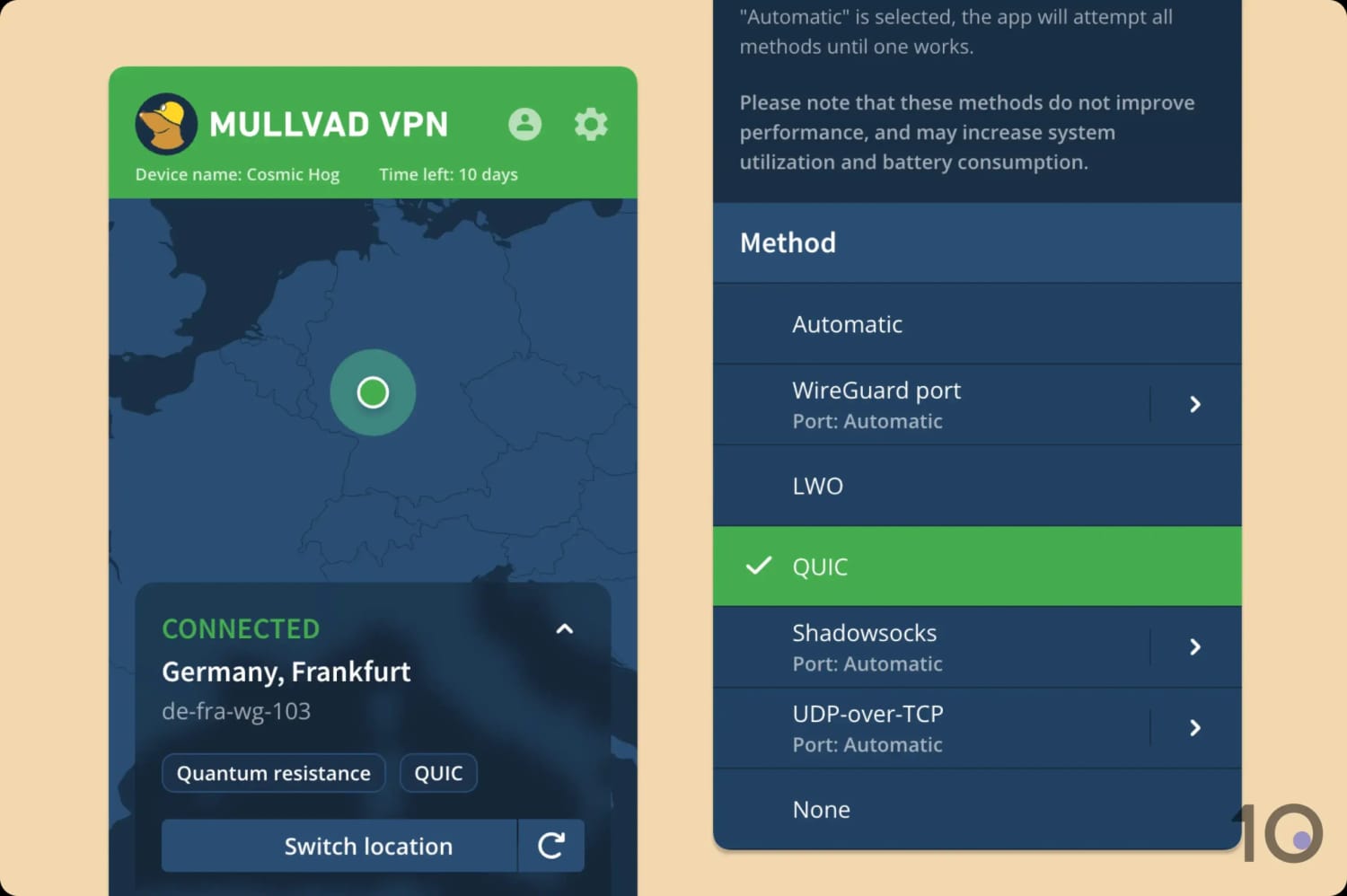
Mullvad runs on WireGuard only, and it pioneered DAITA, a feature that pads your traffic to defend against AI-based traffic analysis. I’ve seen nothing else like it at this level.
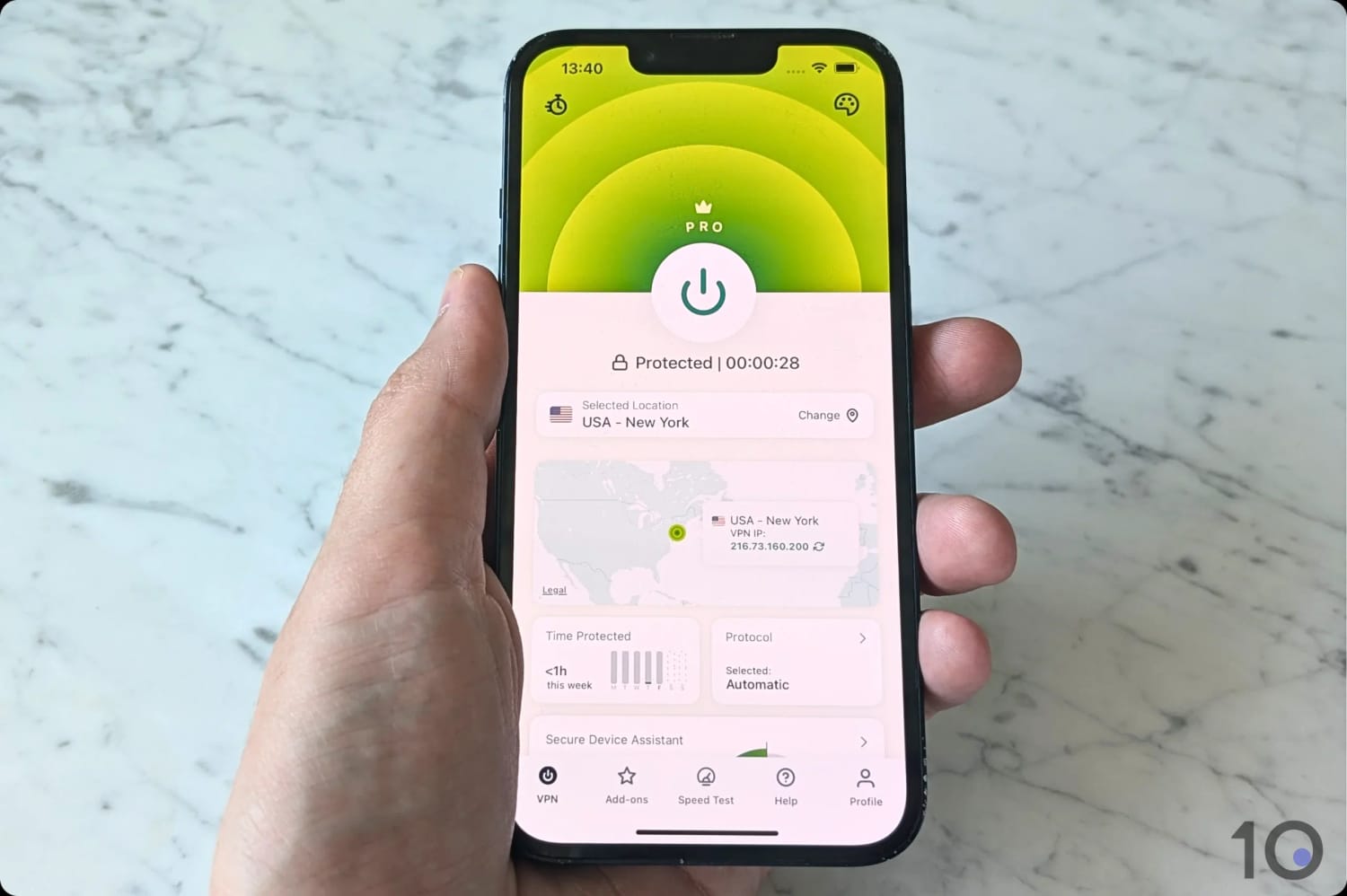
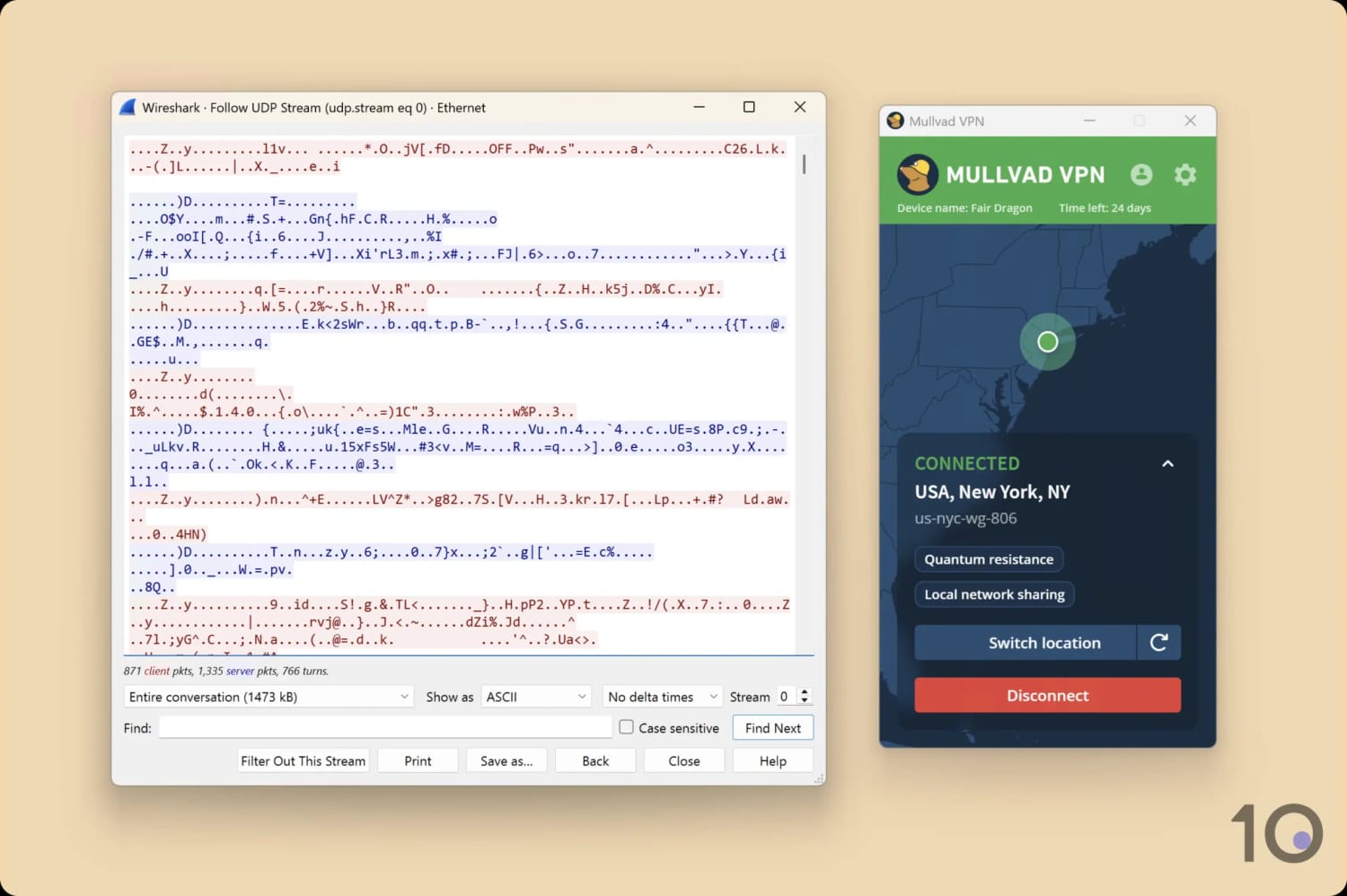
As expected, Mullvad encrypted our internet traffic.
The flat pricing fits the ethos. It’s $5.50/mo with no tiers, no discounts, and no upsells, covering up to five devices.
The problem with Mullvad is that it struggles to beat streaming geo-restrictions, and the network is small at 674 servers. It has also skipped transparency reports so far.
The company’s clear disregard for streaming is clear by the absence of apps for Fire TV and Apple TV as well as browser extensions (although there is a private browser).
Loaded with extras: multi-hop, Threat Protection, Meshnet
Retains username & connection timestamps for 15 minutes post-session
Dedicated IP is tied to your account (a privacy risk)
Pricing Plans
$14.99/mo
$5.49/mo over 12 months
$3.49/mo over 27 months
Money-Back Guarantee
30 Days
Countries with Servers
137
Servers
9,000
Logging Policy
No Identifiable Data
Jurisdiction
Panama (Privacy Haven)
Simultaneous Connections
10
Support
24/7 Live Chat
Compatible with
Windows
Mac
iOS
Android
Linux
Amazon Fire TV
Android TV
Apple TV
Router
Chrome
NordVPN is another solid option for power users who want a VPN that won’t log your activity while offering a wide range of extras.
It’s also a very fast VPN that unblocks almost as many content platforms as ExpressVPN, so you give up nothing on performance.
While it’s certainly not the most private VPN on this list, it’s highly unlikely your activity will be exposed while using NordVPN.
NordVPN encrypted our connection on our iPhone.
Court-Proven Privacy with One Caveat
Despite branding itself a “true no-logs VPN,” NordVPN holds onto your username and connection timestamps for 15 minutes after a session ends.
That’s not enough to tie your activity back to you, and it clears automatically, but a genuine zero-logs VPN doesn’t do that.
Other than that, NordVPN’s approach to privacy is sound. The service is based in Panama, outside every data-sharing alliance, runs a RAM-only network, and its privacy claims continue to be regularly confirmed through Deloitte audits.
If that wasn’t enough, in a 2024 legal case, Nord was ordered to surrender user data and could only produce payment details plus confirmation that an email was tied to an account.
Generous Security Toolkit
This is one of the reasons why you’d be tempted to choose Nord over ExpressVPN. Not many top-tier VPNs come close on features.
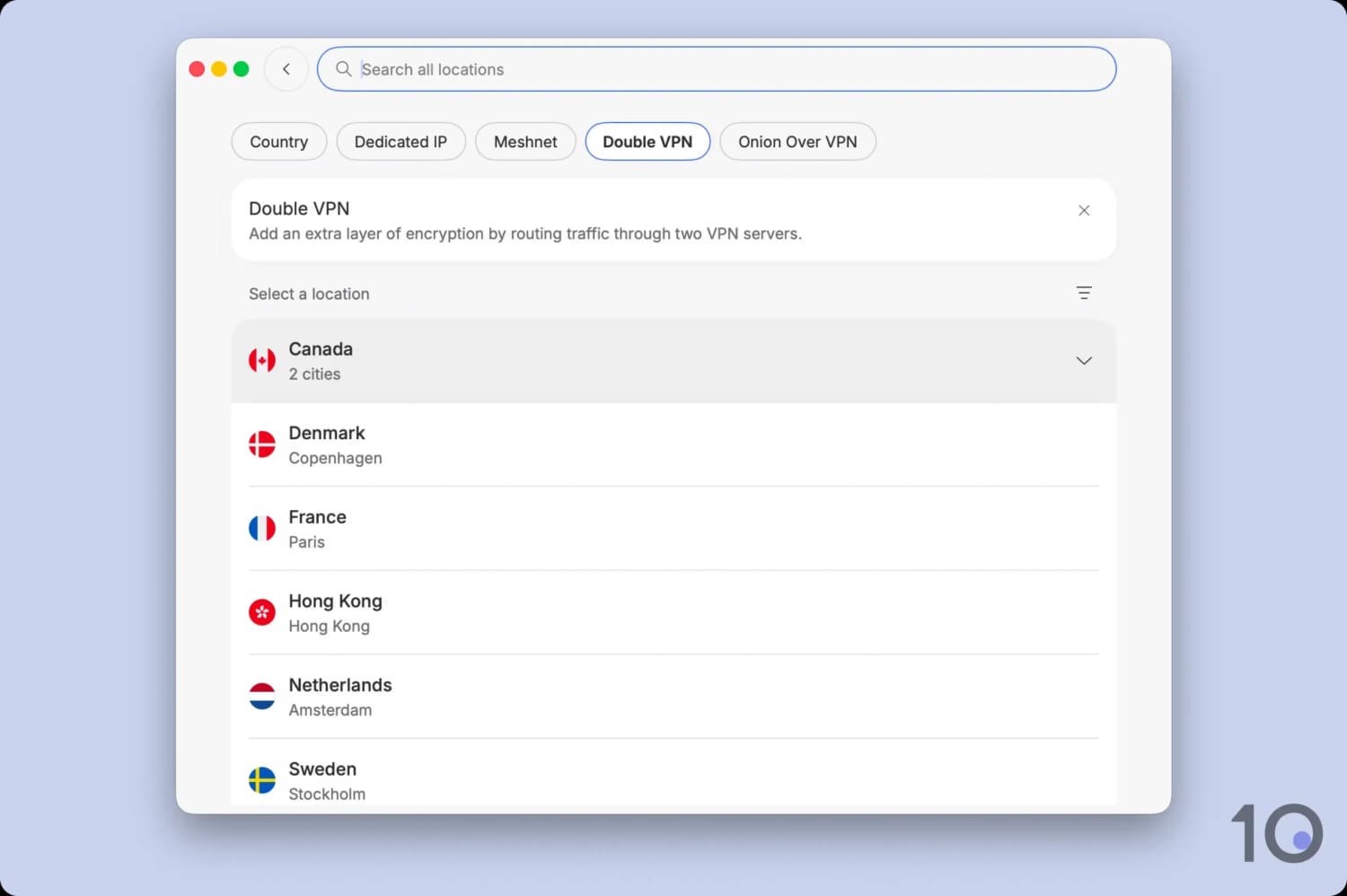
You get access to multi-hop servers, Threat Protection (a strong ad and malware blocker), and Meshnet for connecting to your own devices remotely.
NordVPN’s Double VPN (multi-hop) servers on Mac.
Its NordLynx protocol, built using WireGuard, is what makes the VPN both quick and secure (through ChaCha20 encryption).
One firm warning from my research: avoid NordVPN’s dedicated IP add-on if privacy is your priority. The company ties that static IP directly to your account, which undermines the privacy you’re paying for.
If having your own dedicated VPN IP sounds appealing, ExpressVPN’s addresses are completely anonymous.
Blocks BitTorrent traffic using deep packet inspection
Free servers can't unblock streaming services
No RAM-only servers
Money-Back Guarantee
30 Days
Countries with Servers
10
Servers
2,000
Logging Policy
No Logs
Jurisdiction
Switzerland (Privacy Haven)
Simultaneous Connections
1
Support
Email & Online Resources Only
Compatible with
Windows
Mac
iOS
Android
Linux
Amazon Fire TV
Android TV
Apple TV
Router
Chrome
Proton VPN is my pick for two very different people: anyone who wants proven privacy for free, and anyone who values open-source transparency above all.
It’s the only free VPN I trust that comes with an unlimited data allowance, and the only option in my list whose apps you can inspect line by line.
If you don’t want to pay for a VPN, or you don’t want to take anyone’s word for it, this is the one for you.
You can use Proton VPN’s iOS app to get a free US IP address.
Scientist-Run & Fully Open-Source
Proton VPN comes from Proton AG, the Swiss company founded by former CERN scientists behind Proton Mail.
Its zero-logs policy is genuine, and it’s been proven where it counts. In 2019, a Swiss court ordered Proton VPN to hand over user data but it had none to give.
It backs that with annual third-party audits, and it was the first VPN to open-source all of its apps.
Switzerland’s strong privacy laws and distance from the Eyes alliances round out one of the best jurisdictions in the business.
It’s a shame that Proton VPN doesn’t use RAM-only servers. The company argues its full-disk encryption is just as safe, and it may well be right.
But I reserve full marks for hardware that physically can’t retain data. It’s just extra peace of mind in my book.
No Server Selection & No P2P Traffic
So far so good, right? Well, unfortunately there are two significant differences between the free version and the paid version of Proton VPN.
Firstly, the free app doesn’t let you choose which server location to connect to. All you can do is connect to the fastest free server available.
That might be fine if you don’t mind which IP location you end up being assigned. But if you need an IP address from a specific country, then Proton VPN isn’t the right choice for you.
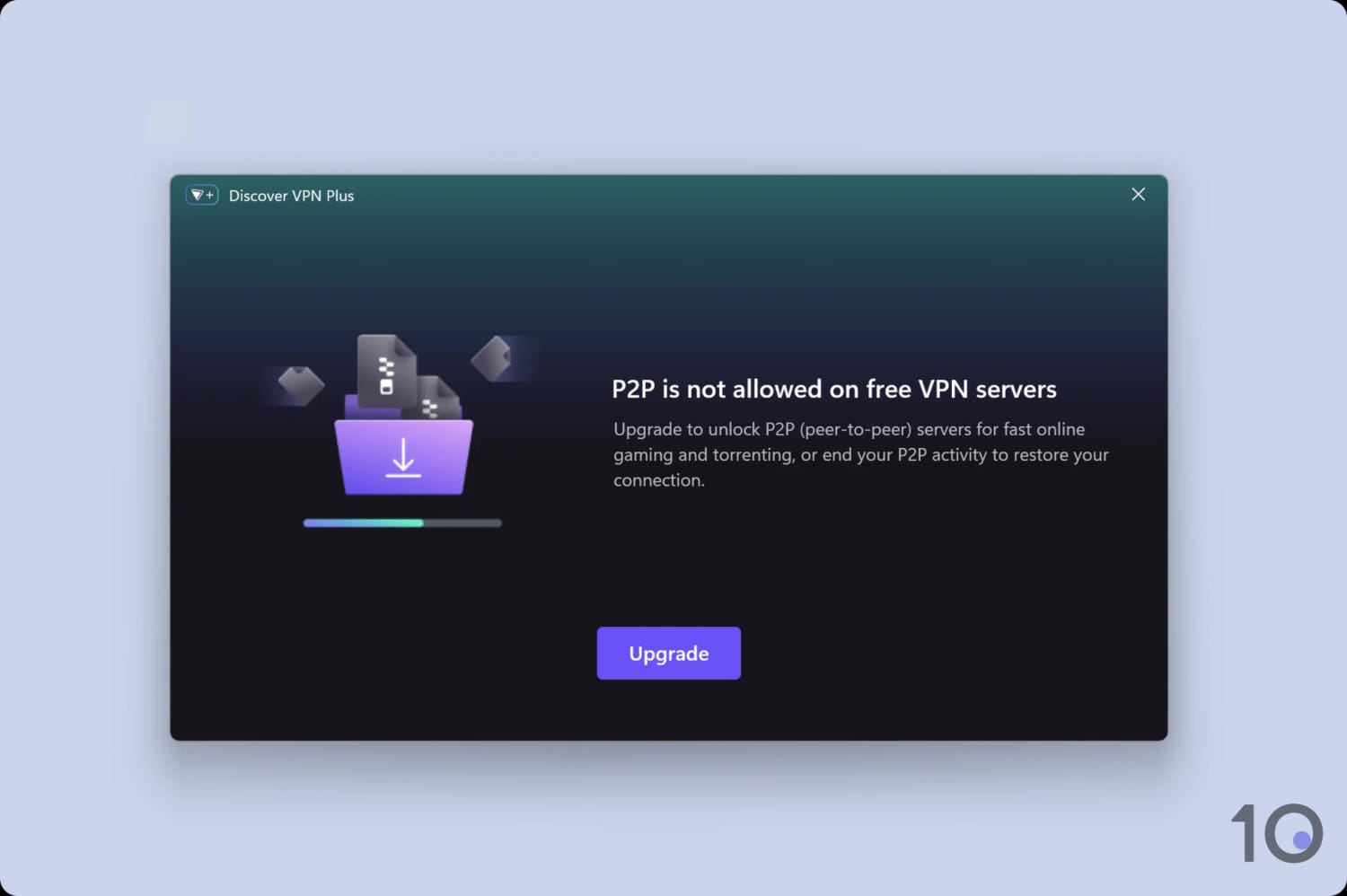
The free app also blocks BitTorrent traffic on its free servers, so you can forget about torrenting anonymously on the free tier.
Proton VPN’s free servers block all P2P connections.
All in all, for proven privacy at zero cost, nothing else comes close to Proton VPN.
My team and I identified the most trustworthy VPNs that claim to be no-logs and put them through a rigorous evaluation.
This helped us understand if they truly follow a no-logs policy, and if they are worth using.
Some data collection is unavoidable, and it doesn’t count against a VPN here. Most providers hold basic account information, such as an email address, username, password, and payment details, purely to run your subscription.
We also make allowances for aggregated or anonymized data, like total server load, which can’t be traced back to any single user. That kind of record is fine and doesn’t undermine a no-logs claim.
The table below shows how our chosen VPNs performed in each of our five key testing categories:
Here’s a more detailed explanation of our methodology and review process.
1. Real-World Proof (30%)
Test Conducted: Research the VPN’s company history and record whether there have been any server seizures, hacks, leaks, or legal data requests.
Why It’s Important: It’s the most reliable way to tell whether a VPN is truthful in its logging policy, and the security of its servers and apps.
Optimal Result: Examples where the VPN has been unable to provide data to third parties due to its no-logs policy.
2. Privacy Policy (30%)
Test Conducted: Analyzed the privacy policies of each VPN to identify what data points are being stored, for how long, and whether they’re aggregated or anonymized.
Why It’s Important: Privacy policies reveal whether a VPN actually adheres to its no-logs claim or secretly collects identifying user data.
Optimal Result: The VPN stores no identifying activity or connection logs and protects user privacy.
3. Diskless Network (20%)
Test Conducted: Looked into whether a VPN uses RAM-only (diskless) servers and, if so, how much of the network they make up. We also researched the size and reach of the network itself.
Why It’s Important: Diskless servers don’t store data persistently, meaning if they are unplugged from the power source, all data on the server is permanently deleted. This makes it almost impossible for law enforcement to seize information like they can with physical servers.
Optimal Result: A large and fully diskless VPN server network that covers most countries in the world.
4. Logging Policy Audits (10%)
Test Conducted: Researched VPNs to find out whether any logging policy audits by third parties like Cure53 or Deloitte have been conducted and analyze them thoroughly.
Why It’s Important: Audits from external parties can prove whether a VPN is actually sticking to its logging policy.
Optimal Result: The VPN conducts yearly audits to prove it isn’t logging activity or connection logs over time.
5. Jurisdiction (10%)
Test Conducted: Researched each VPN’s jurisdiction and data privacy laws of each region.
Why It’s Important: Where a VPN is incorporated will affect its legal obligation to log and store data, or even share it with governmental authorities.
Optimal Result: A privacy-friendly jurisdiction like the British Virgin Islands or a watertight no-logs policy that’s been independently audited and verified in a real-world case.
Why a No-Logs VPN Matters
A few years ago, I’d have told you a no-logs VPN was mostly about keeping advertisers and your ISP out of your business.
That’s still true. But the legal landscape has shifted hard toward surveillance, and it’s worth understanding what you’re up against.
I’ve outlined below some of the surveillance laws that have emerged in recent years that should concern you.
Surveillance & Data Selling in the US
The US is the founding member of the Five Eyes intelligence alliance, and its surveillance reach is enormous.
Under Section 702 of the Foreign Intelligence Surveillance Act (FISA), agencies can collect communications without a warrant. The program’s repeated reauthorization fights show no sign of it going away.
Then there’s the commercial side. Since Congress repealed the FCC’s broadband privacy rules in 2017, your ISP can legally collect and sell your browsing history to advertisers and data brokers.
The infrastructure itself isn’t safe, either. The Salt Typhoon breach, described in Congress as the worst telecoms hack in US history, saw state-linked hackers burrow into US carrier networks.
They accessed the systems built for lawful wiretaps, along with the call and text metadata of more than a million people.
Because of this breach, in June 2025 the FCC actually rolled back the telecom cybersecurity rules it had introduced.
In essence, whatever your ISP can see, someone else can eventually see too.
The "Snoopers' Charter" in the UK
The UK is, in my view, one of the most aggressively surveilled democracies on Earth.
The Investigatory Powers Act 2016, nicknamed the Snoopers’ Charter, requires ISPs to retain Internet Connection Records for up to 12 months.
That logs every service and website you connect to, and dozens of public bodies can access that data.
The 2024 amendments went further, allowing the government to effectively veto security improvements to the tech products you use.
Ask Apple. Using a secret Technical Capability Notice under the same act, the Home Office pressured the company to weaken its end-to-end encrypted iCloud backups.
Rather than build a backdoor, Apple pulled its Advanced Data Protection feature for UK users entirely.
Australia, India & More
Australia’s Assistance and Access Act 2018 lets authorities compel companies to help bypass encryption. That sits on top of a mandatory two-year metadata-retention regime.
India’s 2022 CERT-In directive ordered VPN providers to log user data for five years.
Rather than comply, the major names (including ExpressVPN, NordVPN, Surfshark, and Proton VPN) pulled their physical servers out of the country.
Zoom out and you get the Five, Nine, and 14 Eyes alliances: overlapping intelligence-sharing pacts that let member states pool what they collect.
It’s why so many privacy-first VPNs deliberately base themselves in Switzerland, Panama, or the British Virgin Islands instead.
How to Verify a No-Logs Claim Yourself
You don’t have to take my word for any of this. Here’s the exact hierarchy of evidence I use to judge a no-logs claim, from strongest to weakest:
A real-world test. Has a court, subpoena, or police seizure ever forced the provider to hand over data, and did it come up empty? This is the gold standard, and every VPN here has passed it.
An independent audit. A reputable firm (Deloitte, KPMG, Cure53) inspecting the servers and policy. Strong evidence, but an audit is a snapshot in time, not a permanent guarantee.
RAM-only (diskless) servers. Hardware that wipes on every reboot can’t retain long-term logs even if someone wanted it to. It’s an architectural safeguard, not a promise.
A clear privacy policy in a good jurisdiction. Read what it says it collects, and check whether its country forces data retention. On its own, this is the weakest proof, because it’s just words.
Watch out for the red flags below:
Vague phrases like “we may collect some data.”
A policy that logs your originating IP and timestamps together.
Ownership you can’t trace to a real company.
A free VPN with no clear way of making money.
If a service can’t tell you plainly what data it keeps, assume it keeps too much.
Which VPNs Keep Logs? Full Analysis
We analyzed the logging policies of all the VPNs we’ve reviewed and cross-referenced them against real-world tests.
We can reveal that many VPN services record some form of user data:
36% log connection timestamps
36% store original IP address
13% record browsing activity data
9% log server IP address
The following table lists the specific types of data these VPNs log. If you’re searching for a specific VPN, use Ctrl+F to find the provider you’re looking for.
Why Do Some VPNs Log Your Data?
If a no-logs policy is so important, why do so many VPNs collect data anyway? In my experience it comes down to four reasons:
They’re legally forced to. As covered above, laws in places like India have tried to compel logging. Reputable providers pull their servers rather than comply.
Basic maintenance. Some aggregated, anonymized data genuinely helps run a network, such as spotting an overloaded server. This is the acceptable kind.
They sell it. This is the ugly one. Plenty of “free” VPNs are free because you’re the product: they harvest your browsing data and sell it to advertisers and data brokers.
Third-party servers. A VPN that rents servers without proper vetting can leak data to whoever owns the hardware. It’s why owned, RAM-only, or carefully vetted networks matter.
FAQs
Are Free No-Logs VPNs Safe?
Most free VPNs are not safe. They typically fund themselves by collecting and selling your data, which is the opposite of what you want.
There are a few exceptions, and the one I trust the most is Proton VPN’s free tier, which uses the same genuine no-logs policy as its paid plan.
If a free VPN can’t explain how it makes money, assume you’re the product.
Can a No-Logs VPN Be Forced to Start Logging Me?
In some jurisdictions, yes. A court could order a provider to begin logging a specific user going forward.
This is the one thing an audit or a past seizure can’t rule out. It’s why jurisdiction matters, and why a pick like Mullvad, which collects no account details at all, limits how useful any future logging could be.
Does a No-Logs Policy Make Me Completely Anonymous?
No. It stops your VPN from recording your activity, but it doesn’t hide who you are on its own.
You can still be identified through your sign-up email and payment, through personal accounts you log into, or through browser fingerprinting.
Treat a no-logs VPN as the foundation, then add anonymous sign-up and good account hygiene on top.
What's Stronger Proof: Independent Audits or Real-World Tests?
A real-world test is stronger proof. An audit inspects the provider at one moment in time.
A court order, subpoena, or police raid proves the claim under real pressure, with real consequences. Every VPN in this guide has passed one, which is why I rank them where I do.
Do Live Chat Services & Payment Processors Collect Data?
VPN services may use third-party customer service providers (such as Zendesk) and payment processing companies (like Stripe or PayPal) that may collect your data.
Live chat services in particular can log your IP address, email address, and device information during a conversation.
Respectable VPN services will address this in their privacy policy, but it isn’t always easy to find.
A payment company that handles online subscription payments may also have access to your full name, address, and other billing information.
This isn’t necessarily bad, as many financial institutions that process these transactions are regulated by national financial authorities.
It’s also necessary for these companies to take this information in case you want to request a refund at the end of a money-back guarantee period.
Follow these steps to stay anonymous with VPN third parties:
Register with a fake name and throwaway email address.
Use an anonymous payment method, such as a gift card, virtual credit card, cryptocurrencies, or cash.
Only contact customer service using a PGP key or throwaway email if you have any questions.