


Top10VPN is editorially independent. Buying a VPN through our links supports our work.
The Best VPNs for YouTube TV
Follow us:
Simon Migliano
Simon Migliano is a recognized world expert in VPNs. He's tested hundreds of apps and his research has been featured on the BBC, The New York Times, and more. Read full bio
ExpressVPN is my top VPN pick for YouTube TV, changing my Playback Area on every US server I tried. PIA does the same job for less, though not from every location. Windscribe is the only free VPN I’d trust with it, up to its 10GB monthly limit.
YouTube TV shows live and on-demand content from over 100 US television networks, in addition to premium add-on packages like Sports Plus and Spanish Plus.
Which local channels you get, including Regional Sports Networks, depends on the ZIP code tied to your account. YouTube TV calls this your Home Area.
There’s a second location check, though, and that’s the one you can actually do something about. To change your YouTube TV location (your Playback Area) and watch live streams from other parts of the US, you need a VPN that spoofs your IP address AND your geolocation.
Only a handful of VPNs manage both, and fewer still do it every time. With any of the three I recommend, you’ll be able to watch out-of-market NFL games and get around blackouts on local CBS or Fox broadcasts.
🔄 Recent Updates
I’ve rewritten the location-changing instructions for every device, including what to do on iPhone and iPad, where YouTube TV is at its most stubborn.
Why Trust Top10VPN?
We’re fully independent and have been reviewing VPNs since 2016. Our ratings are based on our own testing results and are unaffected by financial incentives. Learn who we are and VPN testing methodology.
VPNs Tested
59
Total Hours of Testing
30,000+
Combined Years of Experience
50+
The Best YouTube TV VPNs Reviewed
I tested 59 VPNs with YouTube TV. Only 12 VPNs got past its geo-restrictions at all, and only three did so reliably enough to recommend.
Use the table below to compare those three VPNs based on streaming speed, US location coverage, and price.
Excellent internet speeds across its US server network
Covers more US cities than any other VPN
Immaculate apps for all popular platforms & devices
Built-in HTML5 location spoofer in browser extensions
3-day free trial available via iOS & Android
More expensive than PIA VPN
Android app lacks GPS spoofing setting
Pricing Plans
$14.99/mo
$4.99/mo over 15 months
$2.99/mo over 28 months
US States
50
US Cities
56
Simultaneous Connections
10
Support
24/7 Live Chat
Compatible with
Windows
Mac
iOS
Android
Linux
Amazon Fire TV
Android TV
Apple TV
Router
Chrome
Let me be blunt about this: nothing else I’ve tested comes close to ExpressVPN for getting into region-restricted content on YouTube TV.
Its 6,050 US servers connected almost instantly, slipped past YouTube TV’s proxy detection, changed my Playback Area and opened up broadcasts I’d been locked out of minutes earlier.
ExpressVPN is also the most versatile VPN on the market. The range of well-built apps is what makes it easy to keep watching YouTube TV as you move between devices, rather than being stuck on a laptop.
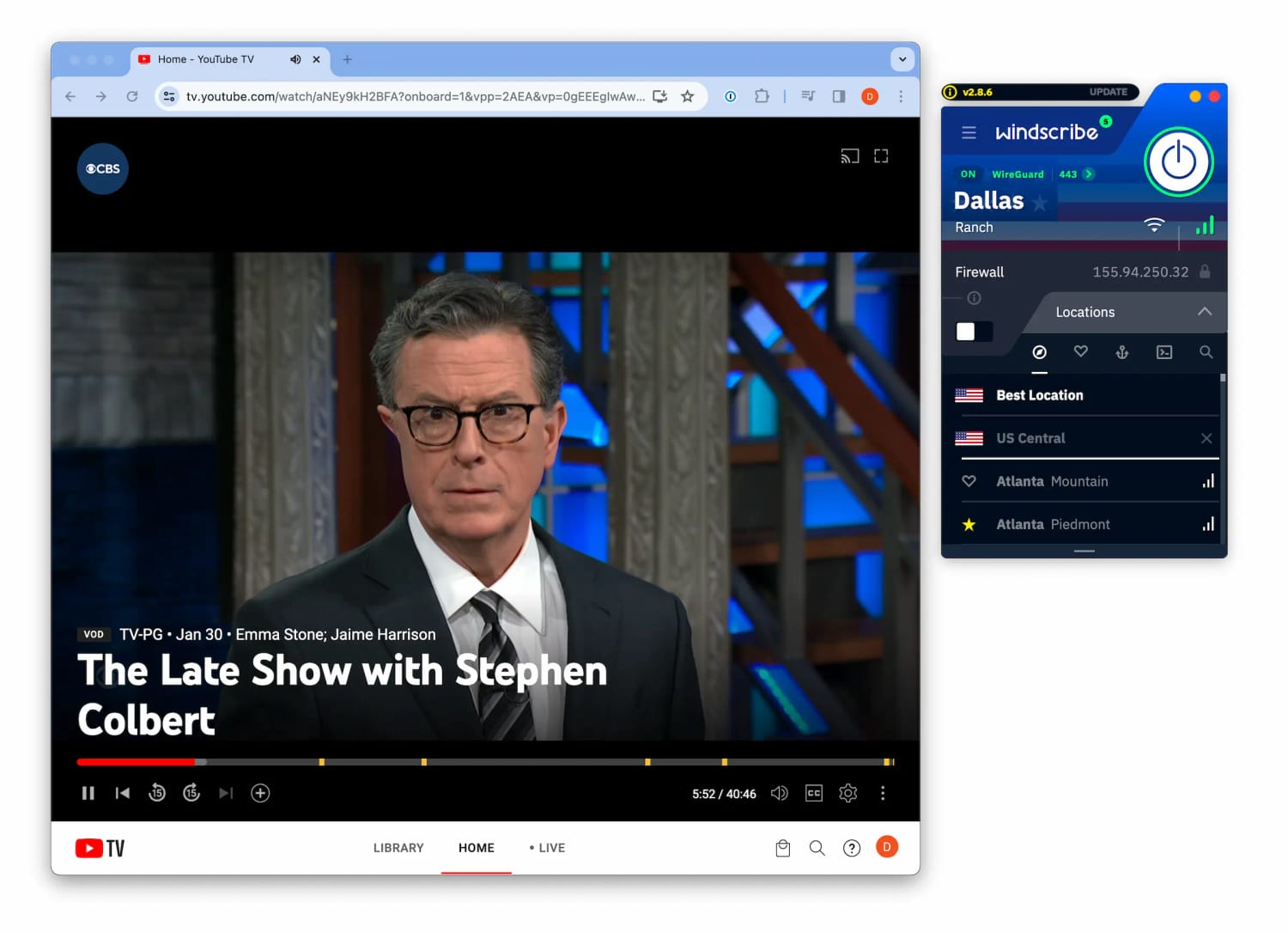
ExpressVPN changed my Playback Area without issue.
Unblocks Region-restricted Broadcasts Across the US
ExpressVPN is at its most effective on PC and Mac, where the browser extension does the heavy lifting.
Switching my IP address to one of its 56 US cities and spoofing my location took two clicks in the extension: no menu-hunting, no separate app to install.
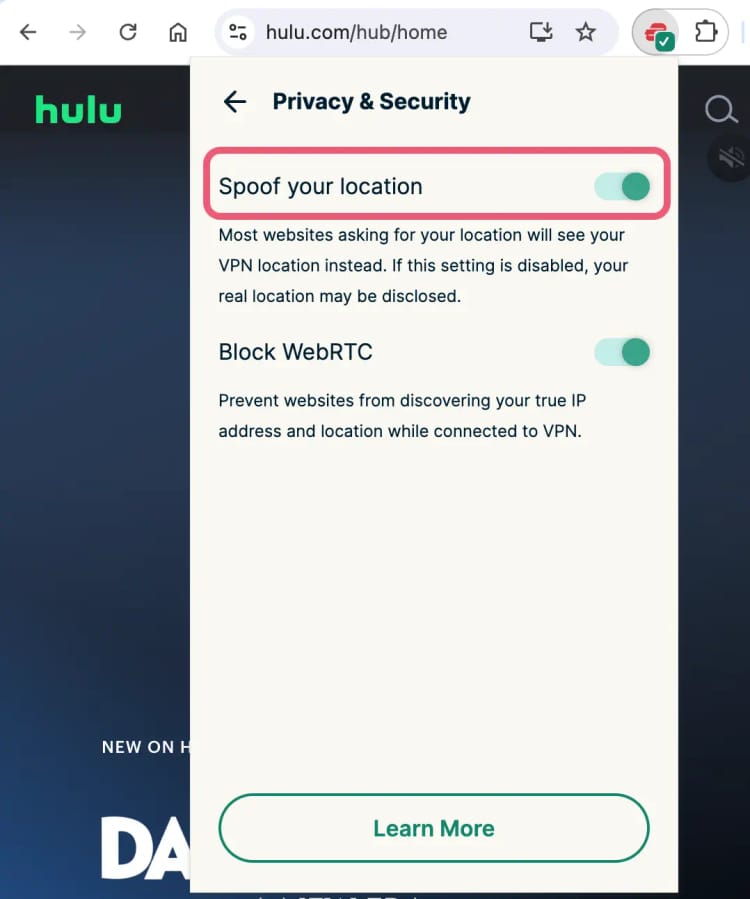
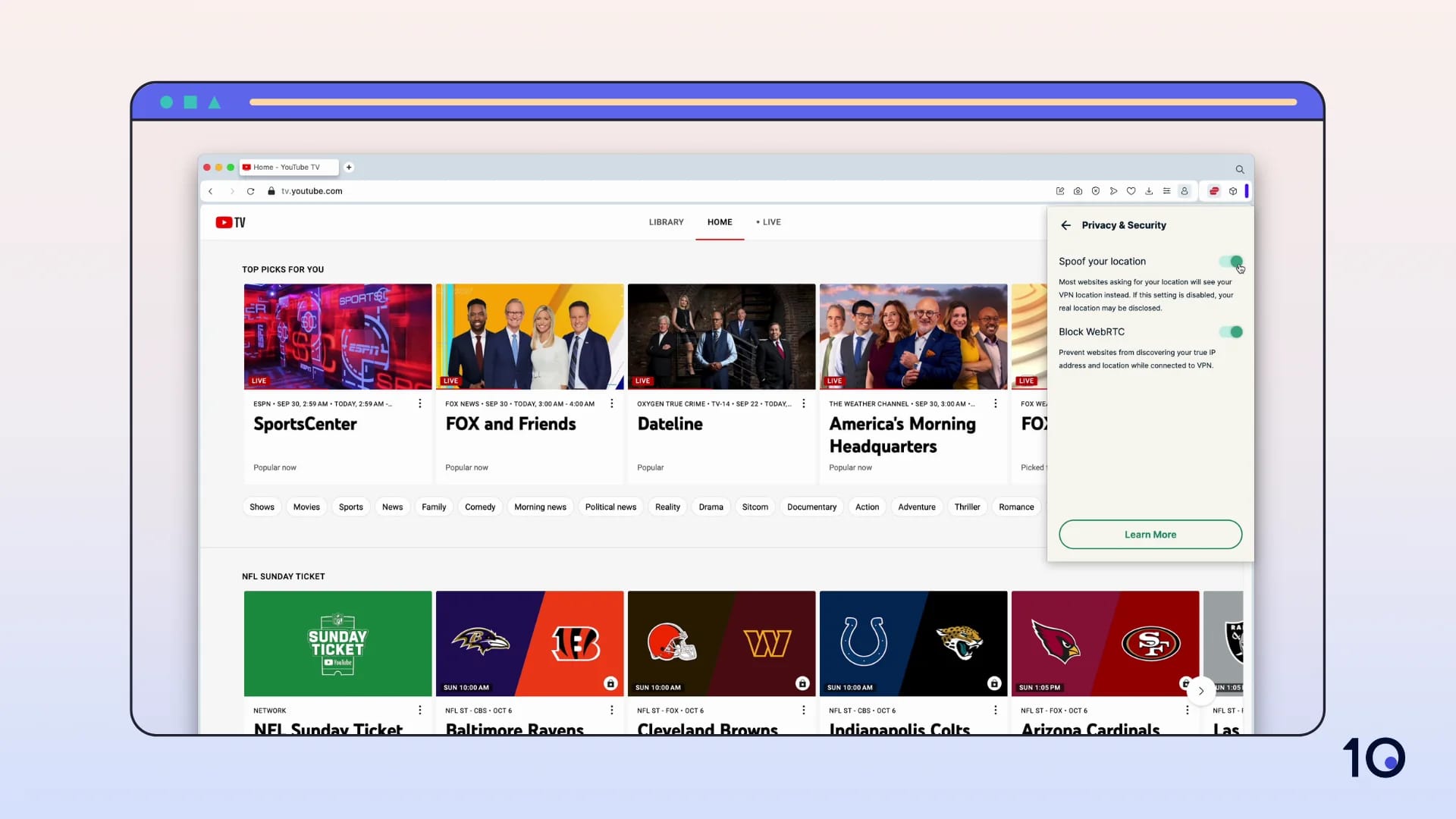
ExpressVPN’s browser extension conceals your HTML5 location.
YouTube TV uses HTML5 geolocation to work out where you physically are. Turn on ExpressVPN’s Spoof your location setting and the browser reports a location that matches the VPN server you’re connected to.
I tested this across a dozen US VPN locations and it worked every single time. I streamed region-locked content without a hitch, including NBA, NHL, and MLB blackout games.
Across hundreds of attempts, YouTube TV never once blocked my ExpressVPN connection.
ExpressVPN’s speeds have barely wavered in all the years we’ve been testing it, and that consistency is the part that matters for live TV.
Servers connect on the first attempt, and the hit to your connection stays among the smallest we’ve recorded.
Connecting to Los Angeles from New York, we measured a download speed drop of only 10%. On shorter hops, like Washington DC, it fell to a barely-there 2%.
Even at peak evening traffic my speeds held steady and the picture never softened, a benefit of the thousands of servers ExpressVPN runs across the United States.
There are plenty of reasons ExpressVPN is my favorite VPN for streaming, and this is one of the biggest.
Intuitive & Eye-pleasing Apps for All Devices
ExpressVPN’s spread of user-friendly apps for practically every device is unmatched.
The design carries across computers, smartphones, and streaming sticks, so nothing feels unfamiliar when you switch.
It’s also the only VPN with its own router app, which is how you get a US IP onto the hardware that can’t run VPN software itself: Roku sticks, game consoles, older smart TVs.
That app lives on ExpressVPN’s own Aircove router, so it’s a hardware purchase rather than something bundled in. It’s also possible, of course, to configure ExpressVPN manually on a compatible third-party router.
Connecting takes seconds in any of the apps: open it, open the server list, pick your city. That really is it.
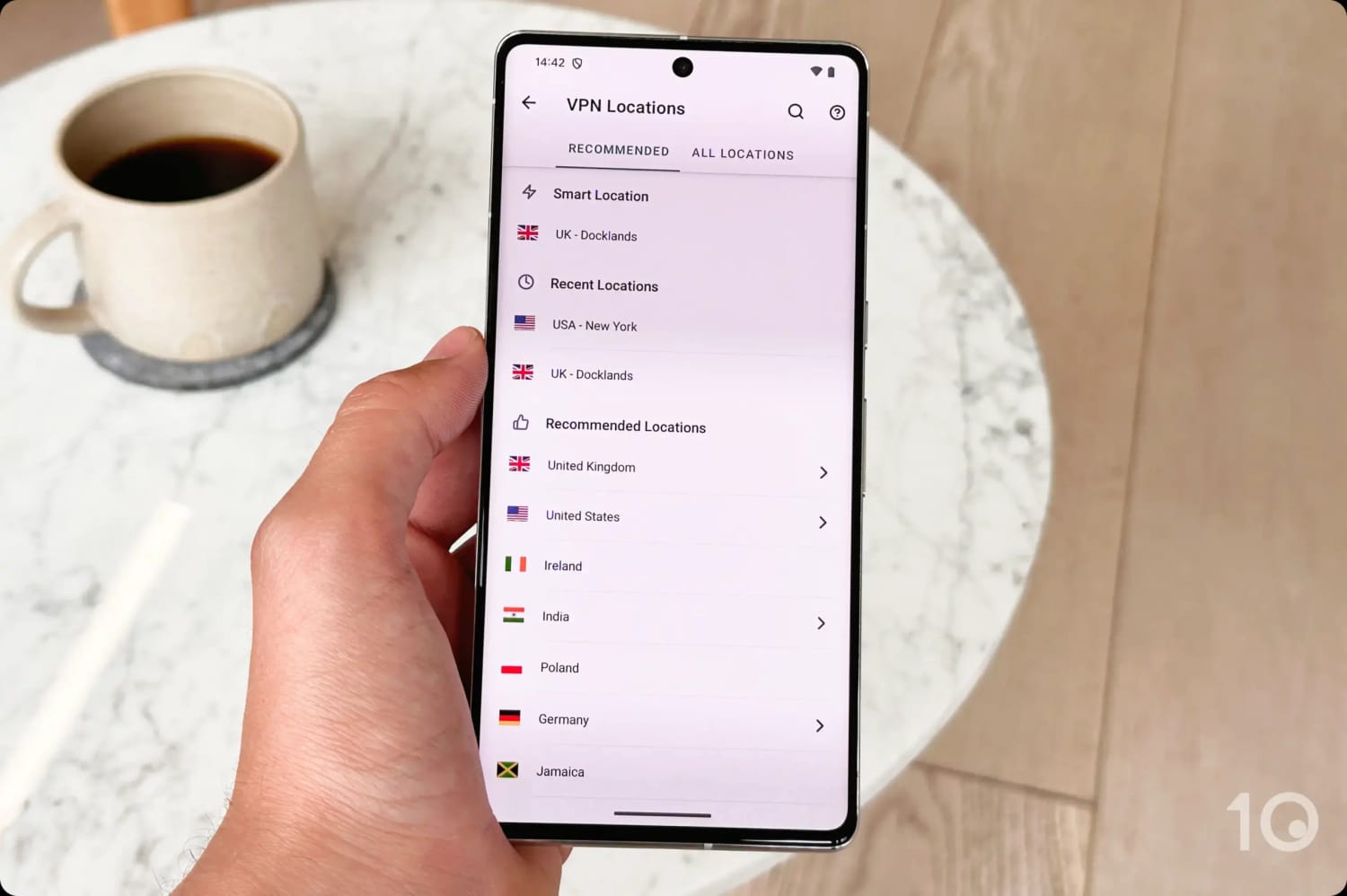
ExpressVPN’s server list on Android.
The one drawback is the price. At $2.99/mo over 28 months, it’s more expensive than Private Internet Access.
I think the streaming performance justifies it, but if you’re counting the pennies, PIA will cost you less.
Like ExpressVPN, its US network covers every state. The differences are that you get fewer individual cities to choose from, and not every location I tried unblocked the service.
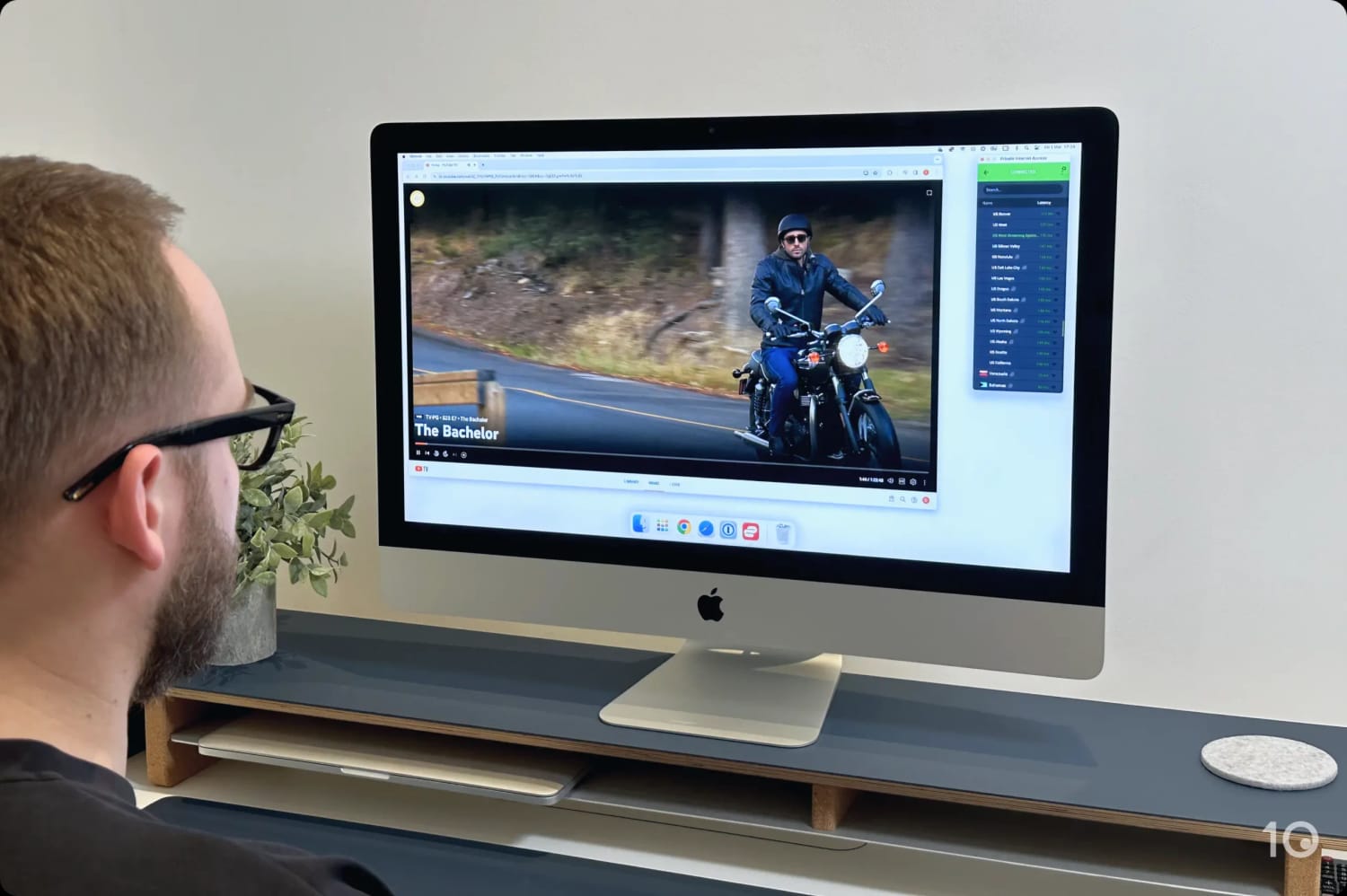
I watched regional content on YouTube TV using PIA.
Great Server Coverage in the US
Having servers in all 50 US states is exactly what you want for working around Home Area and Playback Area restrictions.
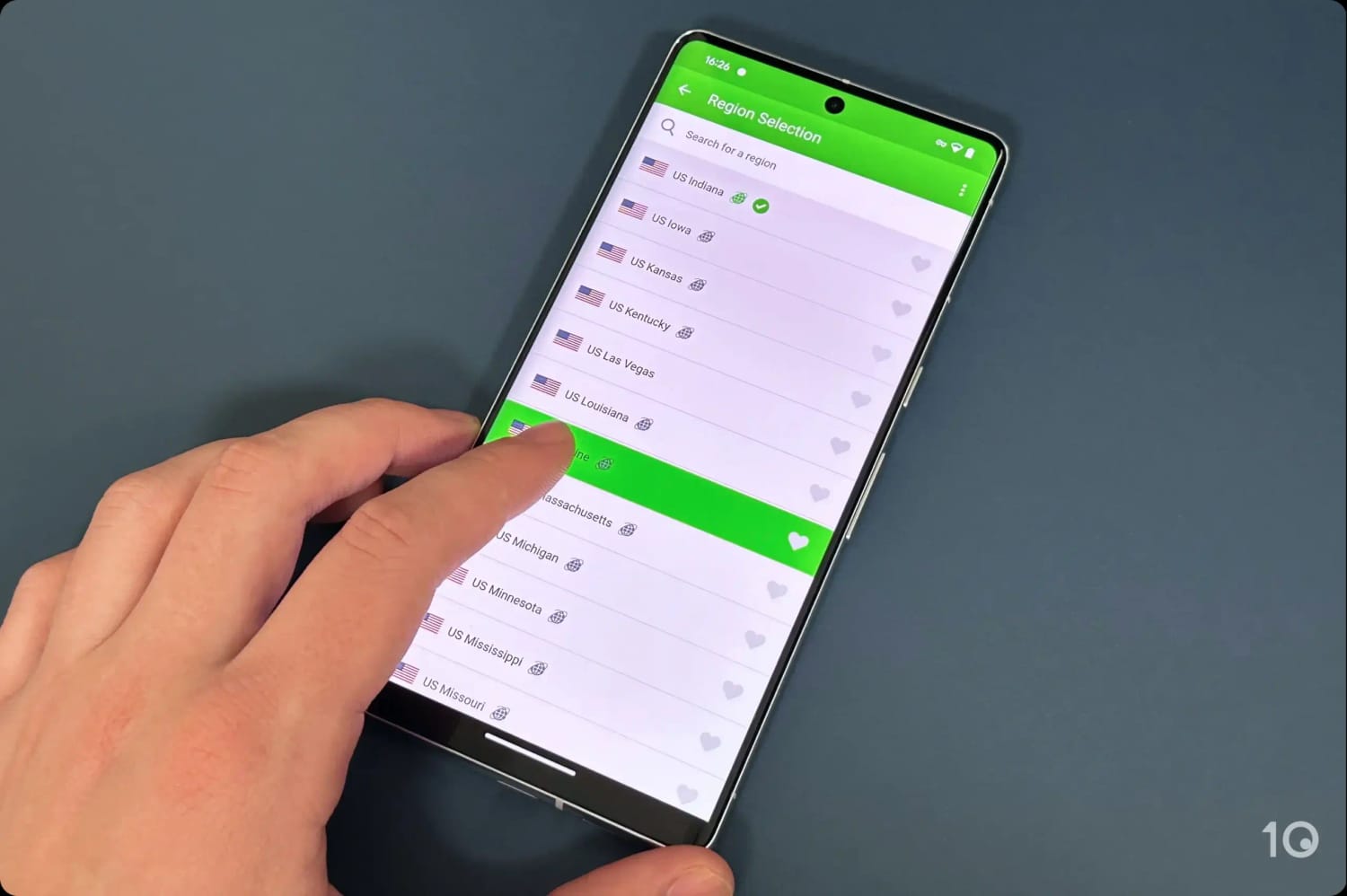
PIA VPN’s US servers in the Android app.
PIA gives you 50 city locations in total. In my testing, though, not every one of them worked with YouTube TV, and there’s no way to tell which is which until you connect.
That inconsistency is the single reason PIA sits second rather than first.
Similar Speeds to ExpressVPN but Cheaper
PIA’s internet speeds, especially within the US, are comparable to ExpressVPN’s and you won’t notice much difference in terms of video quality.
When I connected to different locations across the US, both near and far away, the VPN delivered excellent results on a variety of devices.
Connecting to nearby states, my internet speed slowed down by only 4%, and only 10% connecting from one coast to another.
Good Device Compatibility but Faulty Smart DNS
PIA has tidy, straightforward apps for all the mainstream platforms, including streaming devices like Fire TV Stick and Apple TV. They take a little more getting used to than ExpressVPN’s, but not much.
There are also no device limits, so you can run it on as many devices as you like at once.
That being said, PIA can’t match ExpressVPN for reach: its Smart DNS proxy is unreliable and it hasn’t built a router of its own.
Those two gaps are what make PIA awkward on game consoles and Roku devices.
Its real draw is the subscription price. At $2.19/mo over 26 months, it’s the pick if you’re happy to trade a little consistency for a lower bill.
Completely free to use without payment details needed
Every free US server location unblocks YouTube TV
Good speeds across short & long distances
HTML5 & GPS spoofing settings
10GB monthly bandwidth cap
Fluctuating speeds affect streaming quality
No human live chat support
No Smart DNS solution
Data Cap
10GB per month
US States
7
US Cities
8
Simultaneous Connections
Unlimited
Support
Email & Online Resources Only
Compatible with
Windows
Mac
iOS
Android
Linux
Amazon Fire TV
Android TV
Apple TV
Router
Chrome
My tests left no doubt that Windscribe is the best free VPN for YouTube TV. Its free US servers, spread across eight cities, breezed past the platform’s Playback Area restrictions.
The catch is the 10GB monthly data cap, which won’t get you far into a season of live sport.
Windscribe’s free US servers unblocked YouTube TV.
Fast Free Servers in Eight US Cities
Windscribe offers more free US locations than any other free VPN. That let me change our Playback Area to pick up local channels in Atlanta, Dallas, Los Angeles, Miami, and New York, among others.
Every free US server got past YouTube TV’s geo-blocks quickly, which is genuinely rare among free VPNs I’d consider safe to use. Close competitors like PrivadoVPN couldn’t manage it.
Speeds did dip now and then, though, and when they did I could see it in the stream, the picture lost its sharpness for a few seconds before settling.
Free GPS & HTML5 Location Spoofing
Windscribe’s free plan includes apps for all the mainstream platforms, streaming devices like Fire TV Stick, Android TV, and Apple TV included.
More unusually, its free Android app and browser extensions both come with location-spoofing settings, and both worked with YouTube TV.
Switching on GPS Spoofing in the Android app, or Location Warp in the browser extension, matched my reported location to the VPN server I was connected to. That’s all YouTube TV needed to let me update my Playback Area.
No other free VPN offers location spoofing at this level, which is why Windscribe is so far ahead of the rest for YouTube TV.
And with no limit on simultaneous connections, you can install it on as many devices as you want, though YouTube TV itself caps you at three streams at a time.
YouTube TV uses two separate location signals to decide what you can watch:
Home Area: set by the ZIP code you enter at sign-up. It determines which local channels and regional sports networks your account is entitled to. YouTube TV limits how often you can change it.
Current Playback Area: re-checked every time you stream, based on your IP address and, on mobile and smart TVs, your device’s location services. This is what stops you from watching out-of-market games or local broadcasts when you travel.
To watch channels from other parts of the US, you want to change your Current Playback Area, not your Home Area. There’s no cap on how often you can update it.
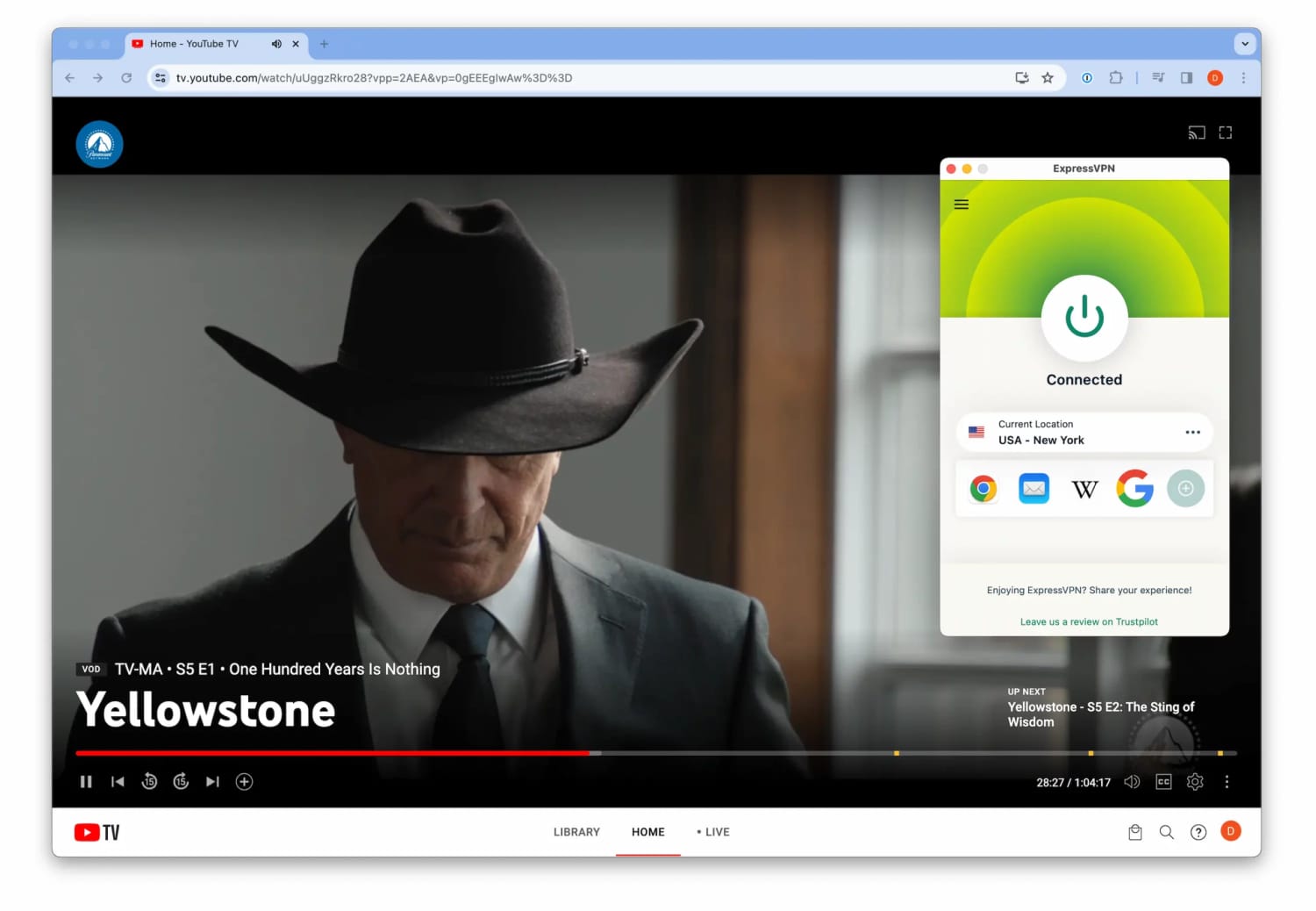
Watch the video below to see how we easily changed our Playback Area using ExpressVPN’s browser extension:
The steps differ by device, because YouTube TV checks your location differently on each one:
How YouTube TV detects your location on each device, and what you need to change it.
Device
Location Method YouTube TV Uses
What You Need
Difficulty
PC & Mac (browser)
IP address + HTML5 geolocation
VPN with a browser extension that spoofs HTML5 location
Easy
Android phone or tablet
IP address + GPS
VPN with built-in GPS spoofing, or a separate mock-location app
Moderate
Apple TV, Android TV & Fire TV
IP address + device location data
Native VPN app, plus Playback Area updated on another device
Moderate
Roku, Chromecast & older Smart TVs
IP address + device location data
Router-level VPN, travel router, or screen mirroring from a laptop
Difficult
iPhone or iPad
IP address + GPS
No working method. Update on a Mac or PC and play there instead
Not possible
Follow the instructions for your device below.
PC & Mac
The easiest way to change your Playback Area is on the YouTube TV website, using a VPN browser extension.
How to Change Your YouTube TV Location on PC & Mac
Get a VPN with HTML5 location spoofing. The extension needs to override your browser’s location data, not just your IP. ExpressVPN is the most reliable option.
Add the VPN browser extension to your Chrome, Firefox, or Edge and sign in.
Turn on the location-spoofing setting. In ExpressVPN, it’s called Spoof your location; other extensions use similar wording.
Connect to a VPN server in the city you want to appear in: To pick up KNBC, for example, connect to Los Angeles.
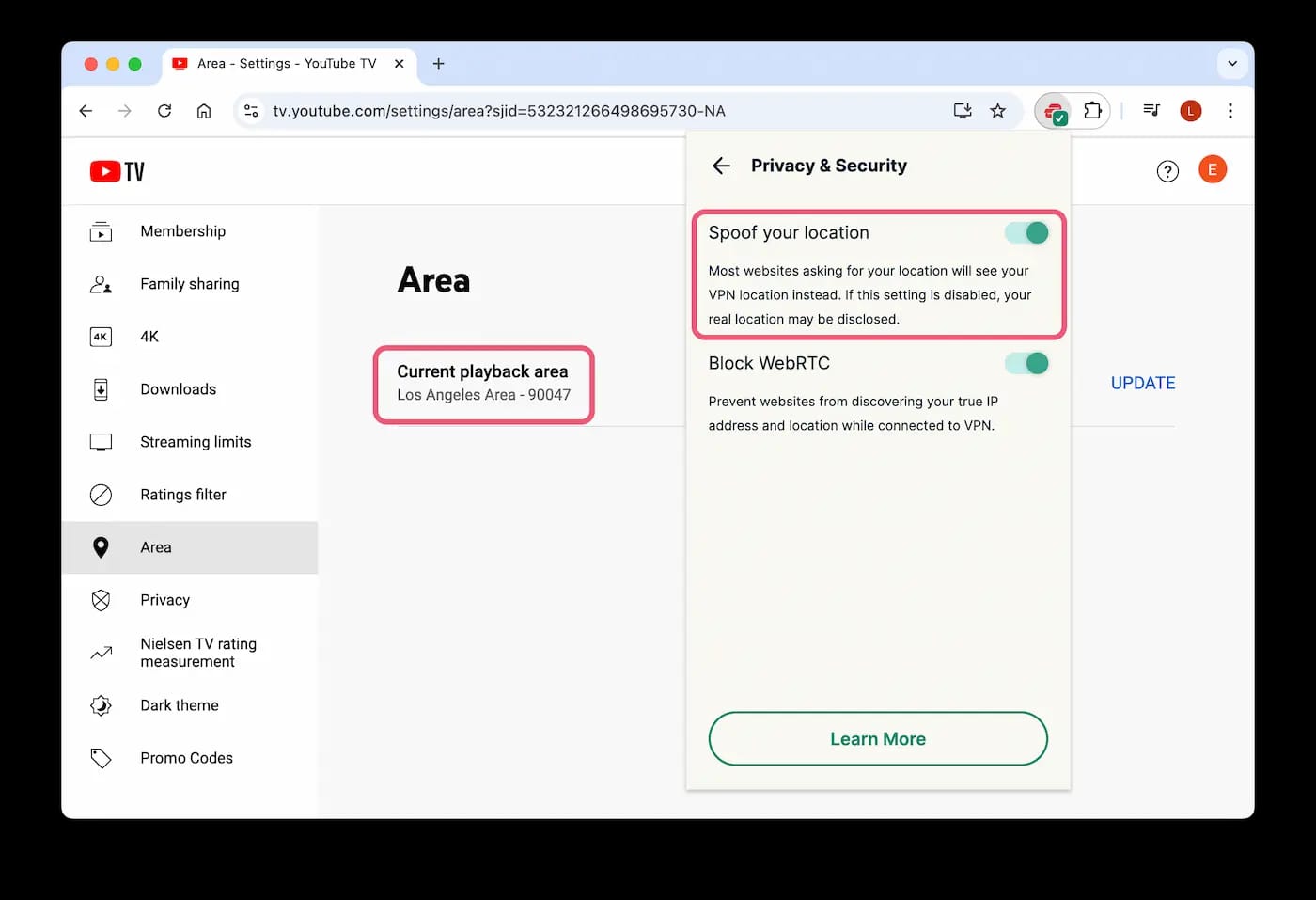
Update your Playback Area. Open your YouTube TV settings, select ‘Area’ and click ‘UPDATE’ next to ‘Current playback area.’
Start streaming. Local channels and out-of-market broadcasts for the new region should load straight away.
If nothing loads, or you get a VPN/Proxy detected error message, skip to my troubleshooting fixes.
ExpressVPN’s browser extension spoofed my geolocation on YouTube TV.
Android Devices
The YouTube TV Android app reads your GPS location as well as your IP address, so a VPN on its own won’t be enough. You need to spoof your coordinates too.
There are two ways to do it:
Use a VPN with built-in GPS spoofing: Windscribe’s GPS Spoofing setting worked best in my tests.
Run a separate mock-location app alongside your VPN: This means enabling Developer Options on your phone, and it’s fiddlier.
Windscribe is a very good Android VPN that handled YouTube TV without complaint, so it’s the one I’d start with.
How to Change Your YouTube TV Location on Android
Install a VPN with GPS spoofing.Windscribe is my top choice for YouTube TV on Android.
Connect to a VPN in your chosen US city.
Turn on GPS-spoofing in Windscribe’s app settings via ‘Privacy’ > ‘Location Warp’.
Update your Playback Area. Open the YouTube TV Android app, select ‘Area’ and tap ‘UPDATE’ next to ‘Current playback area’.
Verify the change. YouTube TV may ask you to confirm it at https://tv.youtube.com/verify.
Start streaming. Your local content should now match your new Playback Area.
iPhone & iPad
iOS is where this gets difficult, and here’s why: the YouTube TV app requires Location Services to be switched on so it can read your device’s GPS directly.
Turn Location Services off, either for YouTube TV or for the whole device, and the app refuses to play anything until you turn them back on.
iOS also blocks third-party apps from changing your GPS coordinates at the system level.
Since I’d strongly discourage you from jailbreaking your iPhone, there simply isn’t a way to change your Playback Area from the YouTube TV iOS app.
What you can do instead is update your Playback Area on a Mac or PC using the browser method above, then watch on that computer. Your iPhone will keep reporting its real location whatever you do.
Apple TV, Android TV & Fire TV
Changing your Playback Area on Apple TV, Android TV and Fire TV is more complicated since these devices combine your IP address with their own device location data.
By far the simplest fix is to use an HDMI cable from your laptop to the TV. It’s old-fashioned, but I have a lot of time for how reliably it works.
If that’s not an option, follow the steps below.
How to Change Your YouTube TV Location on Your TV
All three of my picks have apps for Apple TV, Android TV and Firestick, which makes this far less painful than it is on devices with no VPN support at all.
Install your chosen VPN on your PC, Mac or Android device, and make sure its location-spoofing setting is on.
Install the same VPN on your smart TV or streaming device.
Connect both apps to the same US server location.
Sign in to YouTube TV on your computer or Android device.
Update your current Playback Area. In the ‘Area’ setting, select ‘UPDATE’ next to ‘Current playback area.’
Verify the change. YouTube TV may ask you to confirm it at https://tv.youtube.com/verify.
Open YouTube TV on your TV or streaming device. Your updated Playback Area, and its local content, should be waiting.
Roku
Roku doesn’t support VPN apps, so the only way to route it through a VPN is at router level.
That also means you can’t change your Playback Area from the Roku app itself, you’ll need a second device for that step.
It isn’t a straightforward process, not least because very few VPNs sell a dedicated VPN router. ExpressVPN is the exception, which is why I’d pair it with your computer here.
How to Change Your YouTube TV Location on Roku
Set up a VPN on your router, or use ExpressVPN’s Aircove router.
Connect it to the US server location you want.
On a PC, Mac, or Android device, update your YouTube TV Playback Area.
Open YouTube TV on your Roku. It should now show the local channels for your new region.
Nine times out of ten, a VPN fails with YouTube TV because its US IP addresses have already been blacklisted.
Only a handful of VPNs get past those blocks at all, and plenty of the ones that do manage it only intermittently.
If your VPN should be working and isn’t, the fixes below are where I’d start.
1. Use a Different VPN
The most common cause is simply that your VPN doesn’t have the resources to keep up. YouTube TV blocked its US IP addresses, and the provider hasn’t refreshed them since.
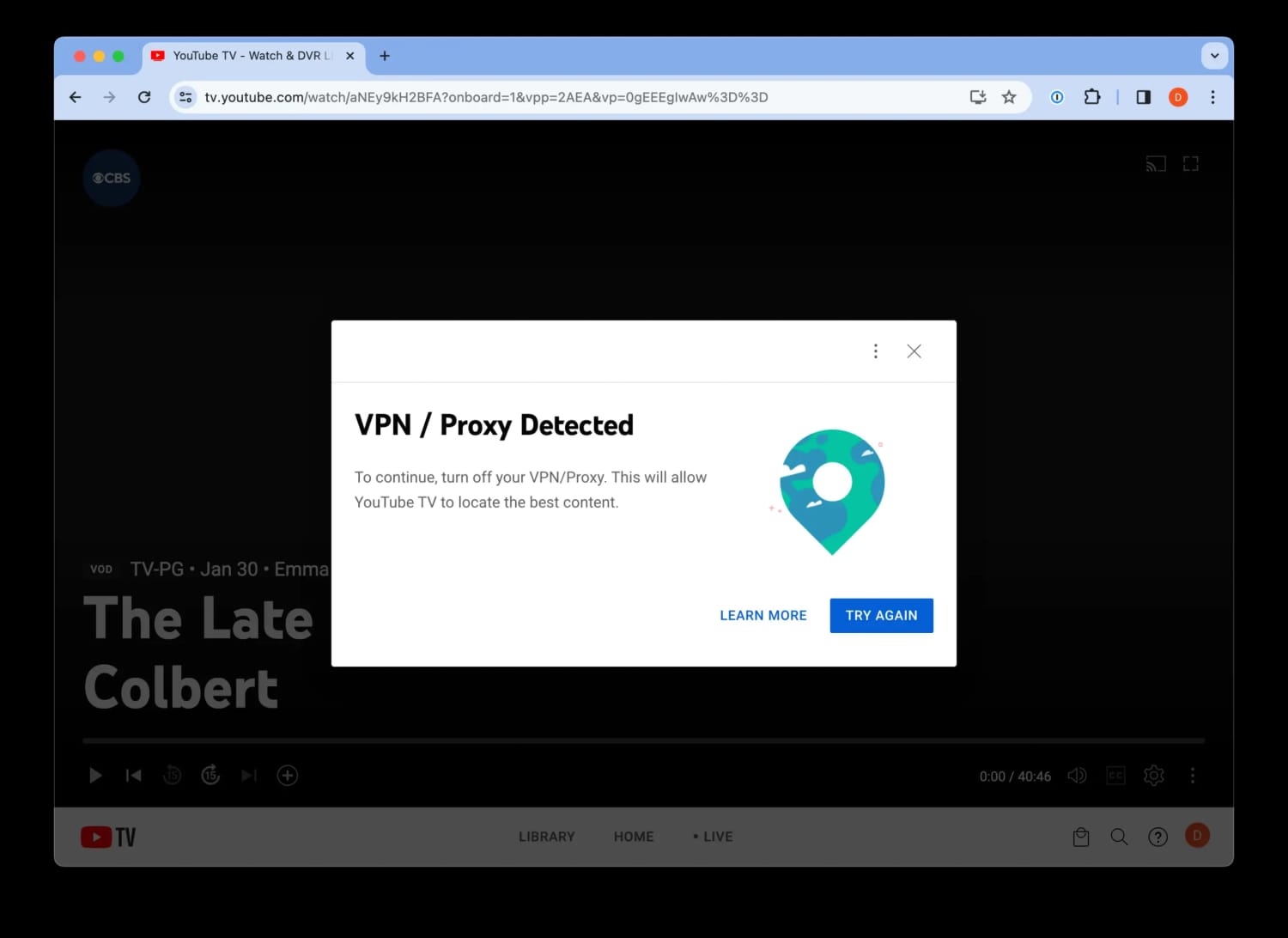
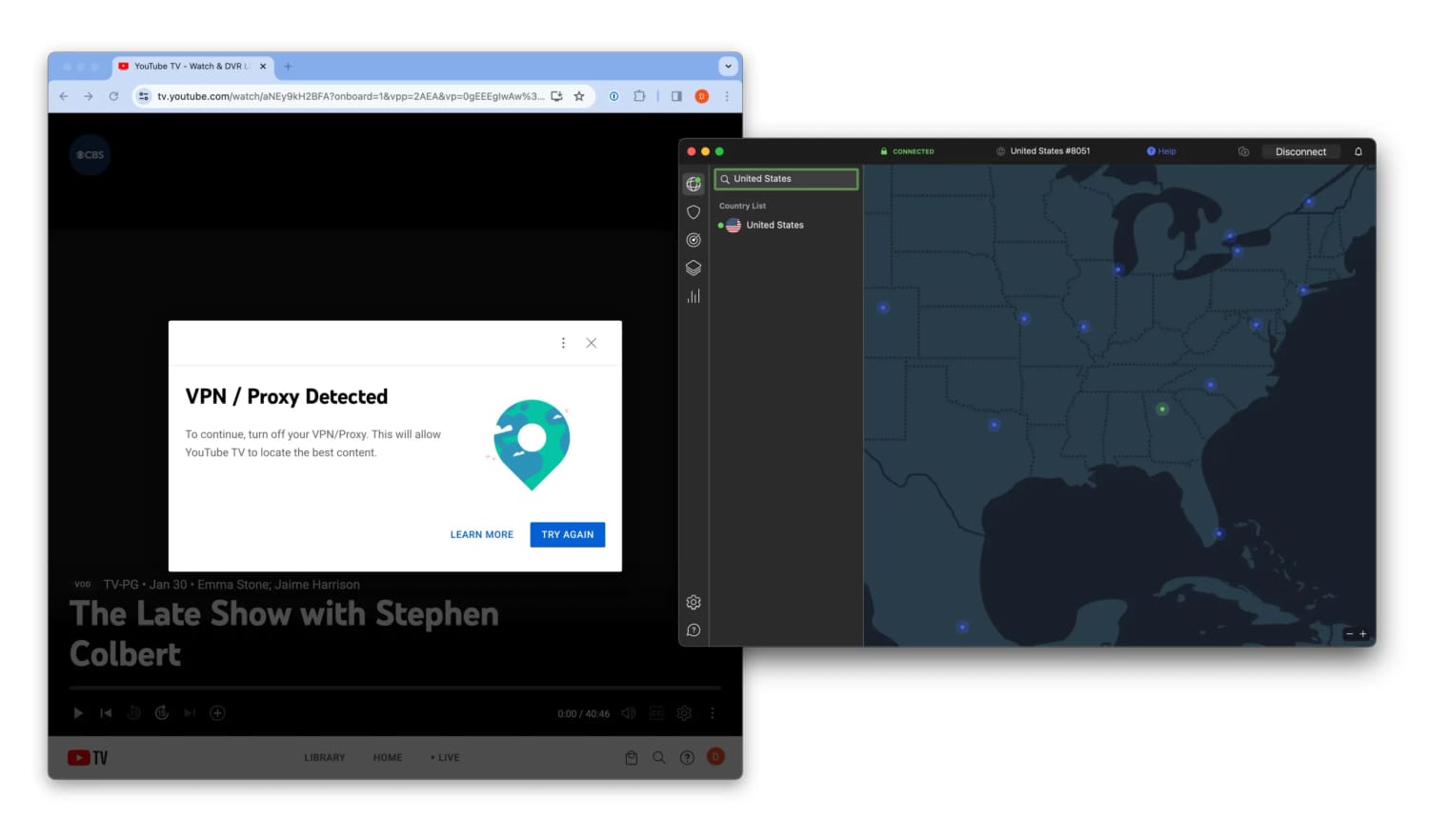
You’ll know because of this error message:
Most VPNs for YouTube TV are detected and don’t bypass geo-restrictions.
Our regular tests keep pointing the same way: ExpressVPN is the most consistent at beating YouTube TV VPN blocks.
If you’d rather not pay, and you can live with the limits I covered earlier, Windscribe‘s free US servers are currently working.
2. Connect to a Different US VPN Location
Sometimes the fix is as simple as switching to another US server.
One server’s IP addresses may have been identified and banned while another’s have gone unnoticed.
With Private Internet Access, for instance, I found its West Coast server was blocked while its East Coast server let me straight in.
Here are the servers that worked in my latest round of tests:
VPN Service
Server
CyberGhost
YouTube TV dedicated server
Surfshark
LA Server
Private Internet Access
East Coast server
Windscribe
New York server
Hide.me
US Streaming dedicated server
I wouldn’t work through the entire server list hunting for a winner, though. If the first few switches don’t help, the rest almost certainly won’t either.
3. Clear Your Browser Cookies & Cache
Websites store location data in cookies and other files in your browser’s cache. That stored information can keep flagging your real location, particularly if you’ve been changing your Home Area.
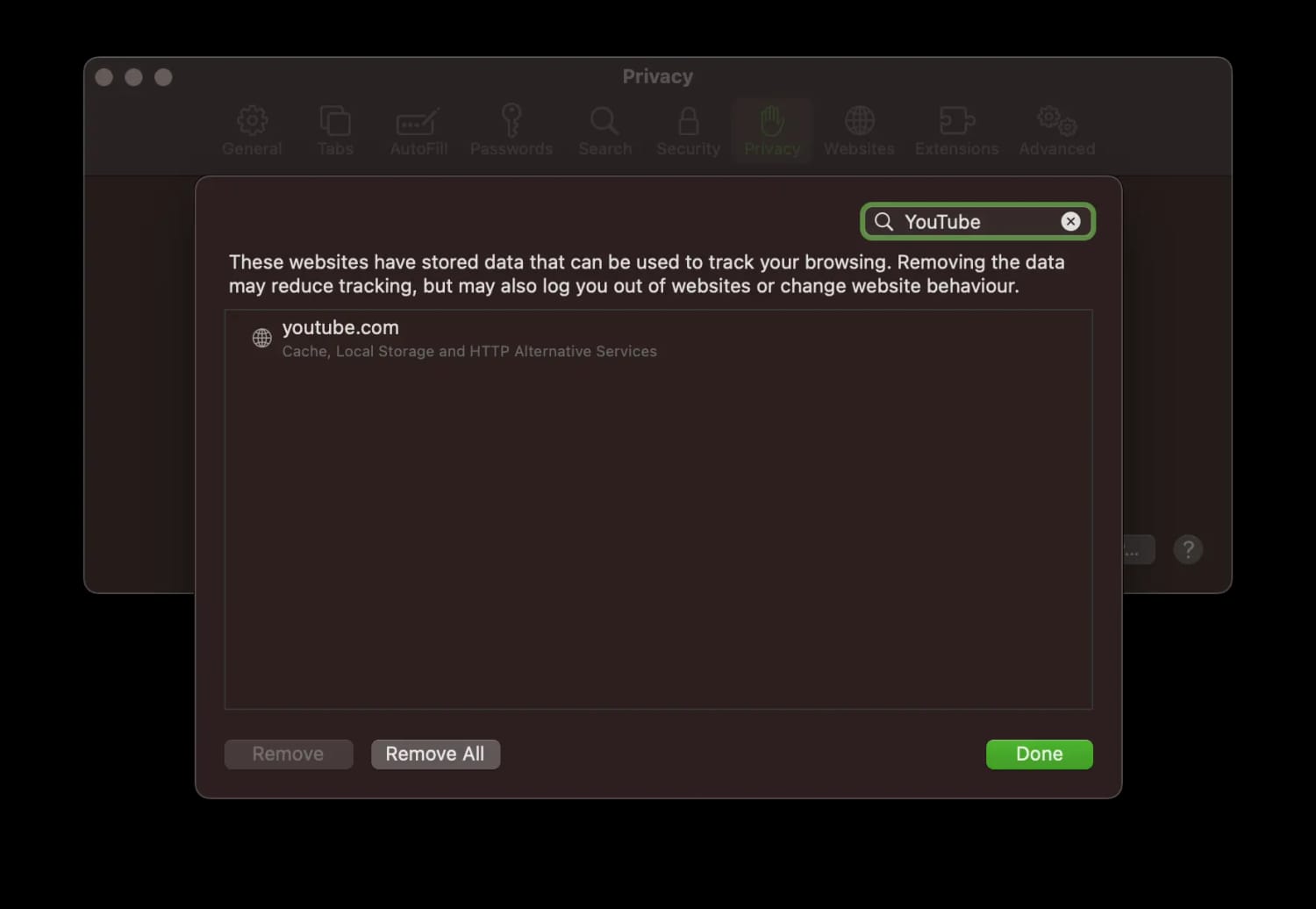
Clearing your cache and cookies removes the stored location data.
Deleting your cookies and cache data clears it out.
4. Check for IP Address or DNS Leaks
It’s possible that your real location is being detected by YouTube TV as a result of a data leak. This happens when your DNS requests or real IP address falls outside the encrypted VPN connection.
This usually happens when using free or inferior VPNs. Quality VPNs have leak protection built into their service, or at the least an option to enable leak protection.
If it is leaking, contact the provider’s support team and see if they can fix it. If they can’t, it’s time to change VPN.
YouTube TV VPN Testing Methodology
My recommendations come from hands-on use across every YouTube TV-compatible platform, scored against a methodology my testing team built specifically for this service.
YouTube TV is unusually hard to fool, because it doesn’t stop at your IP address. That’s why unblocking ability carries half the weight on its own.
The rest of the score covers how far the US server network reaches, how much speed you lose, and how many of your devices the VPN actually supports.
Here’s how my chosen VPNs performed in these specific tests:
Here’s how each of those is tested, and what it contributes to a VPN’s overall YouTube TV rating.
1. Unblocks YouTube TV (50%)
Test Conducted: I signed in to YouTube TV and played one live local broadcast and one on-demand title on a spread of each VPN’s US city servers, on desktop and mobile, connecting fresh each time rather than reusing a session.
Why It’s Important: Everything else is academic if the stream never loads. And a VPN that only works from one city is no help when the game you want is being broadcast somewhere else.
Optimal Result: Access on the first attempt from every US location tested, at full resolution, with no proxy-detected error.
2. US Servers (20%)
Test Conducted: I worked through each app’s US server list, counting states and individual cities, then connected to a sample from each coast and the interior to confirm the locations resolved where they claimed to.
Why It’s Important: Your Playback Area is only as precise as the server list behind it. More cities means more local channels within reach and more IP addresses to fall back on when one gets flagged. Bigger networks also spread users out, which keeps congestion down at peak times.
Optimal Result: Coverage of all 50 states with city-level choice, including the major broadcast markets.
3. Speed (20%)
Test Conducted: My testing team measures download speed loss on each VPN’s US servers over a fixed line, using the provider’s default protocol, at several points across the day. We then average the results by connection distance.
Why It’s Important: YouTube TV streams live sport in high definition, so speed is what decides whether the picture holds through a fourth quarter or dissolves into compression and buffering.
Optimal Result: Under 10% speed loss within the US, and under 20% connecting in from another continent.
4. Device Compatibility (10%)
Test Conducted: I installed every app the VPN publishes and used each one to change my Playback Area, then set up its Smart DNS proxy and router options on the hardware YouTube TV runs on that can’t take VPN software.
Why It’s Important: YouTube TV runs on a lot of different hardware, and most people watch it on a television rather than a laptop. A VPN that stops at desktop leaves the big screen out.
Optimal Result: Working apps for desktop, mobile, Android TV, Fire TV Stick and Apple TV, plus a dependable Smart DNS proxy and a router option to cover Roku and game consoles.
Data Cap Penalty
I apply a penalty to a VPN’s final YouTube TV rating based on its data cap:
Unlimited bandwidth: No deduction to the overall rating
10GB per month: -20% to the overall rating
500MB per day: -25% to the overall rating
5GB per month: -30% to the overall rating
1GB or 2GB per month: -35% to the overall rating
200MB per day: -40% to the overall rating
500MB per month: -50% to the overall rating
VPNs We Don't Recommend for YouTube TV
Plenty of well-known VPNs don’t work with YouTube TV. Of the 59 I tested, only 12 worked at all.
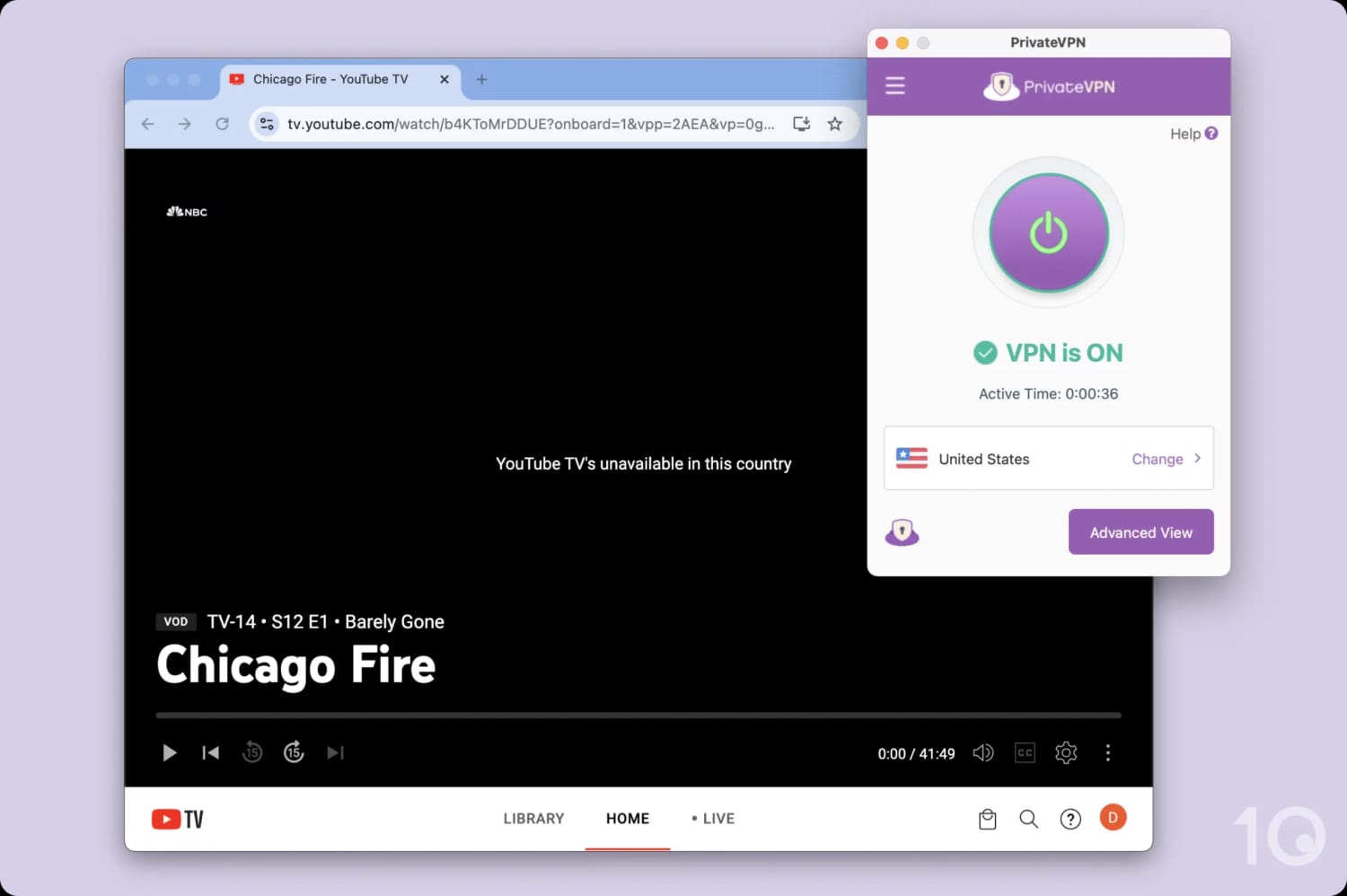
Many top VPNs, including PrivateVPN, are blocked by YouTube TV.
Here are some popular VPNs that didn’t make my list:
NordVPN
NordVPN is a strong streaming VPN in general, but my tests show it can’t get into YouTube TV consistently. That alone is enough for me to leave it out.
NordVPN was detected by YouTube TV in my streaming tests.
PrivadoVPN (Free Version)
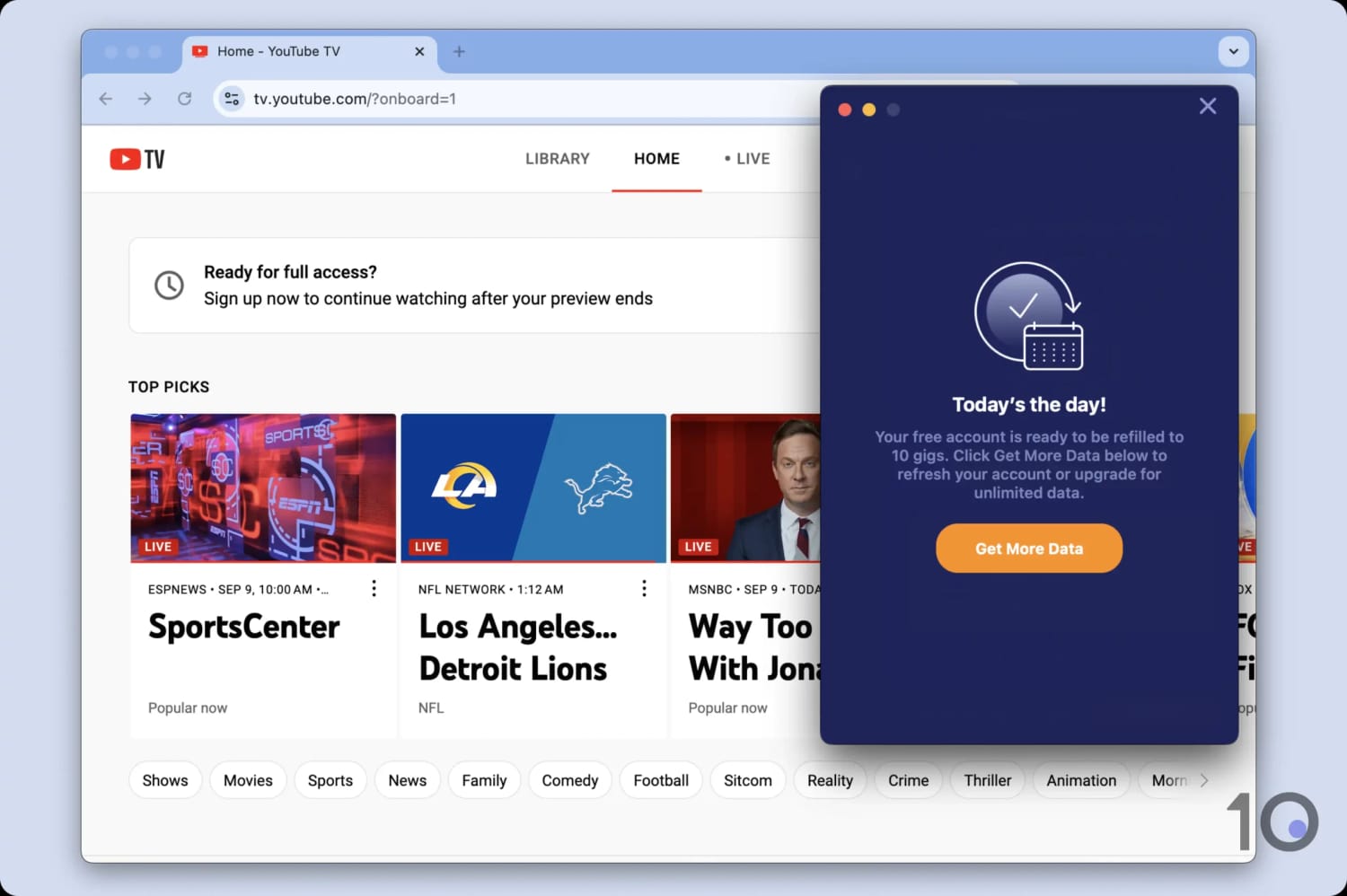
PrivadoVPN is one of my favorite free VPNs for streaming, just not with YouTube TV. It was detected and blocked repeatedly in testing, and having to renew the free data allowance by hand every time it ran out wore thin quickly.
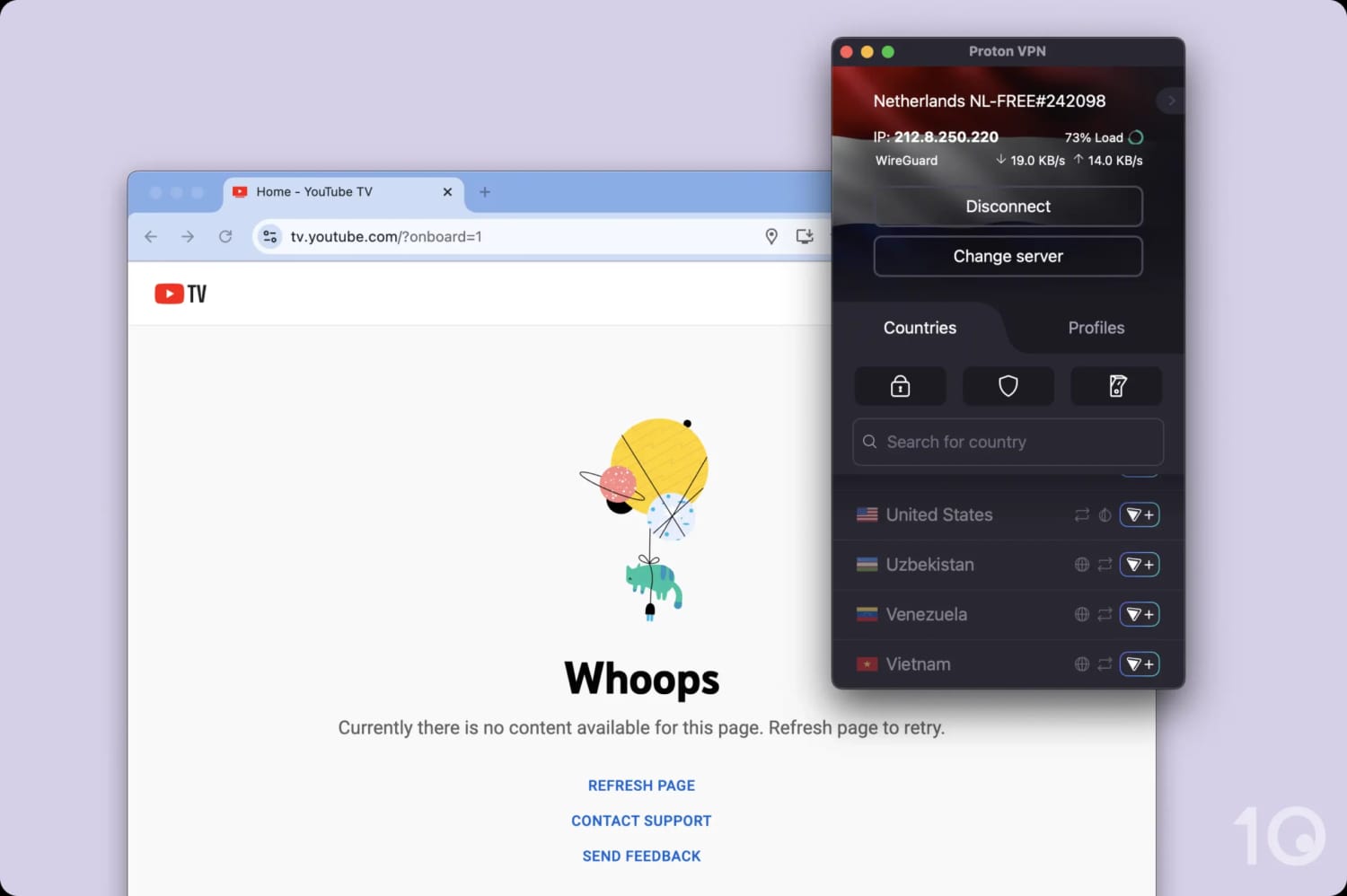
Privado VPN’s free app was repeatedly blocked by YouTube TV.
Proton VPN (Free Version)
Proton VPN’s free plan used to be my top free pick for YouTube TV. It no longer lets free users choose their own server location, US locations included, which makes it effectively useless here.
PProton VPN’s free app doesn’t let you choose a server, so it’s no use for YouTube TV.
FAQs
Why Does YouTube TV Have Location Restrictions?
There are two reasons: to honor the broadcasting rights agreed between regional broadcasters and content owners, and to stop subscribers sharing an account around the country.
On top of the location rules covered in this guide, YouTube TV caps every account at three simultaneous streams and six family members, all of whom have to share the same Home Area.
How Does YouTube TV Block VPNs?
There are a couple of methods at work.
The first is an automated detection system that monitors the IP addresses connecting to the service in real time and cross-references them against known lists of VPN server addresses. A match gets blocked, and you’ll see the “VPN/Proxy detected” message.
The second is volume. If hundreds of people stream from the same IP address at once, YouTube TV flags it as shared infrastructure and blacklists it.
How Often Can I Change My Current Playback Area?
As often as you like. Unlike your Home Area, there’s no limit on it.
Every change is verified, though. YouTube TV checks your IP address alongside your GPS or HTML5 geolocation each time you update it.
That means your VPN and its location-spoofing setting need to be running for every single switch.
Can I Watch the NFL on YouTube TV without Sunday Ticket?
Yes, you can watch blacked-out NFL games on YouTube TV without NFL Sunday Ticket.
Change your location with a VPN and a location spoofer, and you can pick up any Sunday game you want through a live regional broadcast in another state.