



Top10VPN is editorially independent. Buying a VPN through our links supports our work.
The Best Free VPN for Firestick
Follow us:
Simon Migliano
Simon Migliano is a recognized world expert in VPNs. He's tested hundreds of apps and his research has been featured on the BBC, The New York Times, and more. Read full bio
Proton VPN is the best free VPN for Firestick, with unlimited data, fast speeds, and strong privacy. If you want to unblock streaming apps, I’d recommend a paid VPN like IPVanish instead. Here’s all my top picks after fully testing each app on my Fire TV Stick.
The best VPN apps for Fire TV Stick prevent internet service providers (ISPs) and copyright trolls from snooping on your streaming activity.
A VPN on your Firestick hides your IP address so you can watch Kodi and IPTV streams anonymously. The best VPNs even unblock geo-restricted TV shows, movies, and live sports streams.
While you may not want to pay for a VPN, sadly many free VPNs are unsafe, leaking or even selling your personal data. Most free VPNs don’t even have a dedicated app for Firestick, making them awkward to use on a TV.
The two free apps I recommend below are the exceptions. They’re reasonably fast, secure, and completely free: no payment details required, and both install on any Fire TV device in a couple of minutes.
That said, every free VPN comes with frustrating limitations. They either restrict your monthly data, fail to unblock geo-restricted apps, or cover only a handful of countries. In my testing, none of them matched the subscription-based Firestick VPNs for speed, reliability, or unblocking power.
🔄 Recent Updates
Following our updated methodology, Proton VPN is now my top free Firestick VPN. Windscribe scores higher across my five test categories, but its 10GB monthly data cap incurs a 20% rating penalty. Proton VPN’s unlimited data avoids any deduction, giving it the top spot. I’ve also added Surfshark as a cheaper alternative to IPVanish and ExpressVPN.
Why Trust Us?
We’re fully independent and have been reviewing VPNs since 2016. Our ratings are based on our own testing results and are unaffected by financial incentives. Learn who we are and how we test VPNs.
VPNs Tested
59
Streaming Services Tested
120
Combined Years of Experience
50+
VPN Comparison Table
Compare my chosen free and paid VPNs for Fire TV Stick below:
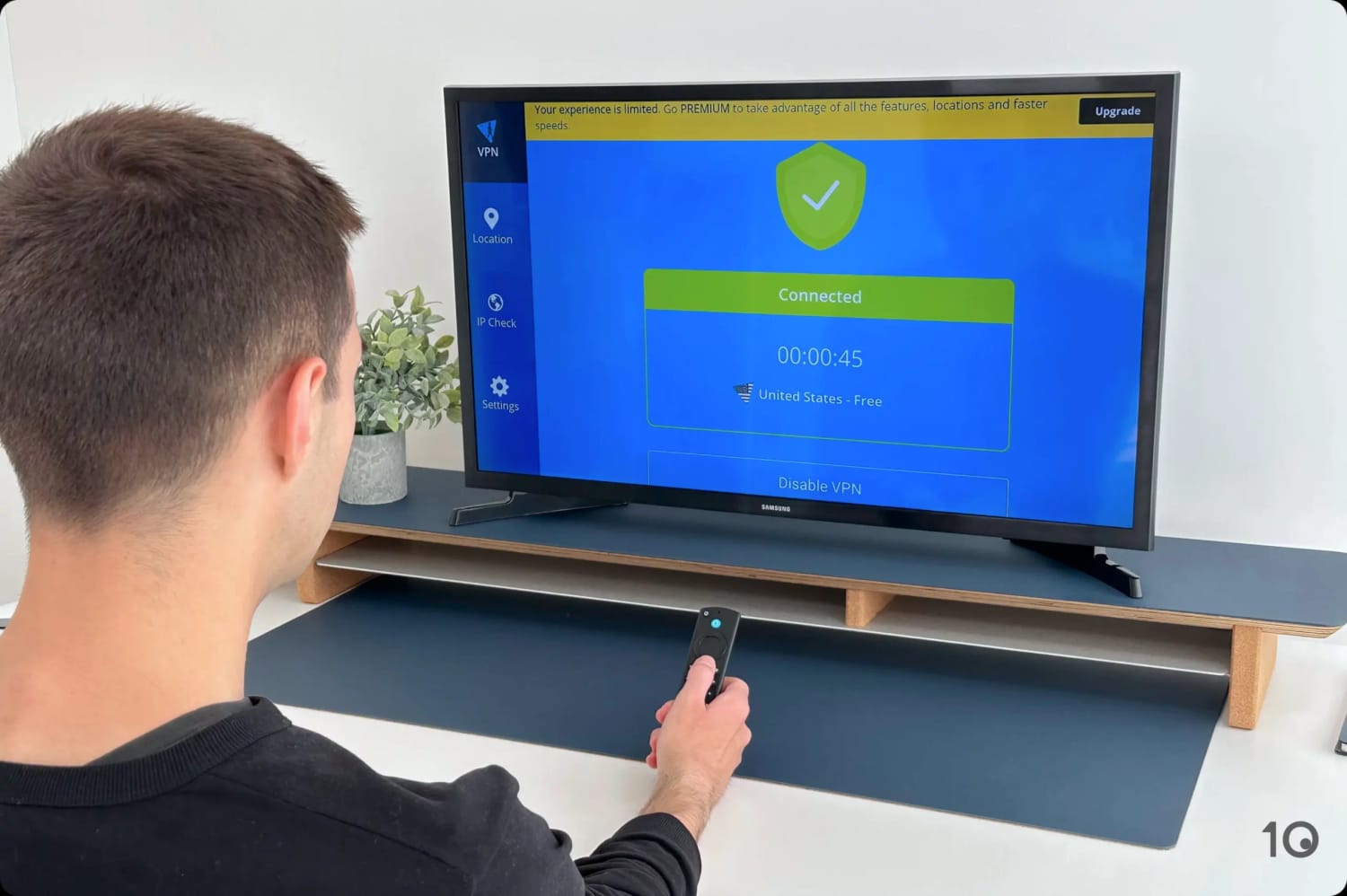
Proton VPN is the best free VPN I’ve used on a Fire TV Stick. Its Firestick app is genuinely well designed, doesn’t ask for a subscription, and took me under two minutes to install and connect.
It’s also extremely private and secure, and the only safe free app I’ve found with no data cap at all. Proton VPN is also the fastest I’ve tested on a Fire TV device.
There’s a significant catch though: Proton VPN’s free service doesn’t unblock geo-locked streaming apps, and it blocks P2P traffic outright.
Proton VPN’s app for Fire TV.
No Bandwidth Restrictions
What sets Proton VPN apart from every other free VPN is the complete absence of data limits. Once it’s installed, you can leave it running as long as you like.
That’s ultimately why it edges out Windscribe here. Windscribe actually performs better in most of our test categories, but its 10GB monthly cap triggers a rating penalty that Proton VPN avoids entirely.
The unlimited allowance isn’t the only advantage, either. Proton VPN was comfortably the fastest free VPN I tested on Fire TV Stick: my connection speed dropped by just 1%, compared to 9% on Windscribe’s nearest servers.
Bear in mind that Proton VPN’s free plan chooses the server for you, so you can’t deliberately pick a nearby location. In my tests, though, it consistently routed me to one anyway.
Very Secure & Private
Proton VPN uses ChaCha20 encryption via the WireGuard protocol, with built-in IP and DNS leak protection. Throughout my testing, it kept my true IP and DNS information hidden without a single leak.
Its servers also don’t log any personal session or web usage data. This claim is backed up by an independent no-logs security audit rather than just a marketing page.
No Netflix & No P2P Activity
Where the free plan falls down is streaming. I couldn’t unblock a single major app with it, including US Netflix, Amazon Prime Video, Hulu, and BBC iPlayer.
The lack of manual server selection is a big part of the problem. Proton VPN automatically connects you to the “fastest” available server, so you can’t target the country whose content library you actually want.
Proton VPN also blocks peer-to-peer (P2P) traffic on its free servers, which will cause problems with any P2P-based Kodi add-ons you use.
In short, Proton VPN is excellent if you want an unlimited free VPN to hide your IP address, but it’s the wrong tool if you’re trying to reach geo-restricted content.
Windscribe is a surprisingly capable free VPN for accessing geo-restricted apps. It got me into several regional Netflix, HBO Max and Disney+ libraries, which is more than I can say for almost any other free service.
Speeds are reasonably quick too, particularly on nearby servers, although I did notice them fluctuating during busy live streams.
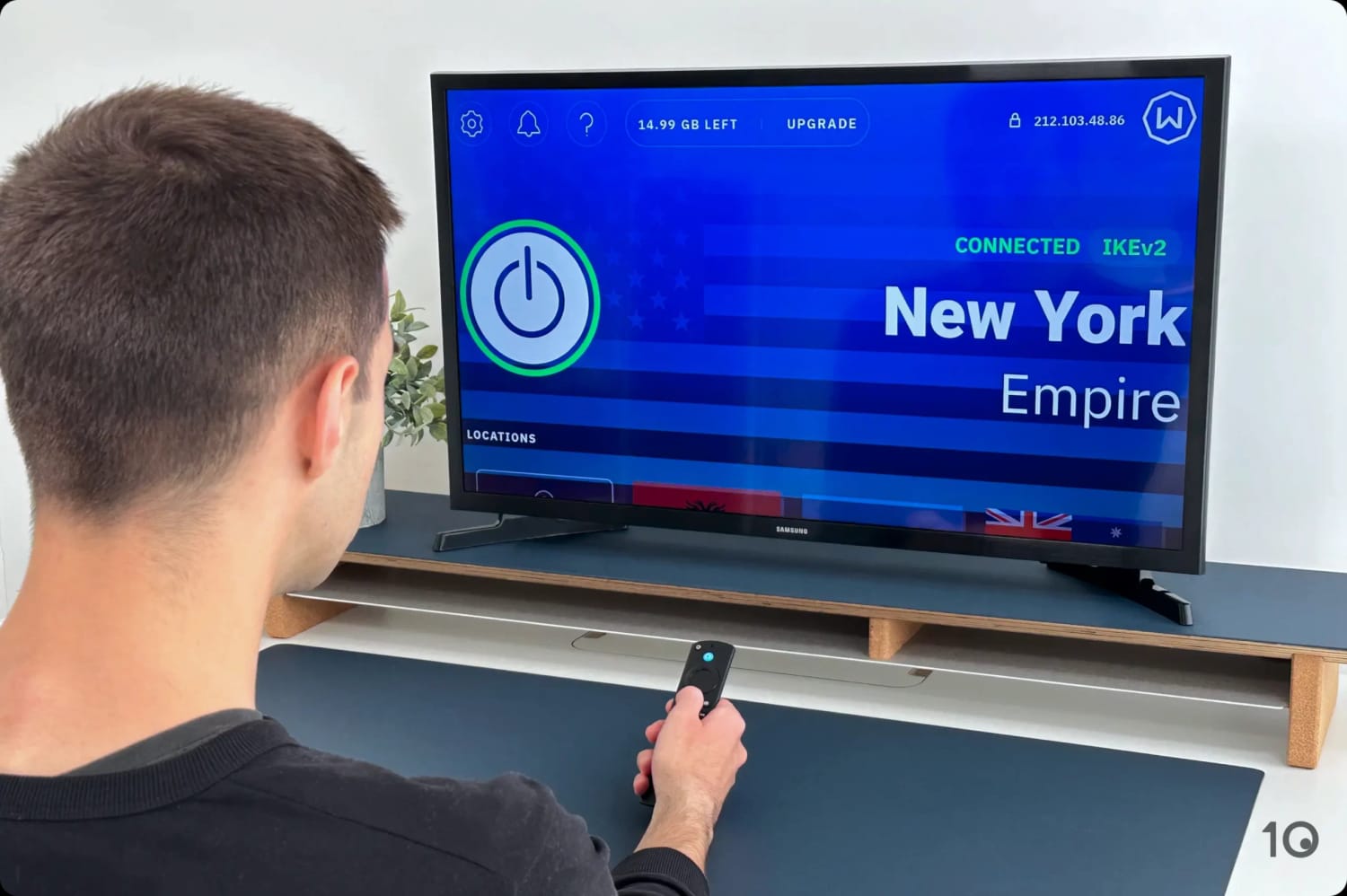
Windscribe’s free Firestick app is easy to use and connected quickly for me.
Streams UK Netflix & P2P-based Apps
The big difference between Windscribe’s and Proton VPN’s free apps is that Windscribe unblocks geo-restricted content in 10 countries, including the US, the UK, and Canada.
If you’re planning on using Kodi addons and IPTV apps that still use P2P delivery, the VPN service supports P2P traffic on all its free servers, another advantage over Proton.
On the security side, Windscribe uses ChaCha20 or AES-256 encryption depending on which protocol you select. Like Proton VPN, it doesn’t log your activity, and it never leaked my real IP or DNS data in testing.
10GB Monthly Usage Cap
The only real drawback to using Windscribe’s free app is that 10GB monthly data cap.
It’s a generous allowance next to free VPNs like TunnelBear and Avira, but it doesn’t go far on a TV. In my experience, 10GB buys you roughly four hours of HD streaming before you’re cut off for the month.
If you want to stretch it, drop the resolution to Standard Definition. I got noticeably more viewing time that way but it wasn’t exactly a great experience.
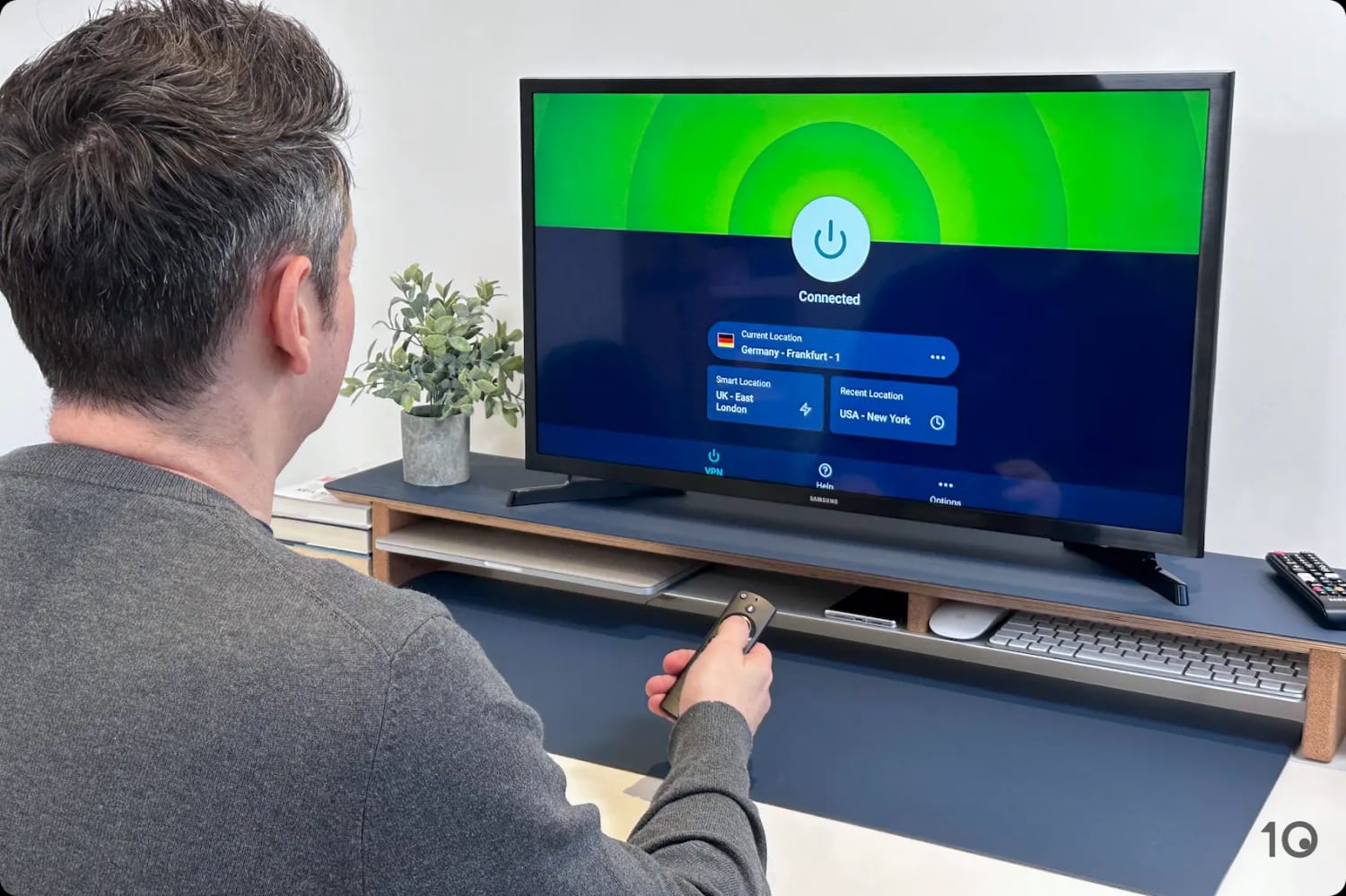
IPVanish is my overall favorite VPN for Fire TV Stick thanks to its Fire TV software that’s fast, secure, and private in equal measure.
It pairs a no-logs policy and unlimited data with one of the best-designed Firestick apps I’ve used, and it doesn’t skimp on privacy and security settings to get there.
IPVanish also works very well with popular geo-blocked apps, including US Netflix, Hulu, HBO Max, and Prime Video.
It’s even developed an app compatible with Vega OS, the Linux-based operating system for all new Fire TV devices.
If you want to try before committing, IPVanish offers a 7-day free trial, plus a 30-day refund guarantee (monthly plans aren’t covered).
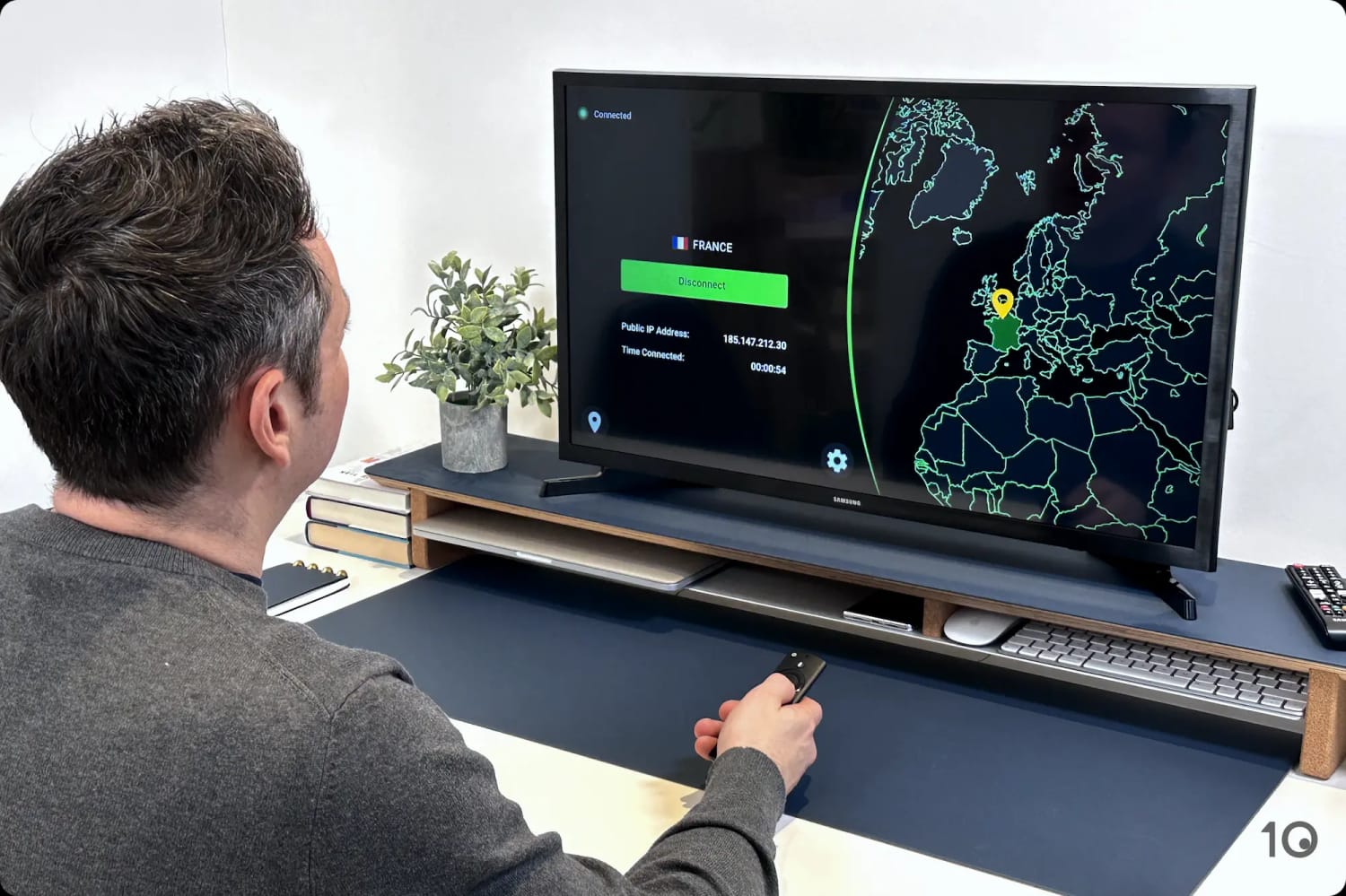
The IPVanish homescreen on my Amazon Fire TV Stick.
Well-Designed App for Firestick
IPVanish’s user-friendly Fire TV Stick app has clearly been designed with Fire TV’s interface in mind. Very few VPNs get that right.
Finding my nearest server took seconds, and connecting to it was a single click away with no menu-hunting.
It was just as easy to locate advanced settings like split tunneling, LAN exemption, and obfuscation. They’re a welcome addition if you want them, though beginners can safely ignore them.
The only real nuisance I ran into was switching on the kill switch, which prevents unexpected IP address leaks.
That’s because the kill switch comes as a separate app, a design decision made to protect you better against sudden VPN shutdowns caused by Fire TV’s memory constraints.
Being standalone and lightweight makes it far less likely to fail, so I think the trade-off is worth it. You install it once, then control it from within the main VPN app.
No-Logs Servers Optimized for Kodi & IPTV Apps
IPVanish has clearly been built with anonymous streamers in mind. Its network of 3,400 no-logs servers hid my IP address in every security test I ran.
All of those servers are now RAM-based, so they never write data to disk. None of them track or store your internet activity, which means you can use your streaming apps privately and securely.
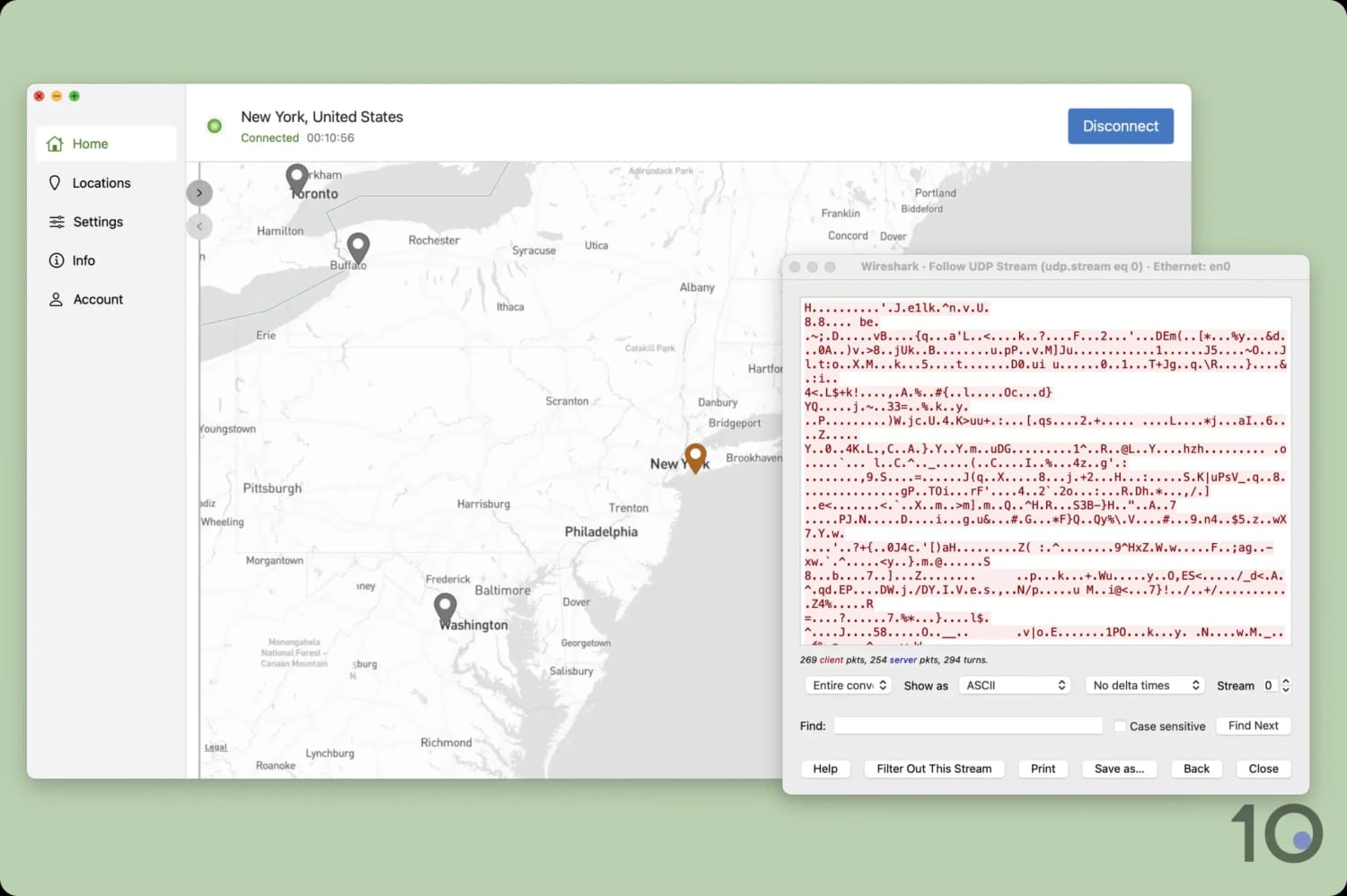
I also ran the connection through Wireshark and confirmed that data flowing through IPVanish’s servers is fully encrypted.
I confirmed that IPVanish encrypts all network traffic.
Expect fast speeds when you’re connected to a nearby IPVanish server. In our most recent round of speed tests, my testing team recorded a download speed drop of under 4% on short-distance connections.
Losing so little speed compared to your normal connection is exactly what you want for buffer-free streaming on a Firestick.
Long-distance connections cost more, as you’d expect: I measured a 14% speed loss connecting from the US into Japan with IPVanish.
That’s still quick enough for comfortable streaming, but if you only need to conceal your IP address, I recommend you connect to a local server and keep the extra speed.
From outside the UK, I reached BBC iPlayer and ITVX on its UK servers without a single error message.
Speeds hold up well across ExpressVPN’s network of 13,360 servers in 113 countries. Connecting from Europe to the US East Coast, I lost only 6% of my base speed.
Longer hops naturally cost more: connecting into Singapore, the drop was 20%.
That’s still fast enough for HD streaming, and more consistent than most VPNs manage at that distance, though IPVanish narrowly edges ExpressVPN in our overall speed scoring.
Privacy-Friendly Logging Policy & Fire OS Kill Switch
ExpressVPN’s logging policy commits the provider to keeping no record of your internet activity or your connections to its service.
The VPN is also headquartered in the British Virgin Islands, a genuinely privacy-friendly jurisdiction for a VPN company.
The kill switch is another privacy bonus, since not all VPNs offer one on Firestick. It cuts your internet access the moment the VPN connection fails, so your real IP address is never exposed.
Unlike IPVanish’s, it’s built into the app itself, which in theory leaves it more vulnerable to shutting down if Fire TV’s memory overloads. In years of testing, though, I’ve never seen it happen.
Surfshark is a very affordable alternative to IPVanish and ExpressVPN. My tests showed it’s not as private, or as fast, but it comes with a Vega OS app and costs only $2.49/mo over 27 months.
It’s a good VPN for TV streaming too. Every US server I tried opened the American Netflix library, along with HBO Max, Prime Video, Hulu, and plenty of other popular apps.
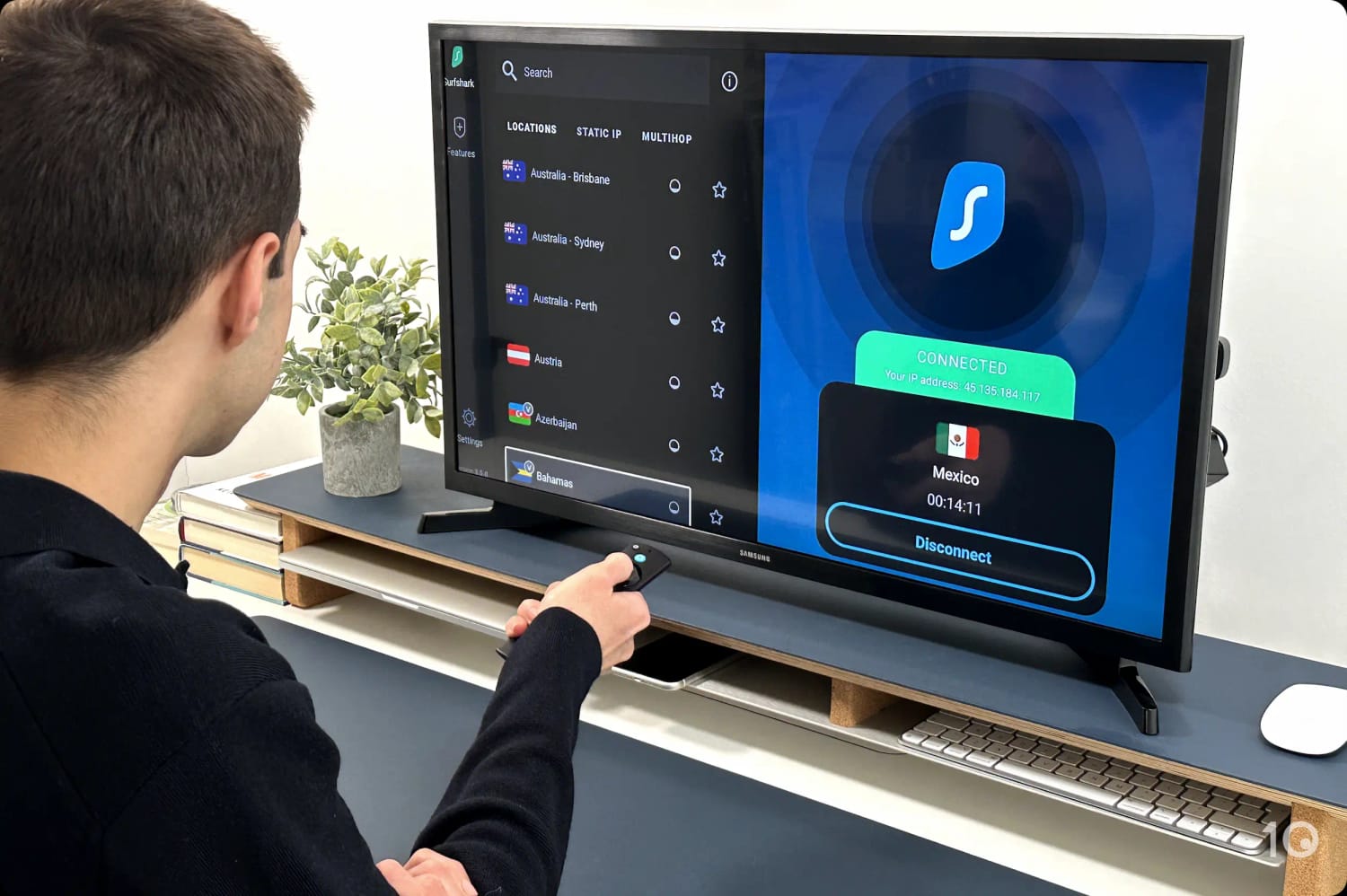
Surfshark’s Fire TV Stick app unblocked Netflix in my tests.
Affordable & Compatible with Vega OS
Surfshark’s two standout benefits are its cheap two-year plan and an app that runs on the Fire TV Stick 4K Select.
That Vega OS app works much like the standard Fire OS version, just simpler.
You’re limited to the WireGuard protocol, which is no real hardship, but you do lose advanced settings like Bypasser (split tunneling), Dynamic MultiHop, and CleanWeb (ad blocking).
Like IPVanish’s Vega OS app, it’s a streamlined build that concentrates on the basics: changing your IP address quickly and securing your connection.
Good Privacy & Security Standings
Surfshark isn’t a strict no-logs service, but I’m satisfied it’s a safe VPN for streaming on a Fire TV device.
Its entire server network runs on diskless, RAM-only hardware, so data is wiped on every reboot and nothing can be extracted even if a server is physically seized.
The company’s logging policy has been independently validated through multiple Deloitte audits, with only your email address and account registration date retained.
I was also able to buy a subscription with cryptocurrency, which is ideal if you’d rather not link a payment method to your identity at all.
As with IPVanish and ExpressVPN, I used Wireshark to confirm that Surfshark encrypts traffic properly: AES-256 with OpenVPN, or ChaCha20 with WireGuard.
One warning before you start. Surfshark’s kill switch isn’t enabled by default on Fire TV. If you install the app and never toggle Network Lock on, your real IP will be exposed every time the VPN connection drops.
Turn Network Lock on as soon as you’ve signed in, it’s the first thing I do on a new install.
My VPN recommendations are based on years of personal use, backed by a testing methodology my team and I developed specifically for Fire TV Stick devices.
I know how frustrating it is to use a VPN on a Firestick without a native app, or install one only to find it doesn’t work with your streaming apps. That’s why we give the most weight to a VPN’s Fire TV app and unblocking ability in our testing.
I also assess how much each VPN slows your connection, its privacy protections, and the strength of its security features.
The table below shows how each of my recommended VPNs performed across these test categories:
Below, I explain how I test each category and how much it contributes to a VPN’s overall Firestick rating.
1. Firestick App (30%)
Test Conducted: I tested every available VPN for Fire TV Stick and assessed their functionality and user experience.
Why It’s Important: Many VPNs still don’t have apps for Fire TV Stick and require manual sideloading. There are also lots of inferior and poorly made VPN apps for Firestick.
Optimal Result: An app that’s readily available on the Amazon Appstore, is easy to install and use, and comes with additional features like a kill switch.
2. Beating Streaming Geo-blocks (30%)
Test Conducted: I tested each VPN’s Firestick app with every major streaming service, including Netflix, BBC iPlayer, HBO Max, Hulu, Prime Video, and more.
Why It’s Important: This is crucial for accessing geo-blocked content on your Fire TV Stick.
Optimal Result: Reliably unblocks over 10 Netflix libraries, HBO Max, Hulu, Prime Video, and BBC iPlayer.
3. Speed (20%)
Test Conducted: My testing team used our in-house speed testing tool to calculate the connection speed loss of each VPN while connected to servers in eight countries.
Why It’s Important: Fast speeds are essential for buffer-free, high resolution streaming and guarantee smooth streaming from anywhere in the world.
Optimal Result: An average international download speed of 90Mbps, or a speed loss of no more than 10% when compared to our normal internet connection.
4. Privacy (10%)
Test Conducted: I analyzed each VPN’s privacy and logging policy to understand what data it stores (if any) and why.
Why It’s Important: Many VPNs collect and store identifying data, which poses a privacy risk.
Optimal Result: No-logs policy confirmed by a court case, server seizure, or a third-party audit from a reputable auditor.
5. Security (10%)
Test Conducted: I assessed each VPN’s security by testing its encryption, inspecting its security protocol, and testing it with our leak and kill switch tool.
Why It’s Important: Safe security practices ensure your streaming isn’t being monitored by your ISP.
Optimal Result: No IP or DNS leaks, a working kill switch, and up-to-date security practices.
How to Set Up a VPN on Firestick
It’s very easy to set up a VPN on your Fire TV Stick, as long as the VPN provider has developed a Fire OS application.
Every VPN I recommend in this guide installs directly onto your Firestick from the Fire OS app store in a few steps. If you have one of the newer Vega OS devices, that list narrows to IPVanish and Surfshark.
Here’s a short video showing how quick the process is, using ExpressVPN as the example:
Video tutorial on how to set up a VPN on your Fire TV Stick.
How to Install a VPN onto Your Firestick
Below are step-by-step instructions on installing a native VPN app on your Fire TV Stick.
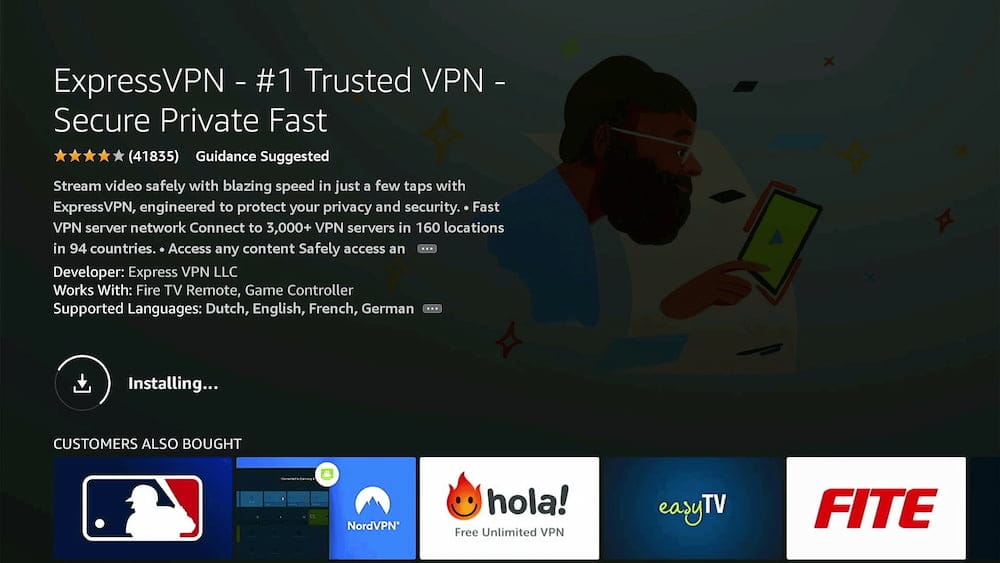
Search for a VPN on your Firestick’s Amazon App Store.
Press Get to install the VPN. If prompted, confirm with your Amazon account passcode.
Once it’s installed, open the VPN and enter your login details (if required).
Choose a VPN server location and press Connect.
Once you’re connected to the VPN server, open any other app on your Fire TV device.
This is by far the simplest and quickest way to get a VPN running on your Fire TV Stick.
If you’ve set your heart on a VPN that doesn’t have a native Fire OS app, you still have options, such as using a VPN on your router or sharing a connection from your computer.
Do I Really Need a VPN for My Fire TV Stick?
I’d argue that a VPN on your Fire TV Stick is essential for your internet security, privacy, and freedom.
There are two key reasons for using a VPN with your Fire TV device:
1. Bypassing Video Geo-restrictions
Many official video apps are only available in certain countries, or serve a different library depending on where you are.
These apps use your IP address to work out your location. Connect to a VPN server in another country, and you’ll appear to be there instead.
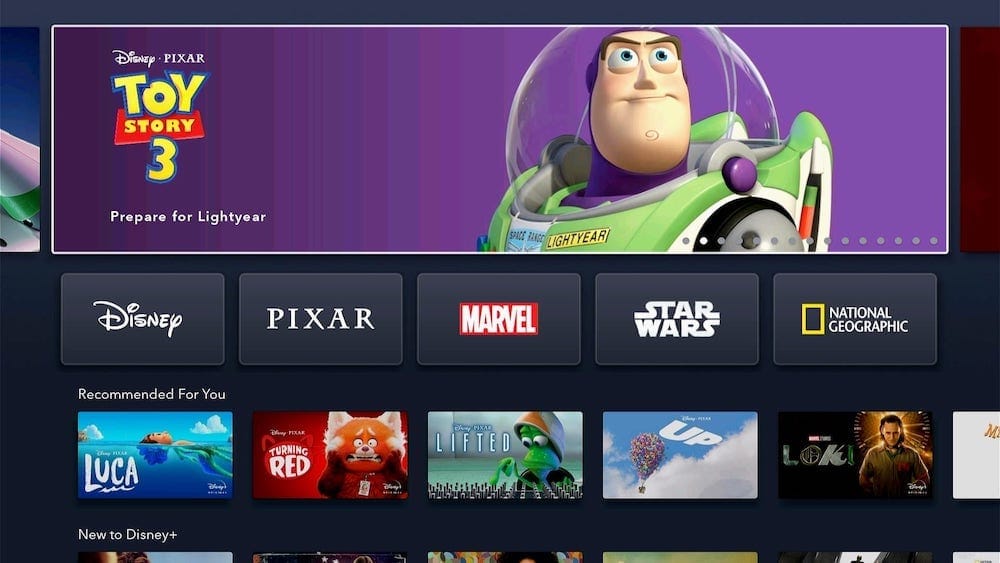
That’s how a good Firestick VPN unblocks geo-restricted content on streaming apps like Netflix, Disney+, HBO Max, Amazon Prime Video, and BBC iPlayer.
ExpressVPN unblocks Disney+ on my Fire TV Stick with no issues.
2. Streaming Video Content Anonymously
Running a VPN on your Fire TV Stick masks your real IP address and keeps your streaming activity private.
With your true IP hidden, your ISP can’t see which applications and services you’re using. That matters most if you stream through Kodi and IPTV apps.
Using a VPN hides your traffic and online activity from your ISP.
Without a VPN, using Kodi add-ons and IPTV apps risks watching copyrighted content without authorization, sometimes without realizing it.
Your ISP will know which applications you’ve used and can pass that information to content owners and copyright trolls who request it. They may then issue you with a fine.
EXPERT ADVICE: If you have a 1st generation Firestick, you won’t be able to install a VPN directly onto it. Therefore, we recommend upgrading to a 2nd, 3rd, or 4th generation Fire TV stick.
Free VPN vs Paid VPN: What's Better for Your Firestick?
There are real disadvantages to using a free VPN on a Fire TV device, especially if you care about streaming quickly and anonymously.
Almost every safe-to-use free VPN restricts you in some way: daily or monthly bandwidth caps, slower speeds, and a short list of free server locations. Proton VPN’s unlimited data is the rare exception, and it pays for that with zero unblocking ability.
Free VPNs also tend to fail against Netflix, Disney+, and other popular streaming apps. Windscribe is the one free service I’ve found that reliably beats those geo-blocks, and its 10GB monthly cap limits how much you can actually watch.
I’ve always found that paid Firestick VPNs, by contrast, genuinely deliver a far better streaming experience alongside stronger privacy and security.
Key features of paid Fire TV Stick VPNs include:
Unlimited bandwidth
Faster connection speeds
Far greater unblocking capabilities
Large number of VPN servers
Extra privacy and security settings
Wider device compatibility
If you don’t want to commit to a subscription-based Firestick VPN straight away, you can try one first by using a VPN free trial or taking advantage of a money-back guarantee.
Free VPNs to Avoid on Firestick
Most free VPNs don’t work well on Fire TV devices simply because very few meet the basic requirements: a native Fire OS app, an APK file you can sideload, or router compatibility.
A handful do offer a custom Firestick app but fall short elsewhere, which is why I can’t recommend them.
Here are the popular free VPNs I’d steer you away from on Fire TV:
Hide.me
Hide.me is a very safe free VPN, with plenty of advanced privacy settings. Unfortunately, its speeds were painfully slow in my testing, it failed to unblock most geo-restricted apps, and it no longer allows P2P traffic on free servers.
Avira Phantom
Avira’s free VPN has no Firestick app, no router support, and a paltry 1GB monthly allowance. I can’t think of a single reason to run it on a Fire TV device.
TunnelBear
TunnelBear’s free service is largely ineffective against streaming geo-blocks. With no Firestick app or router support either, getting it onto a Fire TV device is more trouble than it’s worth.
Hotspot Shield
Like Avira, and surprisingly for a service this popular, Hotspot Shield doesn’t offer a native Fire TV Stick app.
Hola Free
Hola Free VPN logs all of your streaming activity and shares your idle bandwidth with other Hola users. That’s a serious risk to your privacy, so I’d avoid it entirely.
Netflix Error Code When Streaming on a Firestick
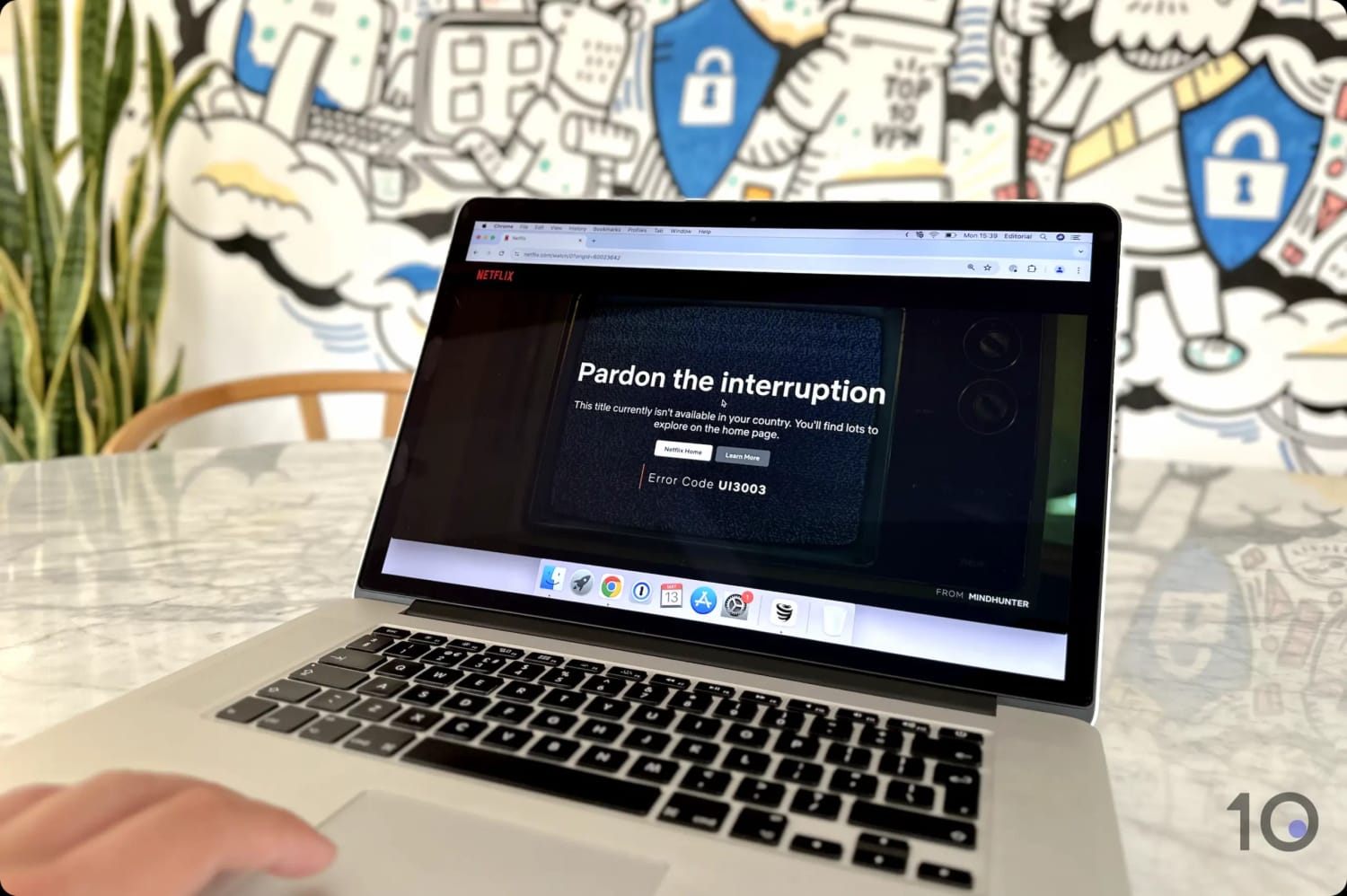
If you’re using a free VPN on your Fire TV Stick to watch Netflix, you’ve probably run into this message:
“Oops, something went wrong… You seem to be using an unblocker or proxy.”
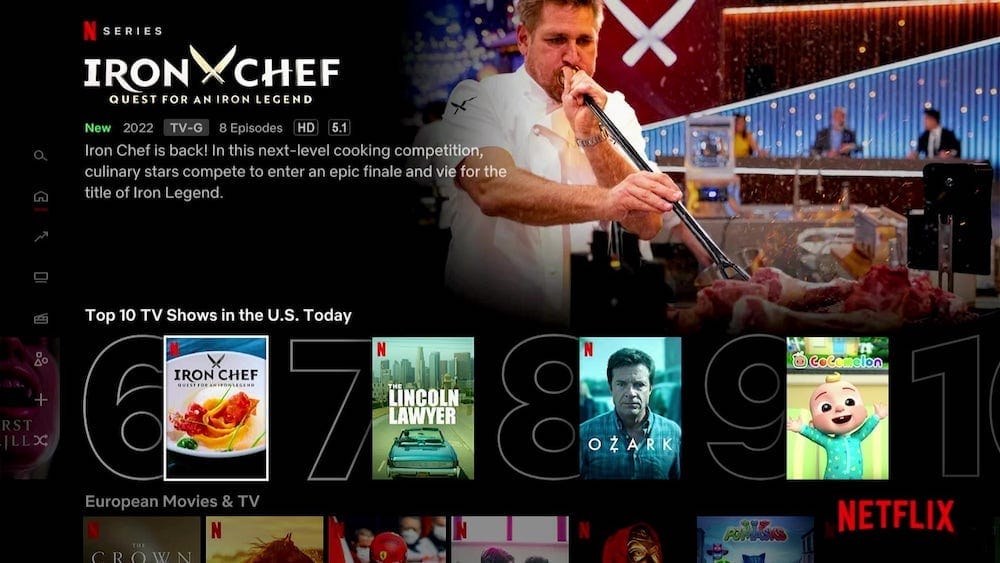
Netflix’s ‘Pardon the interruption’ streaming error message.
Netflix and other major streaming platforms actively block traffic they identify as coming from a VPN, and free VPNs rarely get past those blocks.
There are still a few things worth trying if your VPN isn’t working with Netflix, such as switching to a different server in the same country or changing VPN protocol.
If none of that works, your only real option is to use a VPN for Netflix that we’ve confirmed still works.
Data Cap Penalty
Nearly all free VPN services implement a data cap. As with most limitations on free VPNs, this is used to encourage you to upgrade to a paid subscription.
Streaming or running Kodi can be very data-intensive, so a generous data cap is necessary on Firestick. Less generous free VPNs only offer around 500MB per month, which isn’t enough to stream for more than a few hours.
The best free VPNs offer 10GB a month, or 500MB a day for free. This adds up to enough for light streaming throughout the month or a shorter high-intensity period of streaming.
I recommend paid Fire Stick VPNs that come with unlimited data. I also look for services that don’t throttle or limit certain types of traffic, such as P2P.
I apply a penalty to the VPN’s final VPN for Firestick rating based on its data cap:
Unlimited bandwidth: No deduction to the overall rating
10GB per month: -20% to the overall rating
500MB per day: -25% to the overall rating
5GB per month: -30% to the overall rating
1GB per month: -35% to the overall rating
200MB per day: -40% to the overall rating
500MB per month: -50% to the overall rating
FAQs
If I Use a VPN, Who Will See What I'm Streaming?
A VPN hides what you’re streaming from your ISP, your WiFi network admin, and copyright trolls. They’ll see that you connected to a VPN server, but not which apps you used.
However, these parties will still know what you’re watching:
The app owner e.g. Netflix, because you’re logged into your account.
Amazon, through basic device telemetry (including which apps you open).
Your VPN provider, if it logs your activity (which is why we recommend using no-logs VPNs).
Which VPNs Have a Vega OS App?
As of writing only three VPNs have developed a Vega OS app: IPVanish, NordVPN, and Surfshark. We expect more VPN providers to launch compatible apps this year.
NordVPN didn’t make our recommendations list because we found its Firestick app less user-friendly than IPVanish’s or ExpressVPN’s. Moreover, its Vega OS app doesn’t add enough to displace Surfshark on price or IPVanish on overall quality.
Are There Any Free VPNs for Vega OS?
No, there are currently no free VPN apps for Vega OS. Since Vega OS doesn’t support sideloading, you can’t even install a free VPN’s APK file, either.