




Top10VPN is editorially independent. Buying a VPN through our links supports our work.
The Best VPNs for Japan
Follow us:
Simon Migliano
Simon Migliano is a recognized world expert in VPNs. He's tested hundreds of apps and his research has been featured on the BBC, The New York Times, and more. Read full bio
Japan has some of the world’s fastest internet, but that doesn’t mean there aren’t speed bumps.
Local ISPs can retain your connection data for up to six months, and most of the content you stream at home is geo-blocked.
And if you’re looking to stream Japanese content on Netflix, Prime Video, DAZN, AbemaTV, or TVer, all that content is locked down to Japan.
A good VPN solves all three problems, and the premium VPNs I’ve chosen will do just that through fast and secure servers worldwide, reliable access to popular streaming platforms, and privacy standards to protect you at all times.
🔄 Key Updates
Following my latest tests, I’ve added Surfshark, Proton VPN, and Windscribe to my recommendations list.
Why Trust Us?
We’re fully independent and have been reviewing VPNs since 2016. Our ratings are based on our own testing results and are unaffected by financial incentives. Learn who we are and how we test VPNs.
VPNs Tested
59
Total Hours of Testing
30,000+
Combined Years of Experience
50+
Why Use a VPN for Japan?
Japan is one of the most connected countries in the world, but streaming geo-restrictions, insecure WiFi hotspots, and invasive data retention laws make the use a VPN essential.
Japan also offers a treasure trove of content hard to find elsewhere around the world, especially Anime and gaming exclusives.
Here are my key reasons why I recommend using a reliable and trustworthy VPN for Japan:
Secure Japanese Public WiFi
Japan’s public WiFi is everywhere: airports, the Shinkansen, konbini chains, hotel lobbies. It’s really convenient, but also risky.
Most free WiFi in Japan is unencrypted. Insecure networks expose your DNS requests, device identifiers, and login activity to anyone sharing the same connection.
A VPN encrypts all of that. A café in Shinjuku becomes no riskier than your home broadband.
I’d enable your VPN the moment you land. Airports are among the most targeted by hackers, and the free WiFi at Narita Airport is unencrypted, meaning emails and data can be intercepted and read.
Access Content Back Home
Because of licensing-based geo-restrictions, many of the streaming services you use at home will detect your Japanese IP and block you.
Connecting to a server in your home country via a VPN restores access immediately. ExpressVPN is the strongest in this category, with reliable access to over 95% of the streaming services I tested globally.
Japan's ISP Data Retention Laws
Japanese ISPs can legally retain your connection metadata for up to six months. Japan’s 2025 Active Cyber Defense legislation also expanded law enforcement’s access to telecommunications data.
If you want to keep your browsing private, whether at a hotel, on a local SIM, or on any domestic connection, a VPN encrypts your traffic at the source before it can be monitored and logged.
Access Japanese Content from Abroad
If you love Japanese TV and want to access your favorite shows on AbemaTV, TVer, or Crunchyroll Japan, you’ll need a Japanese IP address.
All of my premium recommendations give you one: simply connect to a Japan server and it’ll be as if you’re browsing in Japan.
These VPNs will also unlock gaming apps restricted to Japan, like Dragon Quest Walk and Uma Musume, plus exclusive Japanese content on popular games like Pokémon GO, and Monster Hunter Now.
VPN Comparison Table
Use the table below to compare my VPN picks for speed, servers, streaming access, free trial options, and price.
ExpressVPN is hands-down the best VPN I’ve tested for Japan, especially for watching geo-restricted Japanese content abroad.
It’s the only VPN on my list with server locations in four Japanese cities: Tokyo, Osaka, Shibuya, and Yokohama.
Its apps are incredibly easy to use, with built-in security and privacy features that are ideal for securing your connections while traveling.
And its all-round quality is simply unmatched. If you want the widest server coverage in Japan through the most beginner-friendly apps on the market, ExpressVPN is the right choice.
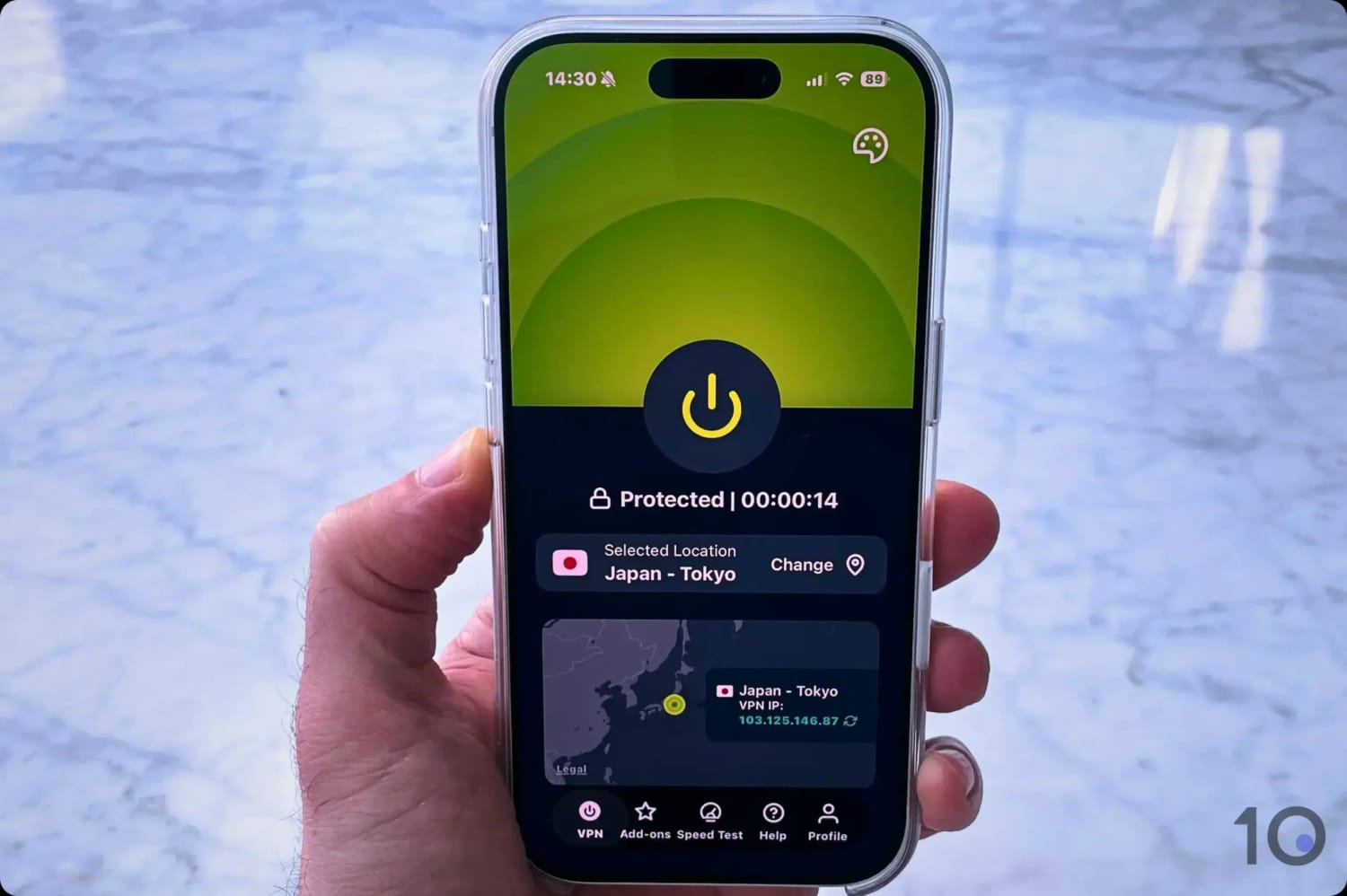
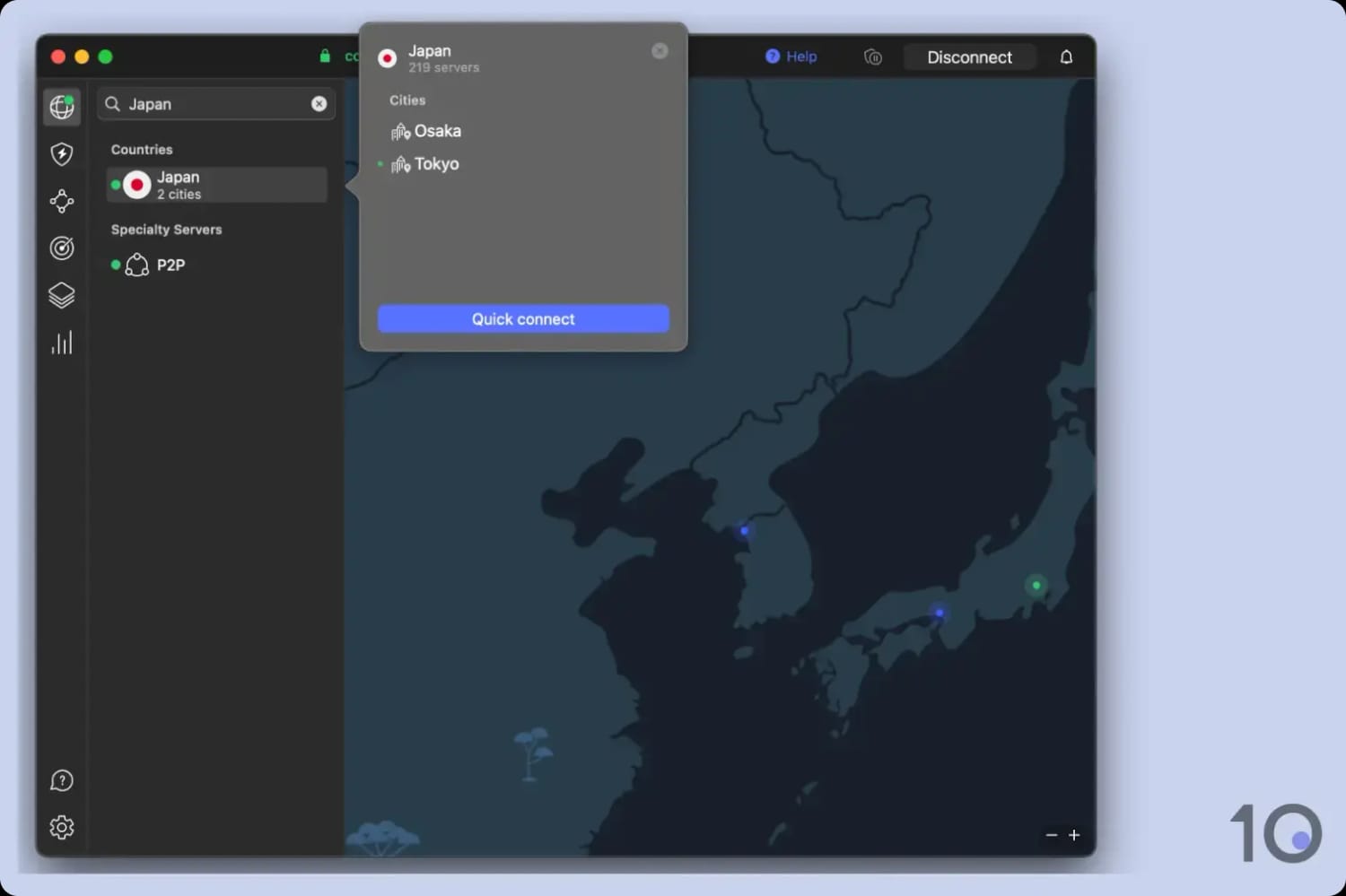
ExpressVPN’s servers in Japan connected almost instantly.
Top Choice for International Streaming
For expats and tourists in Japan, ExpressVPN is the strongest option for keeping access to your favorite content from back home.
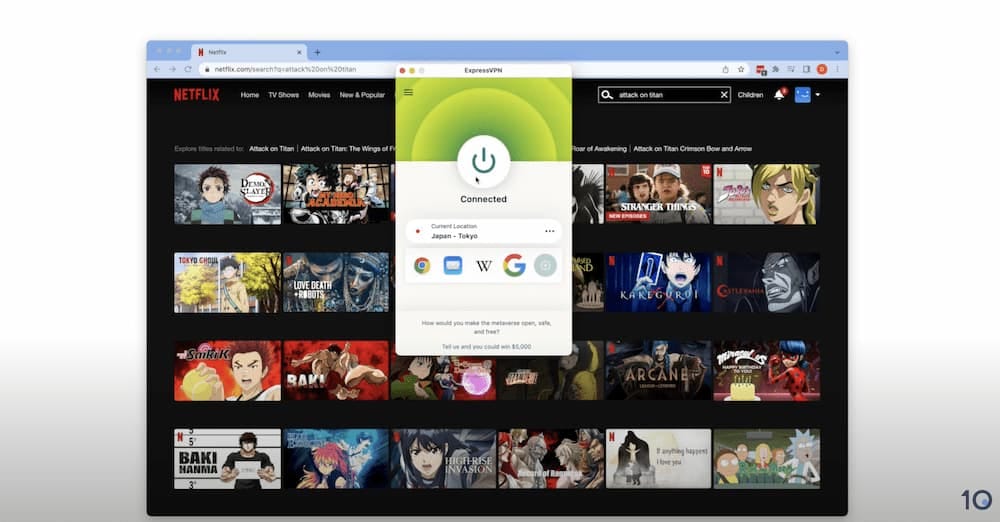
It’s a fantastic VPN for Netflix, giving me access to 18 regional libraries, including Canada, Korea, Japan, the UK, and the US.
Switching to a US VPN server restored my access to Hulu, Peacock, and YouTube TV almost instantly.
And connecting to a UK server location, BBC iPlayer, ITVX, and Sky Go all streamed without a hitch.
Whichever country you’re calling home, the content you’d miss while in Japan is only a server switch away.
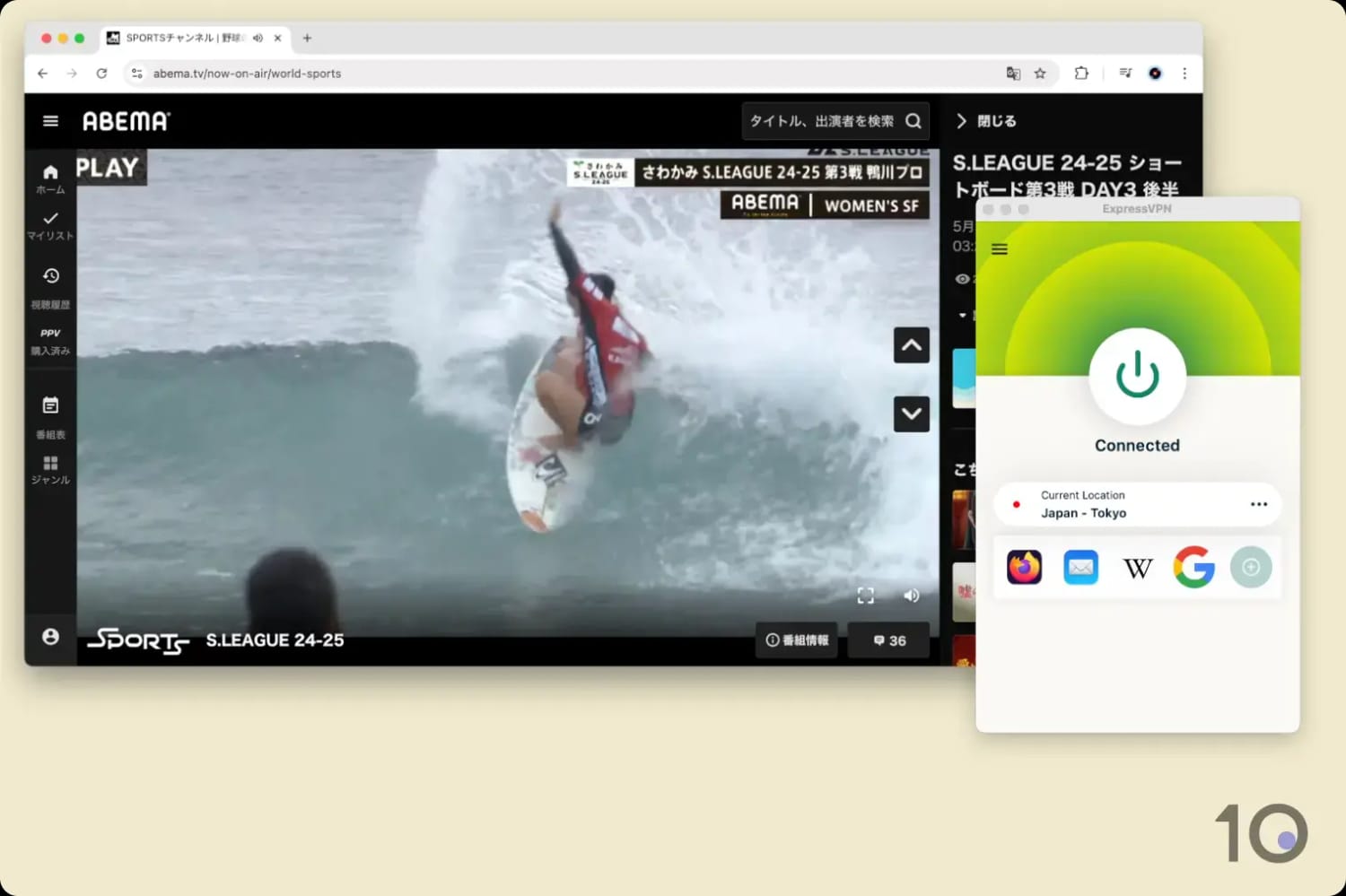
I had equally good results on ExpressVPN’s Japanese servers, which reliably unblocked Netflix Japan, AbemaTV, and TVer. Here are some of my streaming results:
Table showing ExpressVPN’s access to Japanese content platforms.
Streaming Service
Unblocked?
AbemaTV
Yes
DAZN Japan
Yes
Crunchyroll Japan
Yes
Disney+ Japan
Yes
Hulu Japan
Yes
Netflix Japan
Yes
Prime Video Japan
Yes
TVer
Yes
U-Next
Yes
ExpressVPN and NordVPN performed very similarly in my streaming tests. The only exception was DAZN Japan, which ExpressVPN unblocked but NordVPN didn’t.
For Japanese Netflix specifically, NordVPN was actually more reliable, since not all ExpressVPN servers worked every time.
Privacy & Security at Your Fingertips
In my experience, very few VPNs are as easy to use as ExpressVPN.
Compared to most of its rivals, it takes a plug-and-play approach. Features like rotating IPs and protocol obfuscation happen in the background without you needing to touch anything.
Where ExpressVPN is truly unbeatable is usability and device compatibility. Not even NordVPN comes close.
ExpressVPN’s mobile apps are incredibly intuitive and responsive.
In addition to well-designed, beginner-friendly apps on computers and smartphones, it’s especially good on streaming devices like Firestick, Android TV, and Apple TV.
Every native app shares the same interface, so switching between devices takes seconds rather than minutes.
ExpressVPN doesn’t cut corners on security, either. It runs on Lightway, its own proprietary protocol, using AES-256 and ChaCha20 encryption with diskless servers that store no activity data.
The service’s no-logs policy is really important in Japan, where ISPs can legally retain connection logs for up to six months.
And it’s been proven under pressure. ExpressVPN servers have been seized by authorities twice, and not a single piece of user data was retrieved either time.
Advanced features such as multi-hop servers & Threat Protection
7-day free trial via the official website
Fewer Japanese servers than ExpressVPN
Doesn’t unblock DAZN Japan
Renews at a much higher price
Pricing Plans
$14.99/mo
$5.49/mo over 12 months
$3.49/mo over 27 months
Countries with Servers
137
Servers
9,000
Japan Servers
130
Logging Policy
No Identifiable Data
Simultaneous Connections
10
Support
24/7 Live Chat
Compatible with
Windows
Mac
iOS
Android
Linux
Amazon Fire TV
Android TV
Apple TV
Router
Chrome
NordVPN came very close to pipping ExpressVPN to the post, especially when it comes to speed.
Globally, both VPNs produced similar results. On Japanese servers specifically, though, NordVPN caused just 11% impact on my connection speed, compared to ExpressVPN’s 17%.
These faster speeds made a tangible difference in my tests: geo-restricted content loaded quickly and streamed cleanly, including the Japanese and American Netflix libraries.
NordVPN also offers Meshnet, a free remote access tool that’s genuinely useful for keeping a connection into your home network while you’re in Japan.
I found NordVPN’s Japanese server locations highly reliable.
Greater Range of Settings
NordVPN’s feature set goes a little deeper than ExpressVPN’s, and a few of those extras are particularly relevant if you’re in Japan.
Multi-hop (or Double VPN) routes your connection through two VPN servers instead of one, adding an extra layer of encryption.
It’s overkill for casual browsing, but worth knowing about given Japan’s 2025 Active Cyber Defense legislation, which expanded law enforcement’s access to local ISP data.
Threat Protection Pro, NordVPN’s built-in malware blocker, is also worthy of mention. Unlike ExpressVPN, which only flags malicious links, NordVPN scans files as they’re downloaded and blocks threats before they reach your device.
It’s a particularly useful layer of protection when you’re on the go and where the temptation to quickly download something over an unsecured WiFi connection is real.
The most distinctive feature, though, is Meshnet. It lets you create a secure, private connection back to your home network from any country. It’s entirely free, and doesn’t even require an active NordVPN subscription.
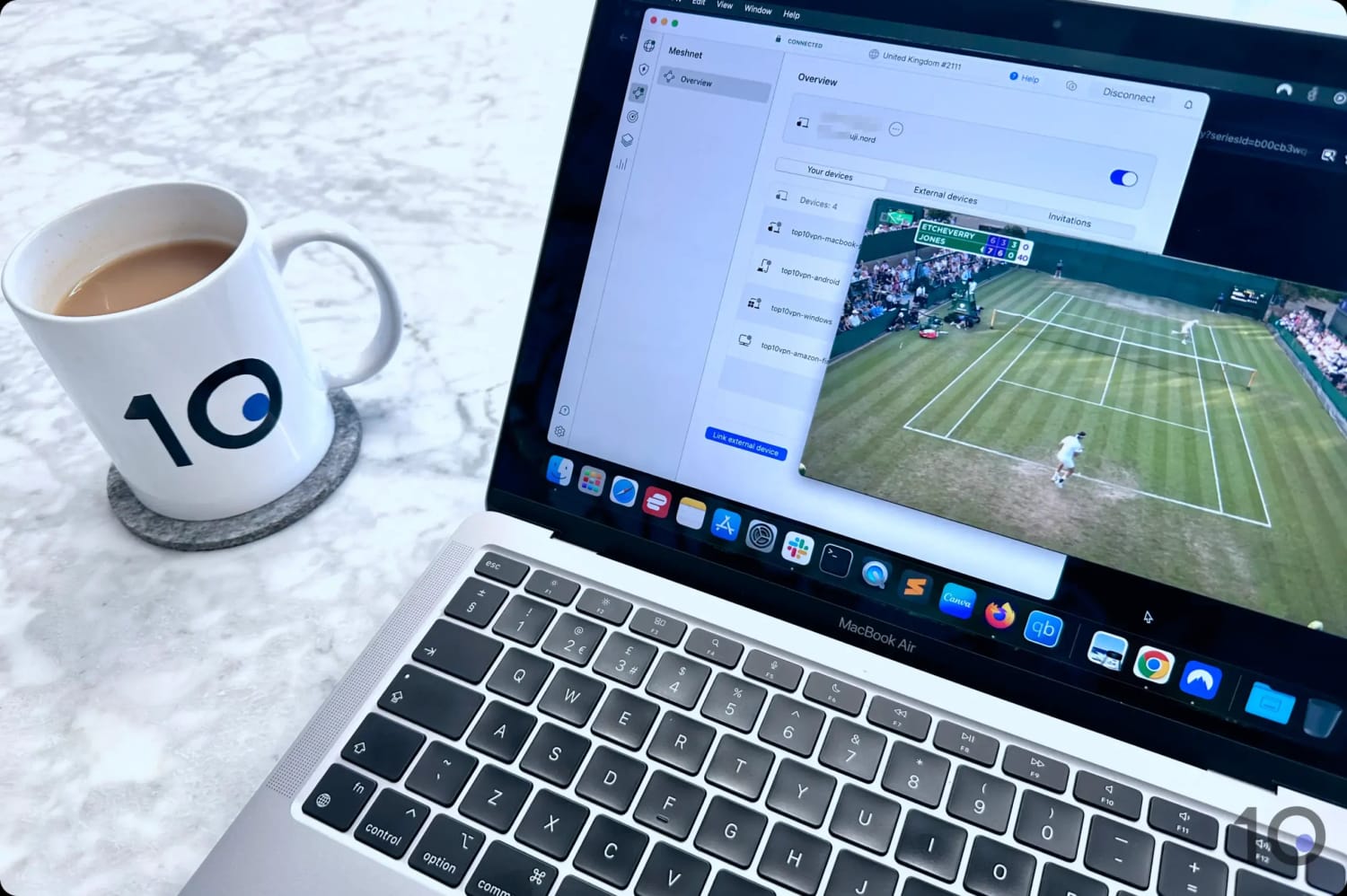
I used NordVPN’s Meshnet to unblock BBC iPlayer from abroad.
For tourists or expats in Japan, that means accessing files on a home computer or routing your traffic through your home country’s IP address as if you never left.
Strong Streaming Performance
NordVPN doesn’t unlock quite as many international platforms as ExpressVPN, but for the services that matter most to the majority of people, it more than holds its own.
For British users, BBC iPlayer, ITVX, and Channel 4 all worked reliably in my tests.
BBC iPlayer in particular is one of NordVPN’s genuine strengths; it’s as good as anything I’ve tested for it. For US users, Netflix, Hulu, and Disney+ all streamed without hiccups.
Just like ExpressVPN, NordVPN accessed most geo-restricted Japanese streaming services. It’s also the most consistent VPN for accessing Netflix Japan, working on every attempt.
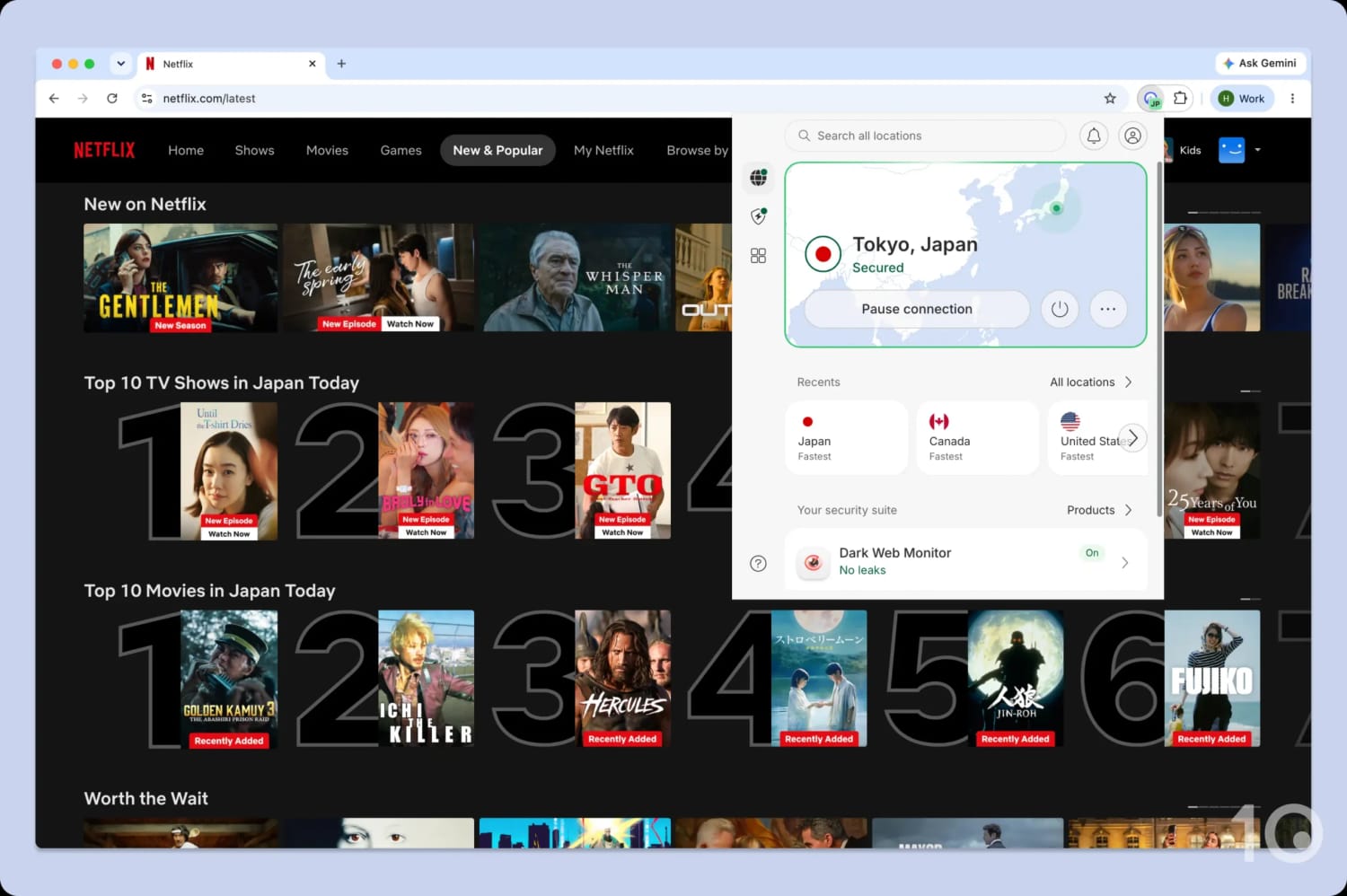
With a single click, NordVPN changed my Netflix catalog from the US to Japan.
The only exception to this excellent performance is DAZN Japan, which NordVPN still can’t unblock.
If mobile gaming is high up on your priority list, Surfshark deserves a serious look.
Its mobile apps are among the most feature-rich I’ve tested. One Android feature in particular sets it apart from ExpressVPN and NordVPN: built-in GPS spoofing.
Security is equally solid, with an independently audited no-logs policy and extras like dynamic multi-hop routing and rotating IP addresses. That goes well beyond what most VPNs offer at this price point.
There are some caveats, though. Surfshark can’t bypass many Japanese streaming geo-blocks, it can be slow to establish mobile connections, and it can leak IPv6 data unless you manually disable it in your device settings.
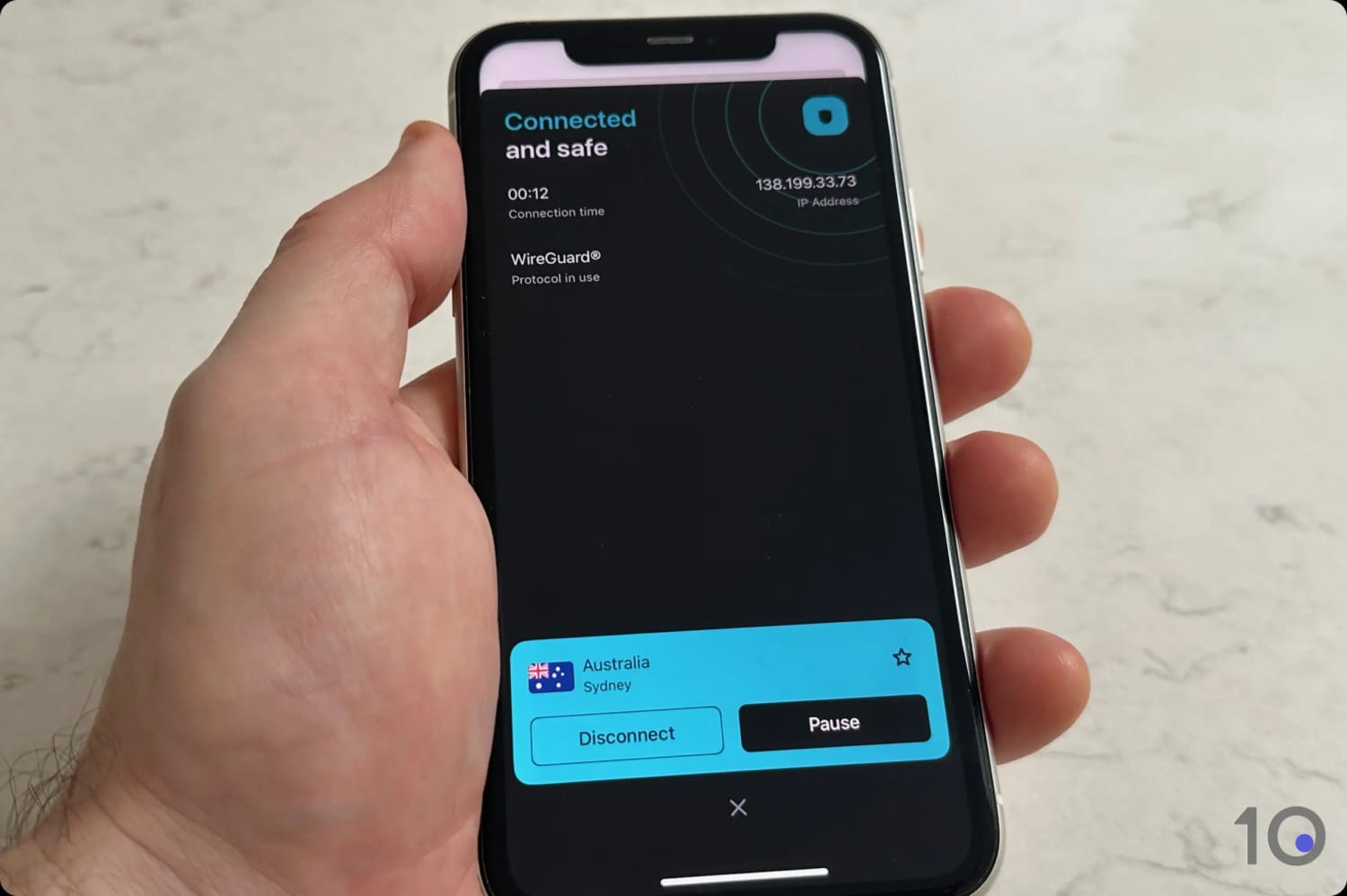
Connecting to one of Surfshark's Sydney servers from Japan.
Great Option for Mobile Gaming
No other VPN on my list does more for mobile gamers than Surfshark, especially for JRPG and Gacha titles.
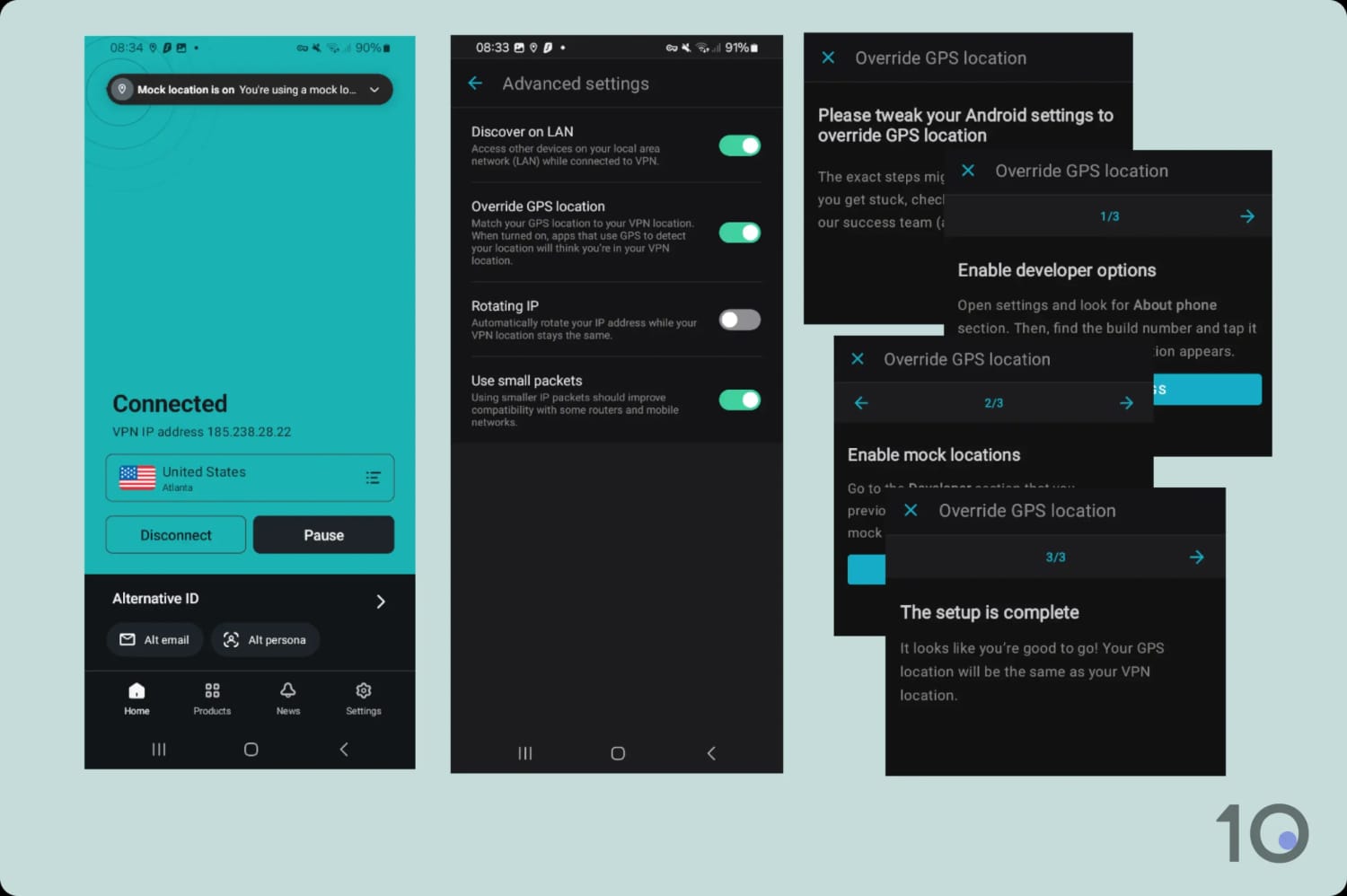
Most VPNs only change your IP address. Surfshark’s Override GPS Location on Android goes further, replacing your phone’s physical coordinates with those of your chosen server location.
That’s a meaningful advantage for location-based games like the Japan-only Dragon Quest Walk.
The game requires matching Japanese IP and GPS data to play, and Surfshark is the only VPN I recommend that satisfies both conditions at once.
Setting up Surfshark’s Override GPS location wasn’t complicated.
I tested it myself and it worked without issue on Dragon Quest Walk, Pokémon GO, and Monster Hunter Now.
Using Surfshark’s Japanese IP addresses also let me play Monster Strike from abroad while on the go.
On weaker signals, Tokyo’s metro being the obvious example, Surfshark’s Use Small Packets (MTU) setting is worth enabling.
It adjusts how data is packaged for transmission and cuts jitter on patchy cellular connections considerably. I noticed a tangible difference the moment I switched it on.
Packed with Privacy Features
It’s safe to say that Surfshark packs in way more privacy tools than you’d expect at such a low price.
Dynamic MultiHop routes your traffic through two separate VPN servers, adding a second layer of encryption.
Japan’s 2025 Active Cyber Defense legislation gave law enforcement broader access to telecoms provider data, so that extra layer is meaningful.
Rotating IP cycles your IP address at regular intervals without changing your server location. Unlike ExpressVPN’s automatic IP refresh, you’ll have to manually enable this feature in Surfshark’s settings.
Underpinning all of this is a no-logs policy independently verified by a third-party auditor. No record of your activity exists to be handed over to anyone.
Proton VPN is a fast and free VPN I trust enough to leave running all day in Japan, and anywhere else.
It has no data cap, which makes it just as useful for securing public WiFi connections as it is for browsing safely in your hotel room.
Proton VPN includes a free server in Japan, but you can’t manually select it from the app. You’ll only be assigned a Japanese IP if you’re already in Japan, or in a nearby country like Korea.
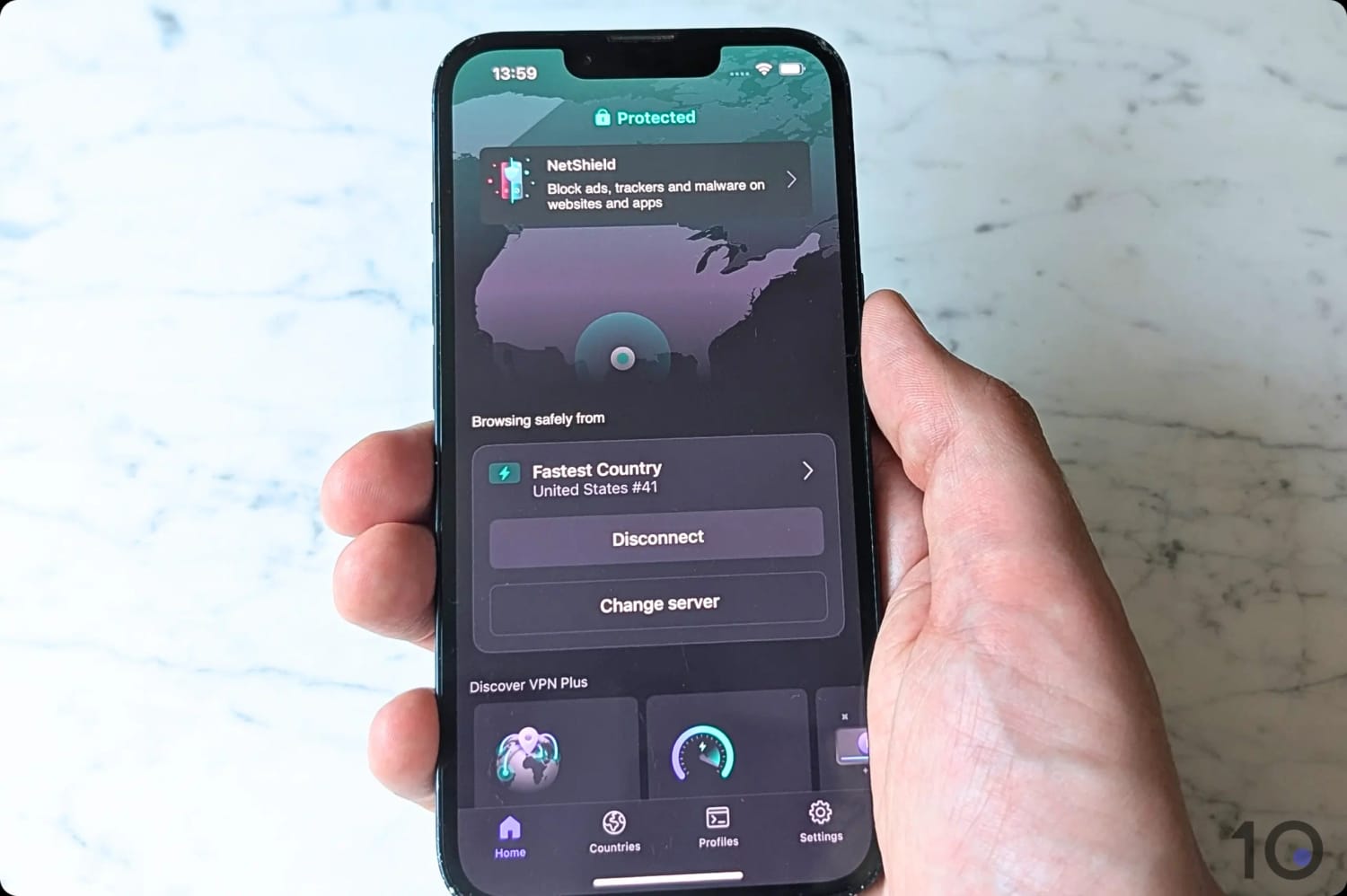
Proton VPN’s free iOS app is quick to download and install.
Strong Privacy Protections for Japan
Japan has intensified its monitoring of what happens online. ISPs are now allowed to retain connection metadata for up to six months and law enforcement has unlimited access to telecommunications data.
In this climate, using Proton VPN is a free way to ensure you stay private and secure at all times.
That’s because Proton keeps no logs of your activity, a policy that’s been independently audited and verified.
Its apps are also fully open-source, meaning security researchers can inspect the code for vulnerabilities.
This level of transparency is rare even among paid VPNs, let alone free ones.
Important Limitations You Can't Ignore
The main limitation is that Proton’s free tier no longer lets you choose your server location.
Despite having a free Japanese server, you can’t connect to it manually. The app picks the fastest available option automatically, which may or may not be Japan depending on where you are.
Proton’s free Japanese server also doesn’t unblock geo-restricted streaming services. In my tests, it failed to access Netflix Japan, AbemaTV, and all other Japanese platforms.
If you want consistent streaming access or reliable control over your IP location, I’d use one of the paid options above instead. Both NordVPN and Surfshark offer genuine VPN free trials, too.
Free extras like Android GPS spoofing & ad blocker
Unlimited device policy
10GB monthly data limit
No human live chat support
Triggers many search engine CAPTCHAs
Dated app design
Data Cap
10GB per month
Servers
10
Countries with Servers
10
Logging Policy
No Identifiable Data
Simultaneous Connections
Unlimited
Support
Email & Online Resources Only
Compatible with
Windows
Mac
iOS
Android
Linux
Amazon Fire TV
Android TV
Apple TV
Router
Chrome
Windscribe takes a different approach to Proton VPN. Where Proton gives you unlimited data and a security-first focus, Windscribe trades that for access to geo-restricted content across 10 countries.
You can manually select your server location, but all free servers carry a 10GB monthly data cap.
If you’re in Japan and want to occasionally dip into content from back home, Windscribe is the better free option. If you need a VPN running all day for privacy, Proton VPN is the stronger choice.
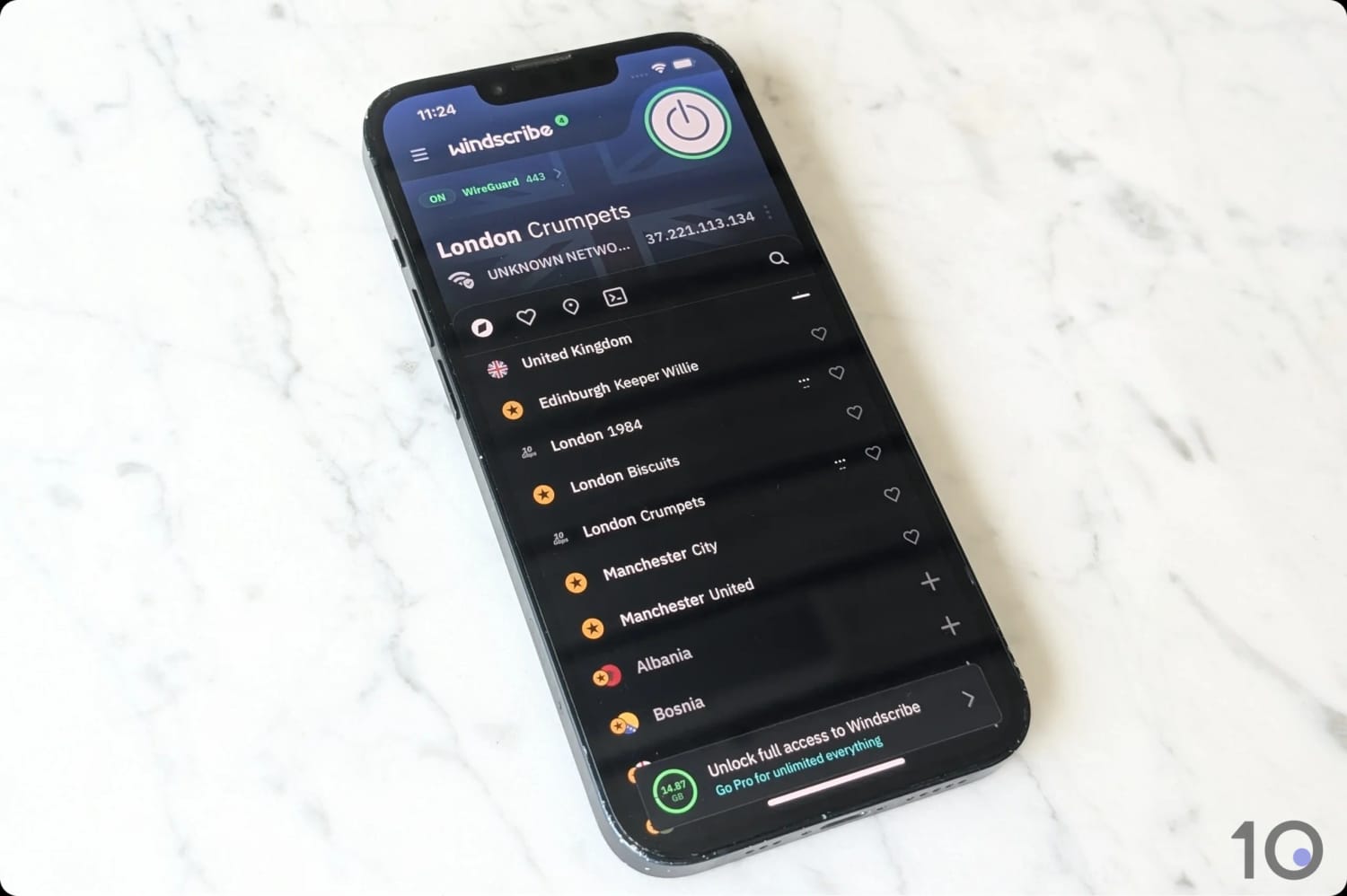
Windscribe’s free server list, including two free UK servers.
Surprising Access to Geo-Blocked Content
For a free VPN, Windscribe’s streaming success rate is genuinely impressive.
Its free servers across 10 countries work with a solid range of popular platforms.
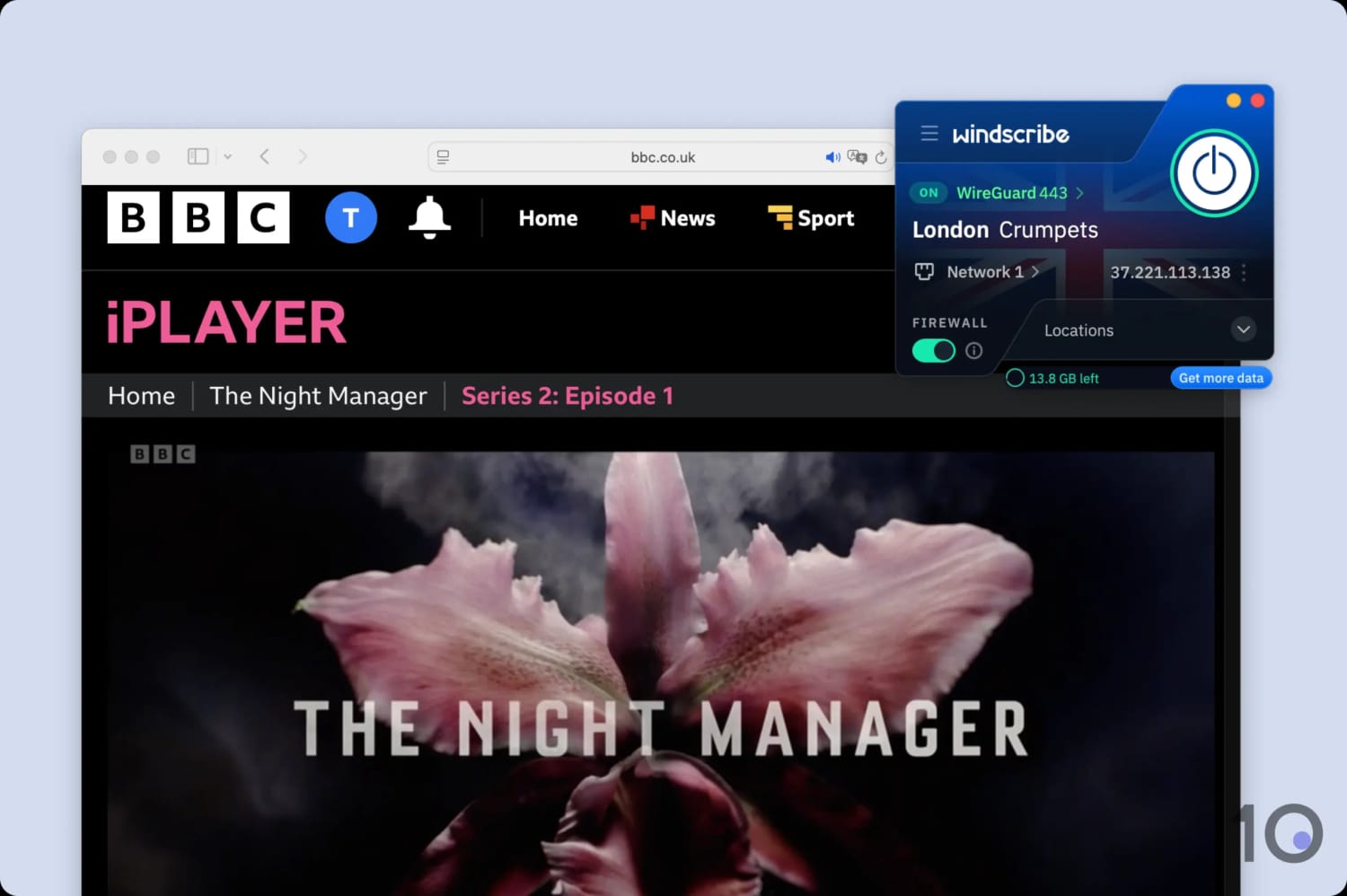
British users will find that BBC iPlayer, ITVX, Channel 4, and Sky Go all stream consistently from Japan.
All of Windscribe’s free UK servers worked with BBC iPlayer.
US users will be able to access Hulu, HBO Max, and Peacock, and the free Android GPS spoofing setting is especially useful for US sports apps like ESPN and NFL+.
From Japan, I found Windscribe’s Hong Kong server gave the fastest speeds and lowest latency on the free tier. It also worked with Viu and a few other regional platforms.
Buffering, CAPTCHAs & Limited Data
Windscribe’s streaming access is impressive, but it comes with real frustrations.
Buffering on the free servers is a genuine problem. I saw the loading spinner every 10 to 15 seconds during live streams on more than one occasion.
The volume of CAPTCHAs triggered by search engines is also irritating, particularly when using Windscribe’s browser extensions.
Then there’s the data cap. At 10GB per month, you’re looking at roughly four hours of HD streaming before you hit the ceiling.
For occasional use, that’s workable. For anything more, you’ll run out quickly.
What I Did: Examined the precise scale and distribution of every VPN’s server infrastructure, recording the overall number of servers and the countries they cover.
Why It Matters: A vast worldwide presence allows you to effortlessly overcome regional restrictions and ensures quicker connections by minimizing server overcrowding.
Optimal Result: Connection options spanning more than 100 nations, featuring a robust and balanced presence throughout all primary continents.
2. Japan Servers (25%)
What I Did: Counted the number of Japan servers in each VPN’s network, including how many city locations it offers, followed by the use of an IP location checker to verify location accuracy.
Why It Matters: A Japanese IP address will enable you to unblock geo-restricted content, and the more Japanese servers a VPN offers, the better its performance.
Optimal Result: Hundreds of servers in Japan spread across multiple Japanese cities.
3. Speed (15%)
What I Did: Conducted internal performance tests to evaluate each VPN’s download speeds connecting into and out of Japan.
Why It Matters: High speeds are essential for ensuring uninterrupted web surfing and seamless, high-definition video streaming without buffering.
Optimal Result: A reduction in download speed of no more than 10% for nearby connections, and a maximum drop of 20% when using long-distance servers.
4. Streaming (10%)
What I Did: Evaluated every VPN against the most popular Japanese and global streaming services.
Why It Matters: Guarantees that users can seamlessly access both Japanese and worldwide entertainment libraries regardless of their physical location.
Optimal Result: Successfully bypassed geo-restrictions on 100% of the media platforms I evaluated.
5. Privacy (10%)
What I Did: Examined the privacy policies of every VPN to determine their exact data retention practices, grading them according to my rigorous criteria.
Why It Matters: In reality, numerous VPN providers quietly retain your personally identifiable information, severely compromising your online anonymity.
Optimal Result: A verified zero-logs guarantee, substantiated through third-party audits or confirmed during actual server confiscations.
6. Security (10%)
What I Did: Thoroughly assessed the security features of every VPN, putting their kill switches through strict tests and scanning for any DNS or IP exposures.
Why It Matters: A single IP leak or weak encryption immediately exposes your true location and browsing habits to ISPs and hackers.
Optimal Result: Absolutely no data exposure, a perfectly functioning kill switch, and a robust array of modern encryption standards.
Data Cap Penalty
The vast majority of secure free VPNs restrict how much data you can use each month, which can hugely limit what you’re able to do with them.
After I calculate a free VPN’s rating, I reduce it based on the data cap. These are the penalties I apply:
Unlimited bandwidth: No deduction to the overall rating
10GB per month: -20% to the overall rating
500MB per day: -25% to the overall rating
5GB per month: -30% to the overall rating
1GB per month: -35% to the overall rating
200MB per day: -40% to the overall rating
500MB per month: -50% to the overall rating
Popular VPNs That Didn't Make the Cut
I tested 59 VPNs and found that many were slow, lacked reliable Japanese servers, or couldn’t bypass Japanese geo-blocks.
Even some well-known names fell short. Here are the most popular VPNs I can’t recommend for Japan right now, and the reasons why.
CyberGhost
CyberGhost is a capable VPN in general, but its speeds connecting into Japan from abroad were notably slower than ExpressVPN and NordVPN in my tests.
I recorded a 19% slowdown versus my baseline connection, which was enough to cause buffering during live streams.
IPVanish
In my streaming tests, IPVanish could only reliably access Netflix Japan out of all the Japanese services I tried. It has improved its international access over time, but it’s not yet at the level of ExpressVPN and NordVPN.
Mullvad
Mullvad is a genuinely excellent VPN for privacy, but it failed to unblock a single Netflix library in my tests, let alone Japanese streaming services. There’s no Fire TV app and no Smart DNS either.
Private Internet Access
Private Internet Access (PIA) is a solid no-logs VPN and a good choice for file sharing.
For Japan specifically, though, it struggled to access most Japanese content platforms in my tests, as well as several important international ones. That rules it out for most streaming use cases.
Urban VPN
Urban VPN isn’t a VPN you can trust. It logs your IP address, it leaks DNS requests, and it struggles to unblock most geo-restricted content platforms, including Japanese ones.
FAQs
Is It Legal to Use a VPN in Japan?
VPNs are entirely legal in Japan and it’s completely okay to get a Japanese IP address from overseas, as long as you don’t use it for illegal activities.
Are There Safe Free VPNs with Japanese Servers?
The two most trustworthy options are Proton VPN and TunnelBear, though neither lets you manually select a Japanese server. I didn’t include TunnelBear in my list because it also caps you at a highly restrictive 2GB per month.
What's the Best VPN for Netflix Japan?
NordVPN was the most reliable VPN at streaming Japanese region-locked content on Netflix, followed by ExpressVPN.
How Do I See English Subtitles on Japanese Netflix?
Many Japanese Netflix titles include English subtitles, but not all. If they’re available, you’ll find them in the Audio and Subtitles section (bottom right corner) of the options panel.
Can I Watch Japanese Anime with a VPN?
You certainly can, and ExpressVPN works really well with services like Crunchyroll, which have a larger anime library in Japan. AbemaTV and U-Next also stream anime for free in Japan.