





Top10VPN is editorially independent. Buying a VPN through our links supports our work.
The Best VPNs for Online Gaming
Follow us:
Simon Migliano
Simon Migliano is a recognized world expert in VPNs. He's tested hundreds of apps and his research has been featured on the BBC, The New York Times, and more. Read full bio
ExpressVPN remains my go-to for online gaming, with the smoothest gameplay and the most console setup methods. NordVPN is a close second and posted the lowest ping I measured for a paid VPN. Windscribe is the free pick, but 10GB a month doesn’t go far.
There’s a lot of misinformation about using a VPN for gaming. Plenty of websites still claim a VPN can speed up your internet, reduce lag, shut down a DDoS attack, or get you games before their release date.
A VPN does none of those things. You can use a VPN to get a moderate NAT Type, access easier lobbies by avoiding skill-based matchmaking (SBMM), stop ISP throttling, and sidestep an inherited IP ban.
However, the unique demands of online gaming, like low ping, stable connections, and access to servers around the world, mean that most of the VPNs I’ve reviewed simply aren’t good enough.
Pick the wrong one and you’ll be worse off than you were without it, with added lag, connections that drop mid-match, and in some cases a banned account.
To find these gaming VPNs, my team and I tested 59 services on computers, smartphones, and game consoles with a range of titles including Apex Legends, Fortnite, PUBG, and Warzone.
🔄 Recent Updates
Added new hands-on details from my own gaming sessions on each VPN. Also updated the comparison table with ping stats, server network sizes, console setup methods, Smart DNS availability, and device limits.
Why Trust Us?
We’re fully independent and have been reviewing VPNs since 2016. Our ratings are based on our own testing results and are unaffected by financial incentives. Learn who we are and how we test VPNs.
VPNs Tested
59
Total Hours of Testing
30,000+
Combined Years of Experience
50+
VPN Comparison Table
Below is a side-by-side comparison table of my chosen gaming VPNs, with their individual performance ratings, free trial options, and cheapest available price.
The most user-friendly apps for desktop, mobile & routers
Smart DNS proxy works well on game consoles
Built-in advanced features such as obfuscation & rotating IPs
3-day free trial on Android & iOS
More expensive than Surfshark
No port forwarding
No built-in GPS spoofer on Android
Pricing Plans
$14.99/mo
$4.99/mo over 15 months
$2.99/mo over 28 months
Countries with Servers
113
Servers
13,360
Smart DNS
Yes
Simultaneous Connections
10
Support
24/7 Live Chat
Compatible with
Windows
Mac
iOS
Android
Linux
Amazon Fire TV
Android TV
Apple TV
Router
Chrome
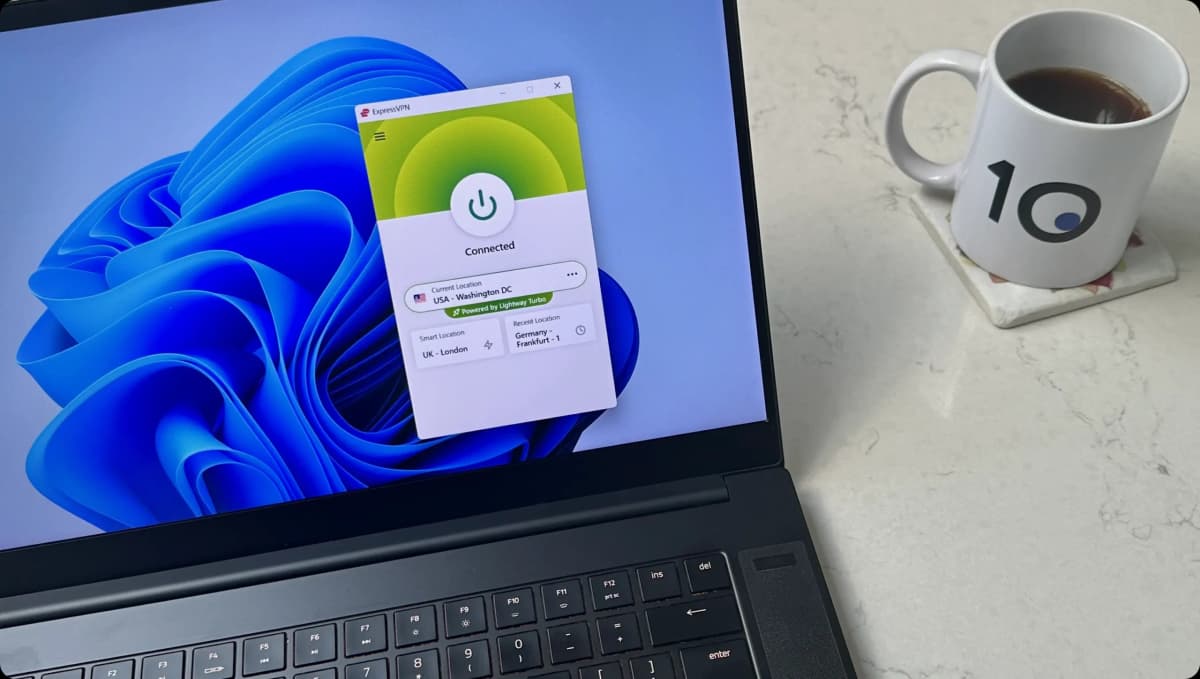
ExpressVPN is my top-rated VPN for gaming on all devices. Its large server network, low latency, and wide device compatibility make it a great choice for mobile, PC, and console gamers alike.
The standout is its dedicated router app, which covers every gaming system in the house from a single installation. It’s the reason it’s also the easiest VPN to get running on PlayStation and Xbox.
The gaps are on Android, where the lack of a built-in GPS spoofer makes it less suited to mobile gaming than Surfshark, and on price, where Surfshark undercuts it on multi-year plans.
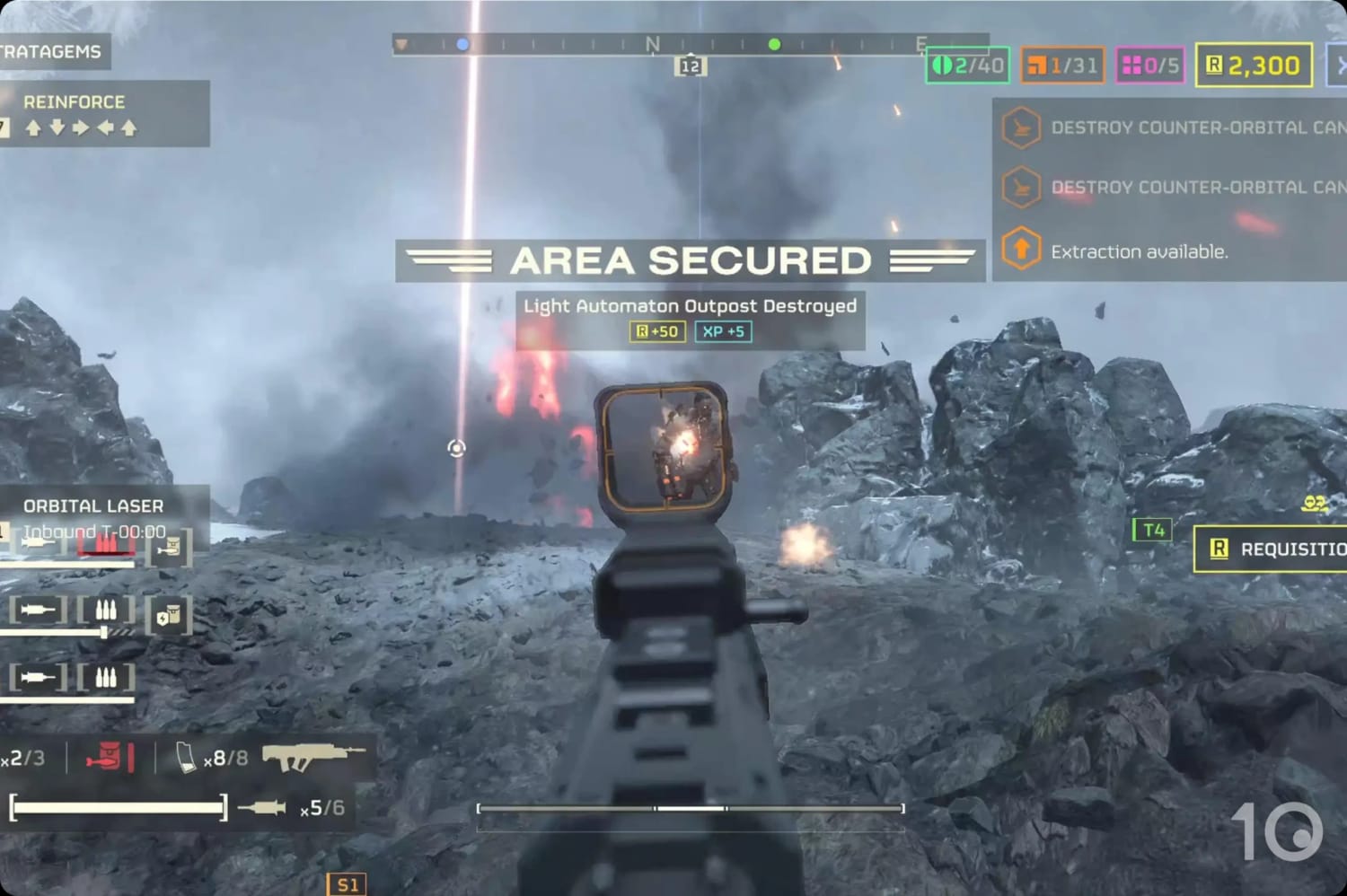
I didn’t notice any lag on Helldivers 2 while connected to ExpressVPN.
Consistently Low Ping for Lag-Free Gameplay
While connected to a nearby ExpressVPN server, I recorded an average ping of 8ms locally and 170ms internationally.
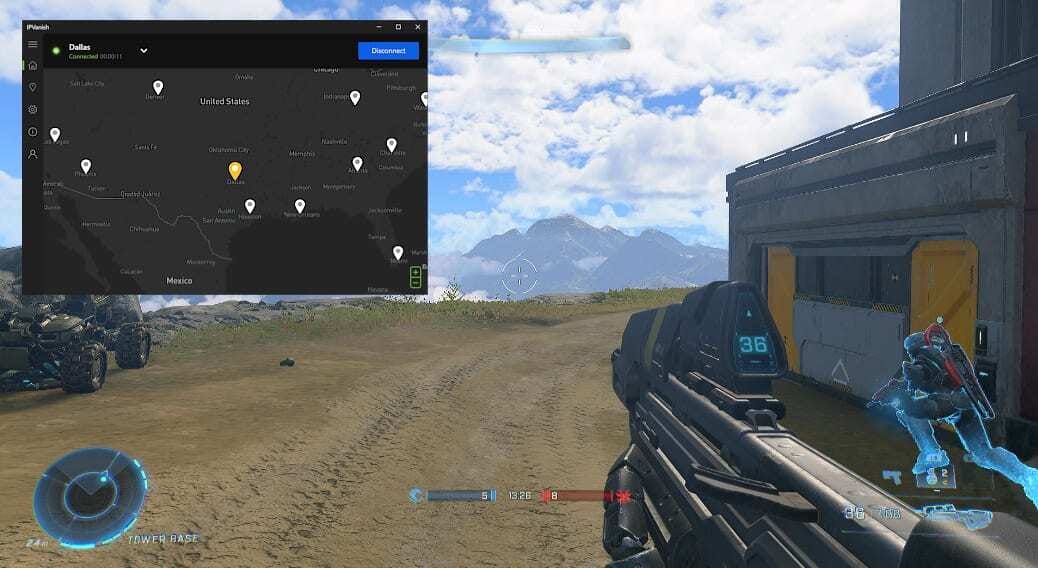
To find out what those numbers actually feel like, I played Valorant and Halo Infinite with the VPN running across several days and at different times, peak hours included.
I never noticed lag or a frame rate drop in any of those sessions, and my hit detection was unaffected.
The chart below shows how ExpressVPN’s short-range ping compares to other top-rated VPNs over five years of testing:
As it shows, ExpressVPN’s latency over short distances has stayed below 10ms year after year.
Stability impressed me just as much as the average. Jitter was extremely low in nearly every session I ran, which is what stops a low ping from being misleading.
Download speeds saw minimal impact too, with an average speed loss of just 2% connecting to nearby servers, and 15% loss on longer routes.
Works on All Game Consoles & Devices
What separates ExpressVPN from the pack is how much gaming hardware it covers.
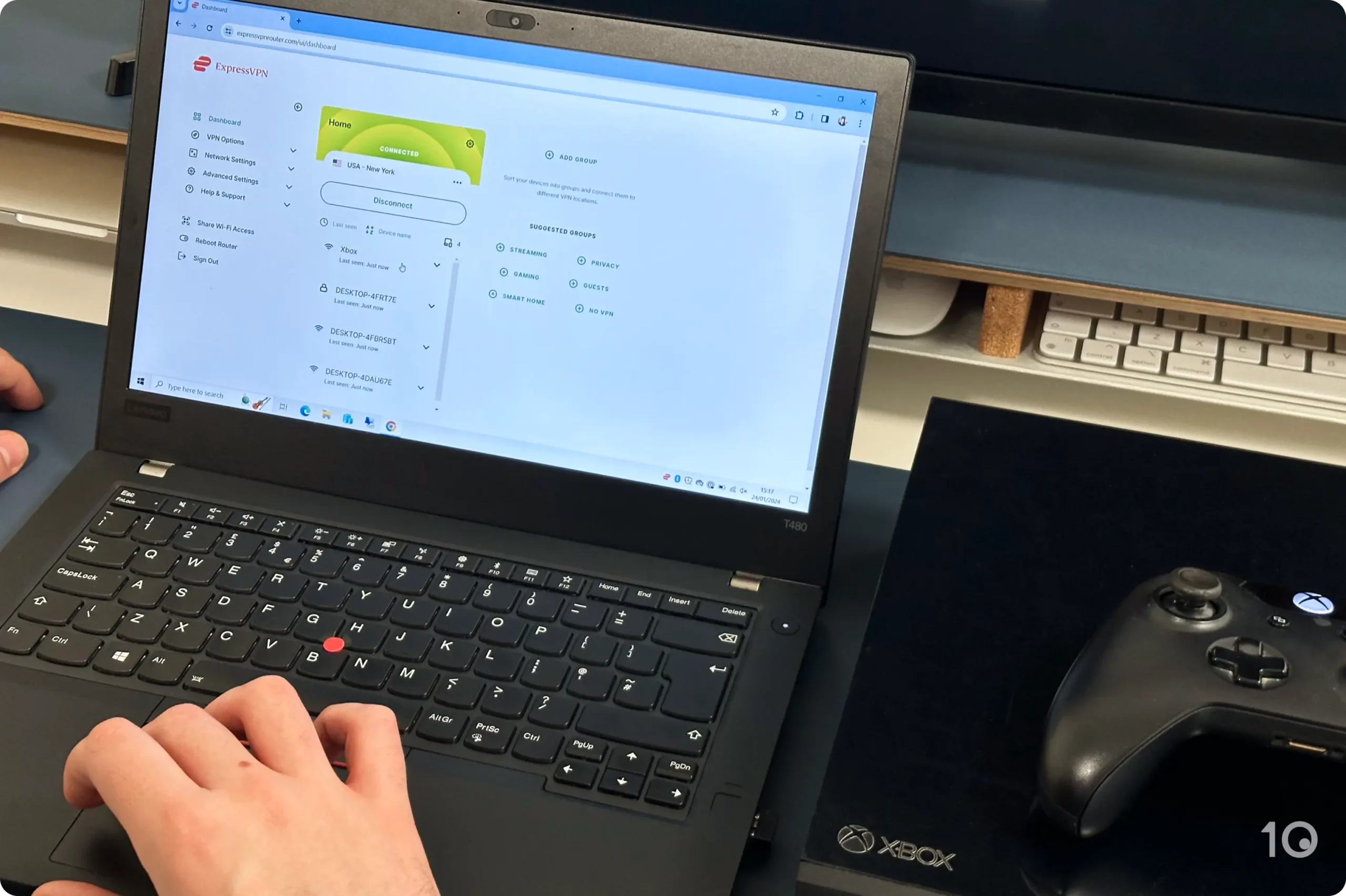
Its dedicated router app is its ace in the hole. With the VPN installed at the router level, I could connect my console directly and route its traffic through any ExpressVPN server I chose.
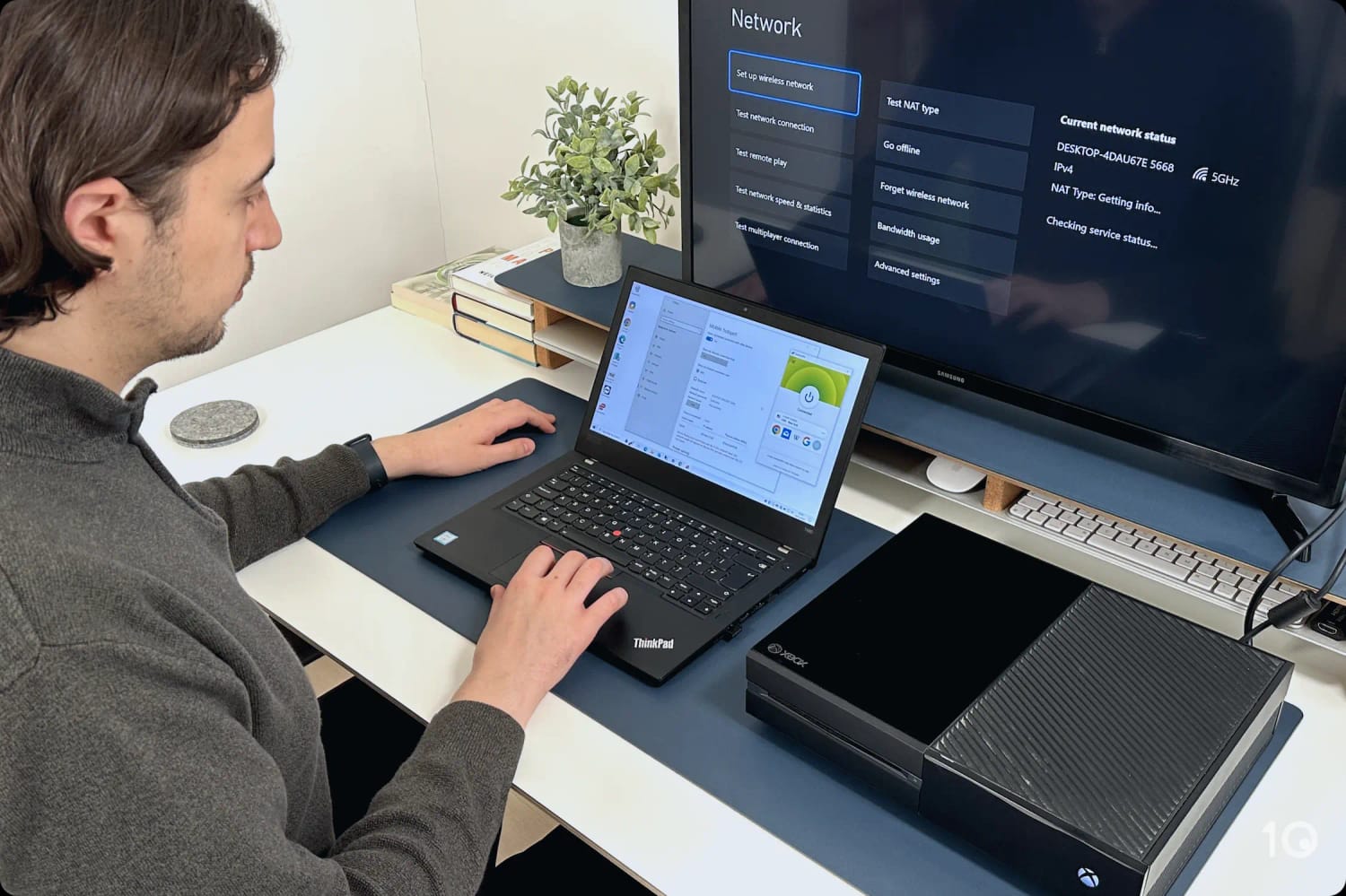
It only took me a few minutes to set up ExpressVPN’s router app and connect my Xbox.
There’s one massive caveat: the router app is only available on ExpressVPN’s own Aircove router models, which are expensive.
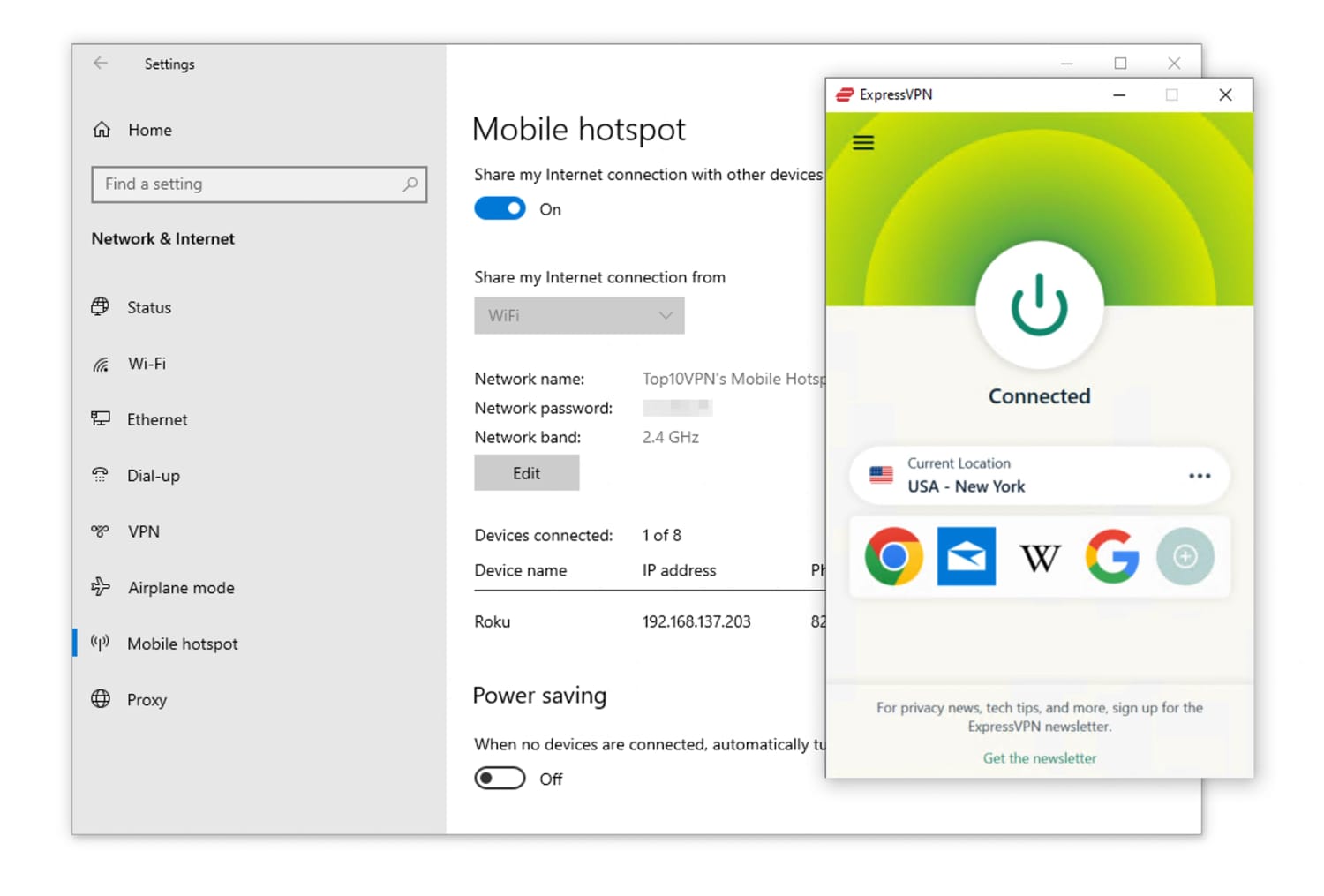
Alternatively, you can share a VPN connection using ExpressVPN’s Windows app and a mobile hotspot. This is also a great choice if you’re unable to access the WiFi router, like in a hotel or dorm.
If all you want is to unblock geo-restricted content on your console, the Smart DNS proxy (MediaStreamer) is an easier option. It won’t encrypt your connection, but it will spoof your geo-location to the US or UK.
The desktop and mobile apps deserve a mention of their own. They’re the best designed in the industry, quick to install, and connect in a single click or tap.
Extensive Global Server Coverage
ExpressVPN’s network consists of 13,360 VPN servers across 113 countries.
Like NordVPN’s server network, that density ensures there’s always a server near you, which minimizes latency.
And with so many countries on offer, you’re really spoiled for choice when it comes to connecting to locations with easier lobbies and avoiding SBMM.
In my own testing, I used the VPN’s vast pool of international IP addresses to bypass IP restrictions on games, like the PUBG Mobile ban in India.
NordVPN posted the lowest ping of any paid VPN in my latest round of testing, and it maintains that consistency on long-distance connections.
Its server network spans 137 countries, and combined with those international speeds it’s my first choice for switching regions to find easier lobbies abroad.
What keeps NordVPN in second place is getting it onto a console. Without a dedicated router app, setting it up on my Xbox and PS5 was noticeably more fiddly than ExpressVPN.
My ping rarely exceeded 8ms on NordVPN servers.
Minimal Latency & Lag
In my most recent tests, I registered an average ping of 8ms while connected to a nearby NordVPN server.
This is a very good ping reading for a VPN, and it’s consistent with the results I’ve tracked over the last few months.
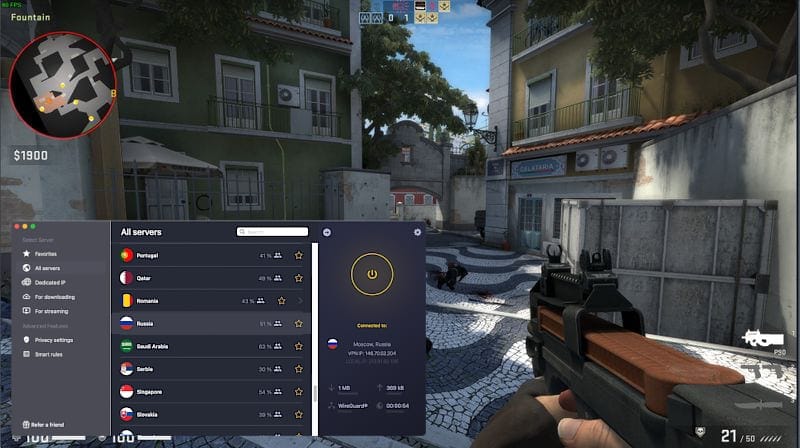
As part of my evaluation, I connected to NordVPN and played multiple matches of Counter-Strike 2 and Rainbow Six Siege. Across several hours of testing, I never detected high lag or sudden frame rate drops.
Even while connected to distant server locations, like Egypt or New Zealand, I enjoyed stable connections to matches and smooth gameplay.
Network speeds were what I’ve come to expect from NordVPN over the years, which is to say they didn’t disappoint.
I recorded an average download speed loss of only 4% on short distances, and 14% connecting to more distant servers.
Highly Compatible but No Router App
You can install NordVPN directly on Windows, macOS, iOS, and Android devices. All apps are fairly consistent in design, and include useful settings such as a kill switch and split tunneling.
Split tunneling is the one I use most for gaming, since it lets you send Steam or a single mobile game through the VPN tunnel and leave everything else on your normal connection.
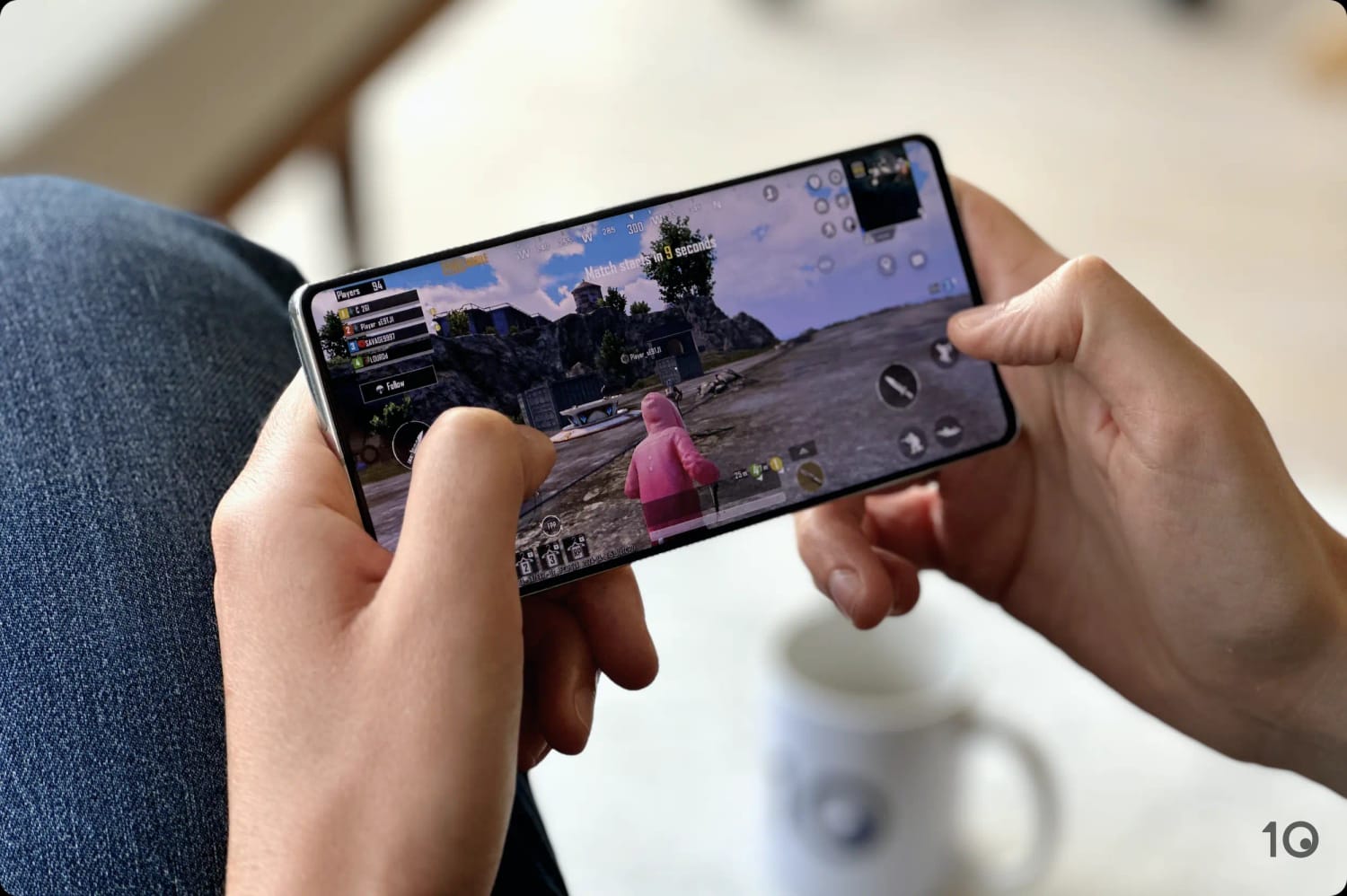
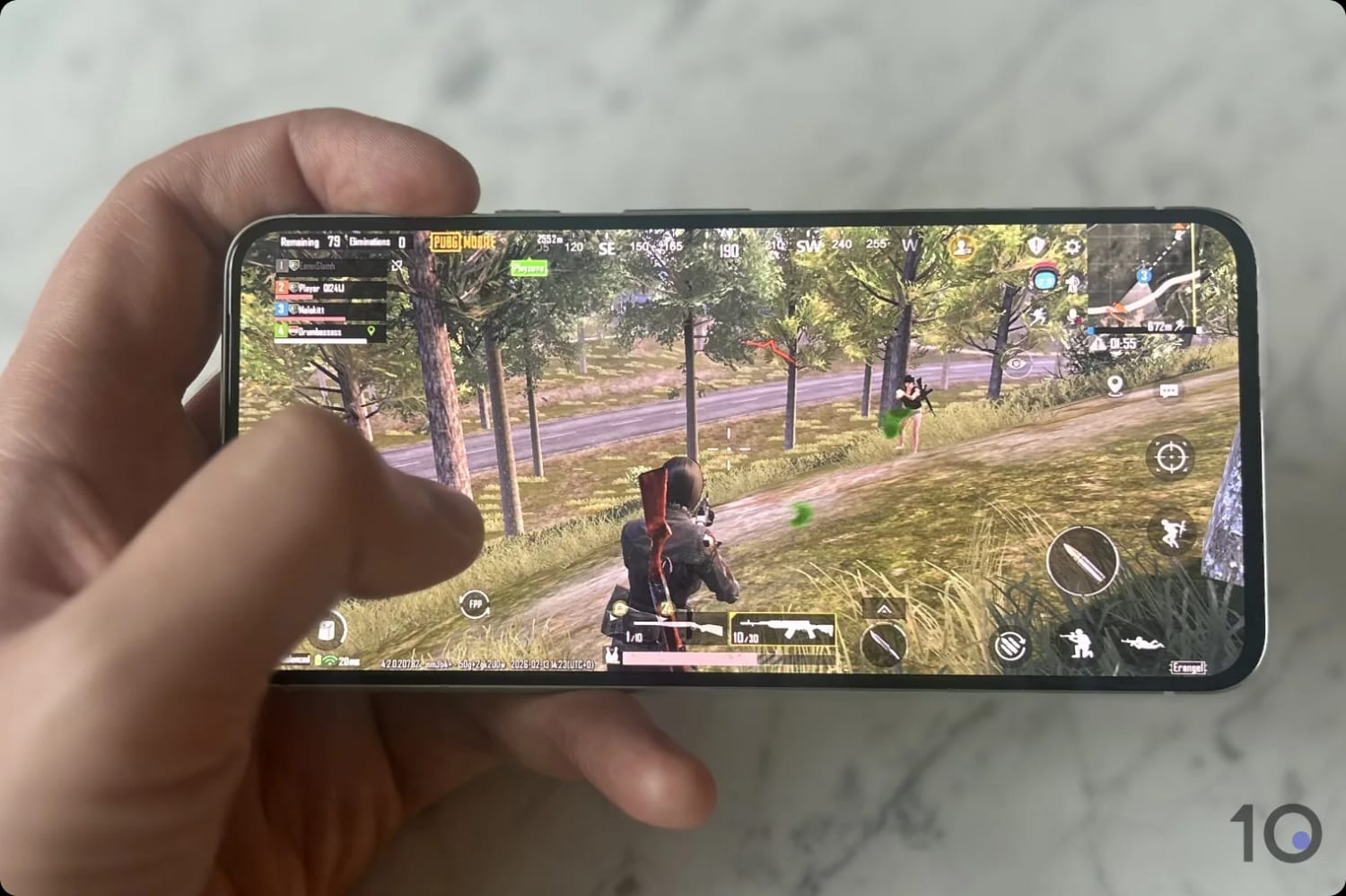
I used NordVPN to protect against DoS attacks while playing PUBG on Android.
Unlike ExpressVPN, NordVPN has no dedicated VPN app for routers, although you can still manually install the VPN on compatible models.
If that sounds too time-consuming, the alternative worked well for me: I got NordVPN onto my PS5 via a Windows mobile hotspot without any difficulty.
You can also use the service’s Smart DNS proxy to change the online location of your console. This won’t encrypt your traffic, but it’ll make you appear in a different location.
Meshnet Is Great for Global LAN Parties
Using port forwarding to try and get friends your into the same lobby is far from straightforward.
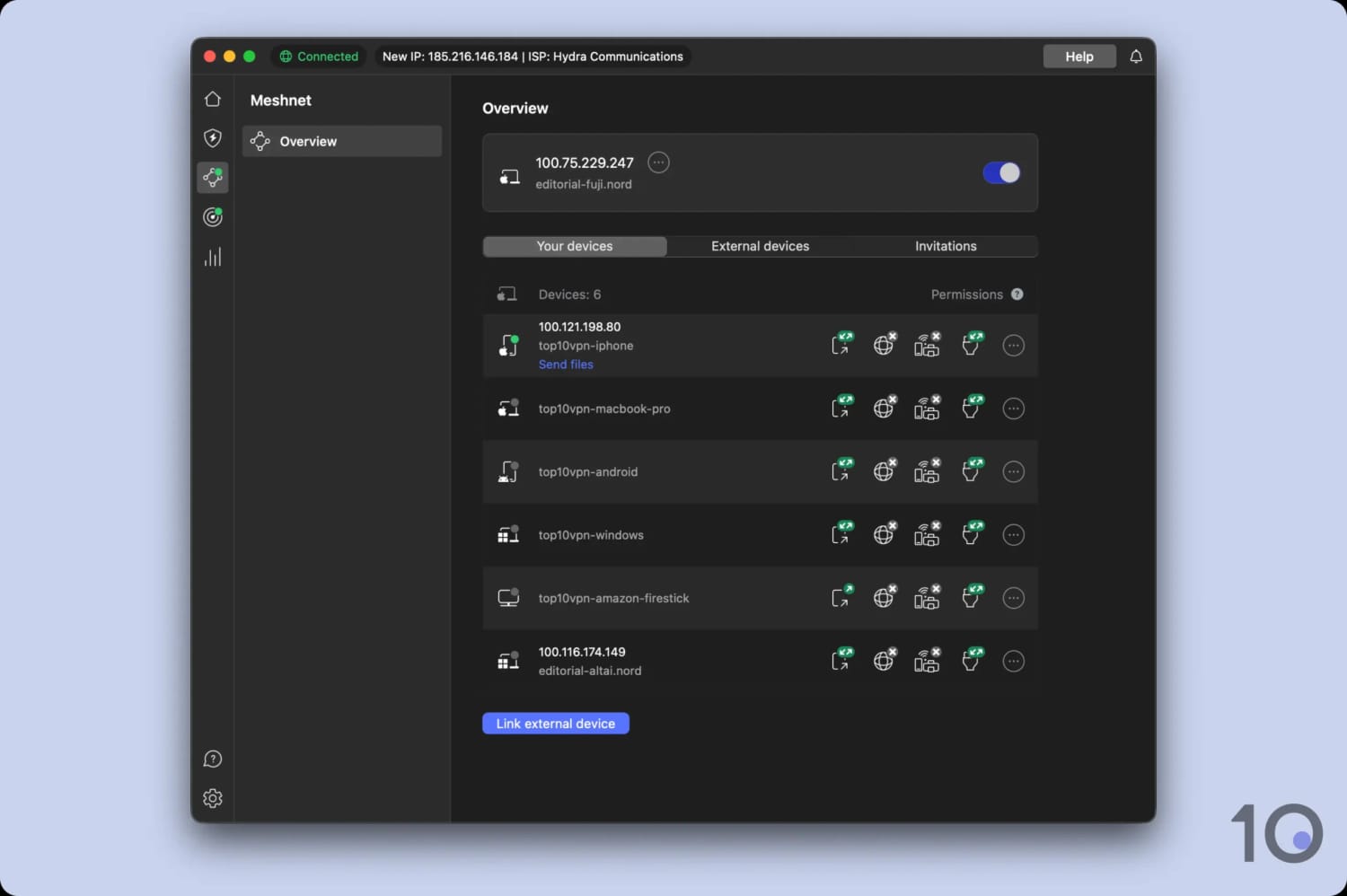
NordVPN’s Meshnet is a better alternative since it creates a private, encrypted virtual LAN that connects yours and your friends’ computers as if you were all connected to the same router.
Setting up NordVPN’s Meshnet.
Once set up, Meshnet assigns each of your friends a unique IP address on your personal network, allowing you to host local multiplayer games without touching your router settings or exposing your home network to the public internet.
By creating a direct connection between all the devices, Meshnet’s Direct Link technology keeps your ping significantly lower and more stable, since your data won’t take unnecessary detours.
Surfshark is my choice for mobile gaming, and its Android app is the reason why.
It’s also the cheapest of my recommendations at $2.49/mo over 27 months, and you can even try it without paying anything through its 7-day free trial.
While the price may be appealing, Surfshark has higher ping than other top-rated VPNs on long-distance connections, and it no longer supports Smart DNS.
Surfshark remains my favorite pick for mobile gaming.
Ideal for Changing Location on Mobile
Surfshark offers access to VPN servers in 100 countries, with city-level options in 11 of them. As such, you’ll always have a server you can connect to, even at peak times.
On my Android phone, I connected to a Surfshark server in Argentina to find easier lobbies on COD: Warzone Mobile.
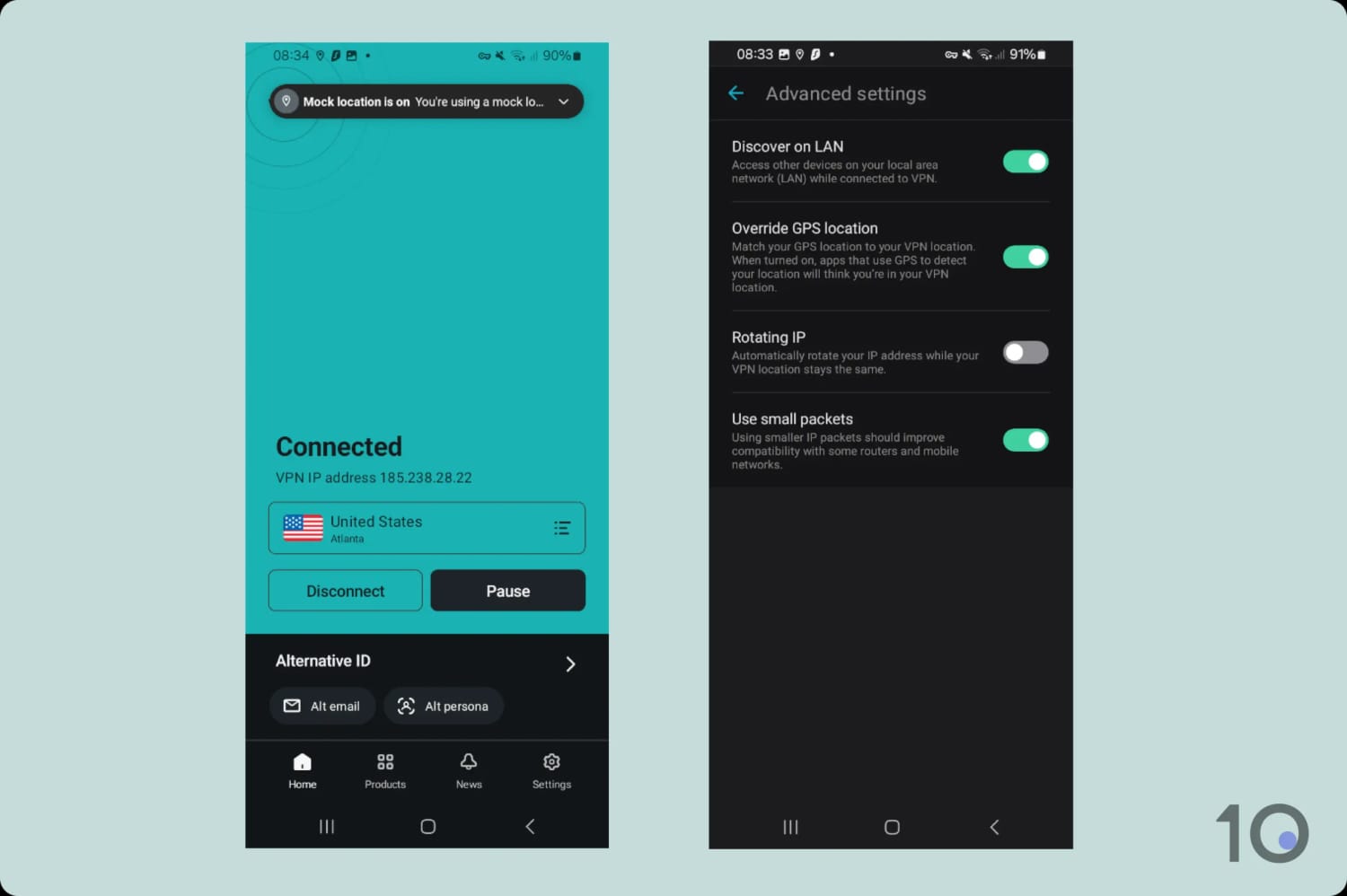
The setting that makes this work is Surfshark’s GPS spoofer, ‘Override GPS location,’ which hides your real coordinates from the game itself. Without it, changing your IP address alone gets you nowhere on mobile.
Using Surfshark’s Override GPS location function.
‘Override GPS location’ also worked well with location-based games such as Pokémon GO, Monster Hunter Now, and Jurassic World Alive.
I also connected to Surfshark’s India VPN servers to change Steam store region and pay significantly less for games.
When on the go, I liked using the ‘Use small packets’ setting, which stabilized my connection on weaker cellular networks and made gameplay feel smoother.
Smooth Gameplay on Nearby VPN Servers
My ping held at 9ms on a close-by Surfshark server, which is low enough for casual and competitive play alike, including fast-paced battle royales like Fortnite and PUBG.
I didn’t notice any lag and my frame rate was consistent on PC and game consoles across hours of testing.
On longer-distance connections, my average ping shook out at 175ms, which is similar to ExpressVPN. In South Africa it spiked to 407ms, though, so keep that in mind.
Download speeds were also solid, with only 4% slowdown on a close-by Surfshark server and 17% connecting further out. Not as good as NordVPN’s or ExpressVPN’s, but very respectable nonetheless.
Works with Most Setup Methods
Like its two higher-ranked competitors, Surfshark has fully-featured apps for Windows, macOS, iOS, and Android.
I was able to use Surfshark on game consoles by installing it on my router, or sharing its VPN connection from a computer.
The second of those turned up something I didn’t expect. Surfshark is the only VPN I’ve tested that can share its connection on a Mac, over Ethernet, which is genuinely useful if you don’t own a Windows PC.
Conversely, the removal of its Smart DNS tool makes it a weaker option for game consoles.
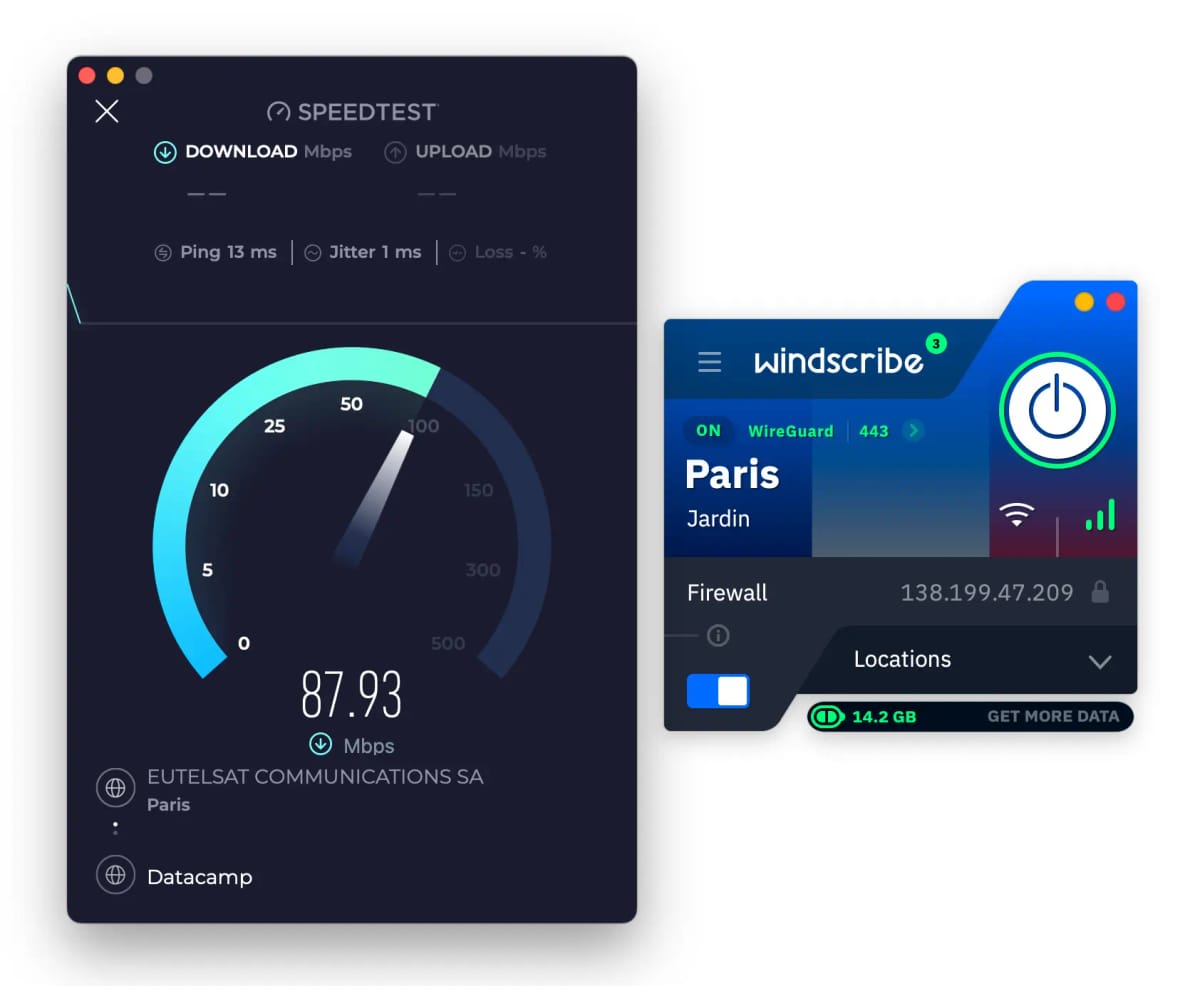
Windscribe’s free plan is the best free VPN for gaming I’ve tested, and my latest round of testing confirmed what years of using it had already told me.
Unlike most free VPNs, it delivers fast connection speeds, uses industry-approved encryption standards, and barely increased my ping.
Its 6.1/10 rating reflects how far behind paid VPNs it still lags, primarily due to a 10GB monthly data cap, free servers in only 10 countries, and higher jitter than my top picks.
I didn’t experience any lag while using Windscribe’s free plan.
Lowest Ping of Any Free VPN I’ve Tested
I measured an average ping of 5ms while connected to a nearby free server. This is an exceptional result for a free VPN and is unlikely to cause any lag.
As expected, my ping increased on longer connections to 75ms in the UK and 98ms in Germany, with an overall international average of 64ms.
Don’t take that figure entirely at face value. Windscribe’s average only accounts for mostly European and North American locations, making it a flawed comparison against ExpressVPN’s 113-country global average. That skewed sample size is why Windscribe still trails paid services in our ping ratings.
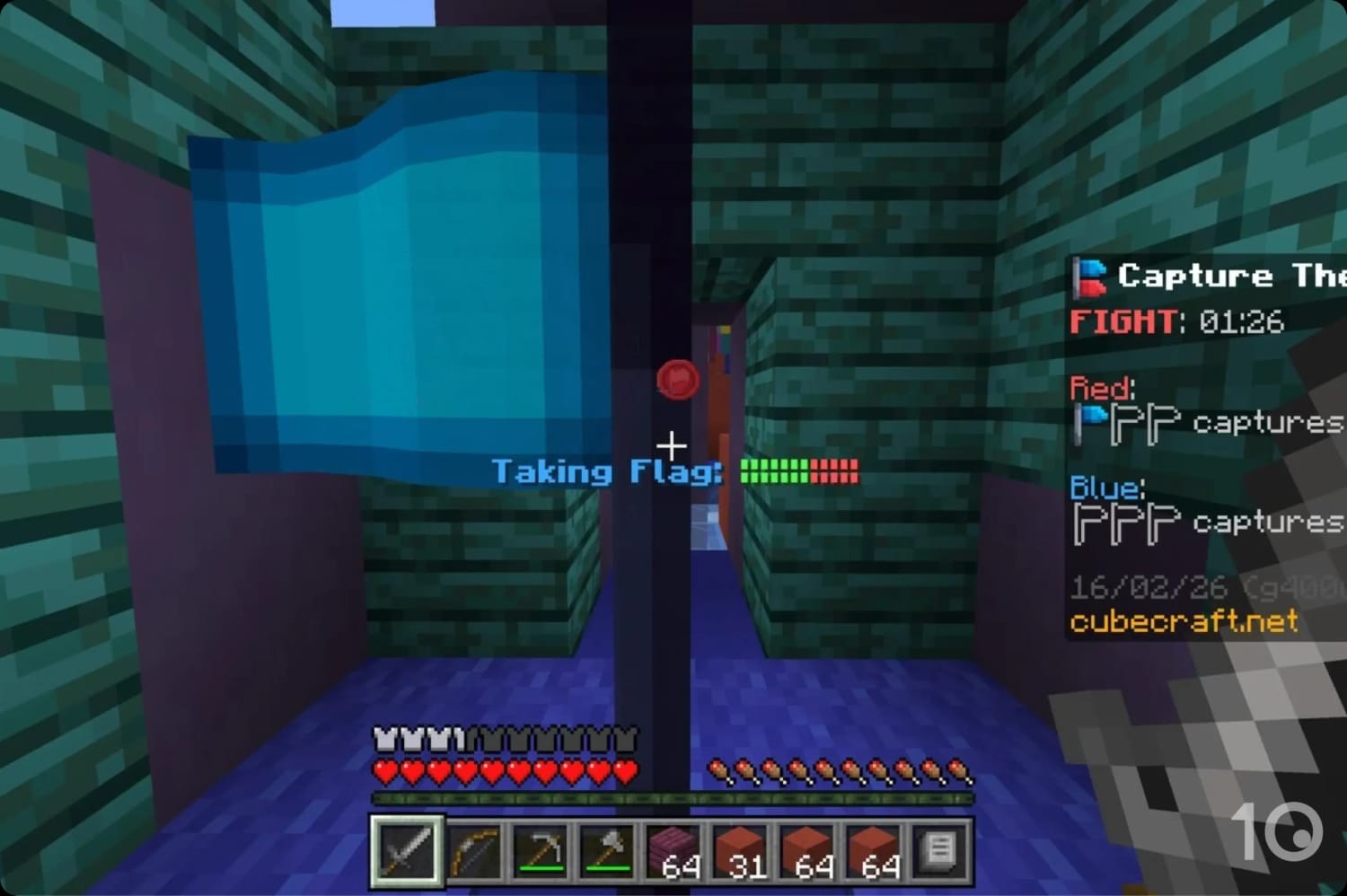
I used Windscribe myself across several Minecraft servers without any frame rate drops or rendering issues.
Speeds tell a similar story: not a match for a top-tier paid service, but quick enough not to get in the way, with only a 9% dip on nearby servers and 13% on longer connections.
Unlike many other free VPNs, Windscribe maintains fast speeds across its server network.
Difficult to Set Up on Game Consoles
Windscribe provides free apps for iOS, Android, macOS, and Windows. I found it seamless to set up and use for online gaming, especially on mobile.
Sadly, you can’t install Windscribe’s free VPN on routers, making it much harder to use on game consoles. Windscribe does have a standalone Smart DNS proxy service called Control D, but it costs up to $40.00 a year.
To use Windscribe on your game consoles, you’ll basically need to create a mobile hotspot or use an Ethernet cable via your computer.
Smaller Server Network
You can connect to a free Windscribe server in 10 countries, which is good for a free VPN but underwhelming compared to a paid service.
While there are multiple free server locations in Europe and North America, there’s only one location in Asia, and none in South America or Africa.
That’s a real problem if you want easier lobbies, because the low-population regions worth connecting to for SBMM purposes aren’t on Windscribe’s free list. For that you’ll need one of the paid services above.
Before you buy anything, it’s worth working out whether you actually need a VPN at all. The table below sorts the common claims into the ones that hold up in testing and the ones that don’t.
True
False
Avoid SBMM and find easier lobbies
Lower your ping or remove lag
Prevent DoS attacks
Prevent DDoS attacks
Bypass IP bans
Speed up your internet connection
Stop ISP throttling
Access games before their release date
Get a moderate NAT Type via a PC hotspot
Change your App Store region
Buy some games more cheaply
Circumvent local firewalls
Access geo-restricted content
Six of the ‘true’ use cases are worth explaining properly, and I’ve done that below.
The last two, bypassing firewalls and unblocking geo-restricted content, work exactly as they would with any other kind of internet traffic, so there’s nothing gaming-specific to add.
1. Avoid SBMM
Popular battle royale games, such as Call of Duty: Warzone and PUBG, use a system known as skill-based matchmaking (SBMM).
The algorithm determines your skill based on your in-game performances, then matches you against players of roughly the same ability.
To bypass this, you can connect to a VPN server in a region with a smaller player base. The algorithm then prioritizes filling the lobby over matching skill, resulting in easier matches.
A tried-and-tested trick is to connect to a region where it’s currently between 3:00 AM and 7:00 AM local time, when the “sweaty” players and streamers tend to be asleep.
Because the matchmaking server can’t find enough players at your exact skill level, the game will often drop you into a lobby filled with casual players and bots.
I’ve listed several countries and regions that work best for this further down.
2. Prevent DoS Attacks
If you play competitive multiplayer, compete in e-sports, or stream on Twitch, you may find yourself on the receiving end of a denial of service (DoS) attack.
DoS attacks are when an attacker sends large amounts of traffic to your IP address to disrupt your connectivity and even disconnect you from the internet.
A distributed denial-of-service attack (DDoS) is a far more sophisticated attack on your network from multiple sources. These types of attack are generally faster, more severe, and much harder to protect against.
A commercial VPN wouldn’t be able to prevent or disrupt an ongoing DDoS attack.
3. Change a Strict NAT Type
A strict NAT Type slows your matchmaking time, weakens your connection to the game server, and restricts your communication with other players.
Some consoles, like the Nintendo Switch, lean heavily on P2P connections and won’t work online if you have a strict NAT firewall.
Despite what some sites may claim, connecting to a VPN doesn’t change your router’s NAT Type. If anything, routing your traffic through both your router and a VPN server would restrict your NAT Type further.
However, you can change your NAT type by connecting to a VPN mobile hotspot on Windows 10 or 11. This consistently assigns you a moderate NAT Type regardless of your router or network settings.
4. Stop ISP Throttling
Your internet service provider (ISP) may throttle your connection while you’re gaming, either because of how much bandwidth you’re using or because of where you are.
It’s also common for ISPs in hotels, college dorms, or other shared accommodations to throttle your connection to optimize bandwidth distribution.
Some online games ban IP addresses they suspect of wrongdoing. This can wrongly lead to your IP address being banned, preventing you from playing the game.
It’s also entirely possible for your ISP to assign you an IP address that was banned due to the actions of a previous user.
In either case, connecting to a VPN server replaces the banned IP address with a clean one and gets you back into the game.
I’d stop short of recommending it if the ban is yours, though. Evading a ban you earned breaches the terms of the game you’re playing and can escalate to a permanent suspension.
It’s also not a universal fix: a VPN can’t do anything about bans tied to your account, your email address, or your device’s MAC address.
6. Get Games Cheaper
Though you can’t use a VPN to access games early, you can get games for cheaper in most cases.
On Xbox, the approach that works is buying a game key from a cheaper region and activating it on a VPN server there. I picked up a Red Dead Redemption 2 key from Turkey for a fraction of the US price and redeemed it in my Microsoft account through a Turkish server.
While this saves money, it’s also strictly prohibited in the Microsoft terms of service. I’ve never known anyone to receive a ban for taking advantage of it, but you are doing so at your own risk.
Similarly, I discovered that you can use a VPN to get Steam games for cheap on PC.
On PlayStation, a VPN won’t get you cheaper games at all. Your PS Store is tied to the region of your account rather than your IP address, so the only route is creating a new PSN account in another country, which is a slow and frustrating process.
How to Use a VPN on a Game Console
Consoles don’t support VPNs natively, which makes getting a VPN onto one considerably harder than installing an app on a PC.
My team and I have spent hours working through the options, from installing VPN software manually on a WiFi router to changing the console’s DNS settings.
The method I keep coming back to is the simplest: share your VPN connection from your computer, either through a mobile hotspot or an Ethernet cable.
How to Set Up a VPN on Your Game Consoles via Mobile Hotspot:
Subscribe to a reputable VPN and install it on your Windows PC or laptop.
Connect to the VPN on your computer.
Create a mobile hotspot in your Network & Internet Settings.
Share your VPN connection through the mobile hotspot.
Connect your game consoles to the hotspot.
I used ExpressVPN on my Xbox by creating a mobile hotspot.
For device-specific instructions and alternative setup methods, you can refer to my dedicated guides:
Connecting to another country is one of the main reasons gamers use a VPN in the first place, so I’ve listed the countries worth getting an IP address for, and what each one gets you.
I’ve also created a separate table with suggested locations and regions for popular multiplayer games like Apex Legends and COD: Warzone:
VPNs vs GPNs: What's Better?
While a virtual private network (VPN) encrypts your internet data, which inevitably adds lag, a gamers private network (GPN) strips away encryption to prioritize speed.
A GPN works like a multi-hop proxy, simultaneously routing your game traffic through various high-speed servers to find the fastest path and eliminate packet loss or jitter.
Crucially, GPNs don’t hide your IP address, so they won’t help you bypass IP bans or regional game restrictions. They are specialized gaming tools designed for raw performance and that’s it.
In short, VPNs are for security and unblocking while GPNs are for competing. If a VPN is adding too much lag and causing unstable ping, a GPN like ExitLag or NoPing is a superior choice for faster and smoother gameplay.
The table below compares GPNs to VPNs and proxies for gaming purposes:
Popular VPNs I Don't Recommend for Gaming
While assembling my recommendations, I discovered that some well-known VPN services weren’t as good for gaming as I expected.
Below, I’ve highlighted a selection of popular VPNs that fell short of the very best gaming VPNs:
IPVanish
Reason for exclusion:
No Smart DNS proxy
No router app
While IPVanish performed well in my gaming tests, its main shortcomings were the lack of a Smart DNS proxy and a dedicated router app.
CyberGhost
Reason for exclusion:
Higher latency and jitter
Slower download speeds
CyberGhost is an excellent VPN but its ping and download speed on long-distance connections are slower than those of my recommended gaming VPNs.
Norton VPN
Reason for exclusion:
High ping
Slow download speed
Logs your IP address
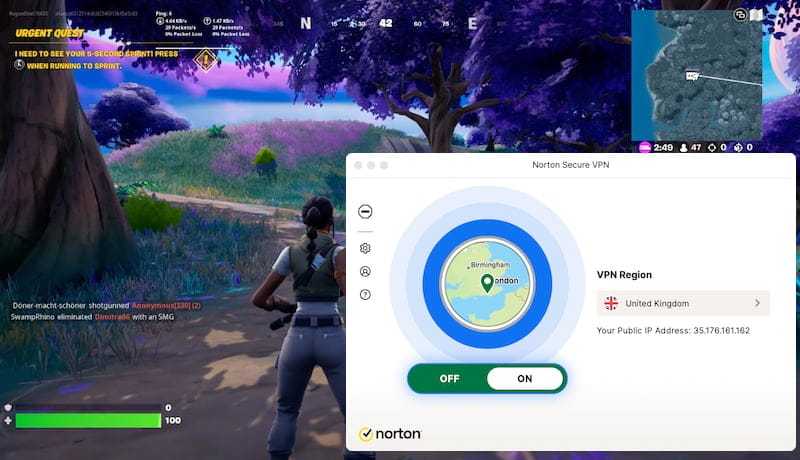
Put simply, Norton VPN isn’t private enough for me to recommend it. It logs your real IP address, lacks essential security features, and outputs average download speeds.
Gaming VPN Testing Methodology
We tested 59 VPNs for gaming by evaluating their performance in five key testing categories. We assign a rating for each of them, which we then combine to calculate an overall gaming rating.
Below is a more detailed explanation of these key testing categories, along with how much of the overall gaming rating they make up:
1. Ping (30%)
Test Conducted: Recorded the ping times to game servers across the globe, using both our proprietary speed test tool and in-game ping measurements.
Why It’s Important: A low ping time or ‘latency’ is essential for minimizing the amount of lag you experience while playing online, which is especially important in fast-paced games.
Optimal Result: An average ping of 10ms or less on a nearby VPN server and 100ms or less on international connections.
2. Jitter (25%)
Test Conducted: Measured jitter by analyzing the consistency of data packet delivery across multiple servers. Using our network diagnostic tools alongside in-game telemetry, we recorded the variance between consecutive ping spikes rather than just average latency.
Why It’s Important: High jitter causes instability that affects gameplay, even if your average ping is low.
Optimal Result: A jitter reading of 3ms or less.
3. Device Compatibility (20%)
Test Conducted: Installed each VPN’s PC app and tested if we could share its VPN connection via Windows hotspot. We also downloaded and tested its mobile apps with popular titles and used its Smart DNS tool on both Xbox and PlayStation consoles. If available, we also installed its router app and tried connecting a variety of devices to the network.
Why It’s Important: VPN setup differs by gaming device. For instance, PC players can simply install a VPN’s Windows app whereas Xbox players need to connect to a VPN-enabled network. As such, it’s essential that a VPN service includes the necessary software and functionality to be used on all devices.
Optimal Result: User-friendly and easy-to-install apps for mobile, router, and PC. Plus, a Smart DNS tool for streaming on game consoles.
We tested sharing each VPN’s connection via a Windows 10 and 11 hotspot.
4. Server Locations (15%)
Test Conducted: Recorded the total number of server locations listed on each VPN’s website and compared them to the in-app server list to ensure consistency. We then connected to several VPN servers while using our IP lookup tool to verify that they were working correctly.
Why It’s Important: An extensive server network ensures that there’s always a server nearby to minimize latency and download speed loss. Moreover, a vast server network allows you to connect to online lobbies in regions with a lower player base, providing easier opponents.
Optimal Result: A VPN server list covering every inhabited continent, with multiple servers per location.
5. Security (10%)
Test Conducted: Evaluated each VPN’s encryption using Wireshark, a packet analyzer. We also tested for IP or DNS leaks using a mix of in-house and third-party tools.
Why It’s Important: Robust VPN encryption prevents your ISP from detecting your gaming activity and throttling your connection. Plus, VPN encryption conceals your real IP address, protecting you from malicious third-parties.
Optimal Result: AES-256 or ChaCha20 encryption with no known security vulnerabilities or data leaks.
Data Cap Penalty
I apply a penalty to the VPN’s final overall rating for gaming based on its data cap:
Unlimited bandwidth: No deduction to the overall rating
10GB per month: -20% to the overall rating
500MB per day: -25% to the overall rating
5GB per month: -30% to the overall rating
1GB or 2GB per month: -35% to the overall rating
200MB per day: -40% to the overall rating
500MB per month: -50% to the overall rating
FAQs
What Is the Best VPN Protocol for Gaming?
Connection speed and latency are very important factors when picking a VPN protocol for gaming.
Generally, the best VPN protocol for gaming is WireGuard. It adds less latency than OpenVPN without sacrificing security. This varies according to the VPN service you use, though.
In some cases, PPTP may be the fastest protocol, but it isn’t secure and I don’t recommend using it.
Find out how much additional data each VPN protocol uses in our guide to VPN data usage.
Will a VPN Reduce My Ping?
Ping time or ‘latency’ is the time it takes for data packets to travel from your device to an internet server and back again.
The lower the latency on your connection, the less lag you’ll experience while gaming. However, VPNs with fast speeds don’t always have low ping.
In almost all cases a VPN will make your ping worse to some degree, because your data has to travel further. I only recommend VPNs for gaming if they add as little latency as possible.
In very rare situations, a VPN might improve your ping. For example, your ISP or local network administrator could be throttling your connection speeds due to network congestion.
Similarly, if your VPN exit node is close to the gaming server you are connected to, your latency might be reduced.