




Top10VPN is editorially independent. Buying a VPN through our links supports our work.
The Best VPNs for Singapore
Follow us:
Simon Migliano
Simon Migliano is a recognized world expert in VPNs. He's tested hundreds of apps and his research has been featured on the BBC, The New York Times, and more. Read full bio
The best VPN for Singapore is ExpressVPN: its fast servers in 113 countries unblocked censored websites and geo-restricted streaming services. NordVPN performed similarly and at slightly faster speeds, and Hotspot Shield is a good free option with a rare Singaporean IP address.
Of the 59 VPNs I analyzed, these five stood out from the pack:
Every time I go to Singapore I see that one thing never changes: the number of blocked websites I hit.
Singapore’s actual blocklist isn’t the longest in the world, but what makes it concerning is the legal apparatus behind it, which is among the most far-reaching in Asia. It also gives authorities room to widen those blocks at any moment.
This makes life awkward for tourists and expats: you’re rarely sure where the line is, and nobody wants to find out the hard way.
That’s where the VPNs below come in. They beat website blocks, unblocked streaming content in both directions, and shielded my browsing from ISPs like Singtel and StarHub.
And if you’re Singapore-based but currently abroad, my highest-rated VPNs also unblock Singaporean streaming platforms and avoid the extra security checks that online banking portals often throw at foreign IP addresses.
🔄 Recent Updates
I’ve replaced TunnelBear with Windscribe and Hotspot Shield as the free alternatives to my main recommendations, which now also include Surfshark.
Why Trust Us?
We’re fully independent and have been reviewing VPNs since 2016. Our ratings are based on our own testing results and are unaffected by financial incentives. Learn who we are and how we test VPNs.
VPNs Tested
59
Total Hours of Testing
30,000+
Combined Years of Experience
50+
VPN Comparison Table
The VPNs I’ve picked all offer multiple servers in Singapore and across Asia, fast international speeds, and reliable access to geo-restricted websites and apps. Here’s how they compare side by side:
If you’ve read somewhere that ExpressVPN isn’t the best VPN for Singapore, I’d take that advice with a pinch of salt.
It isn’t only the scale of the network, though 250 fast servers in Singapore alone (covering Central Business District, Jurong, and Marina Bay) is hard to argue with. What sold me was the speed and smoothness with which the apps replaced my IP.
These fast speeds held up regardless of where I was, and the apps themselves were a pleasure to use across a wide range of devices. That extends to smart TVs and game consoles, which is where most VPNs disappoint.
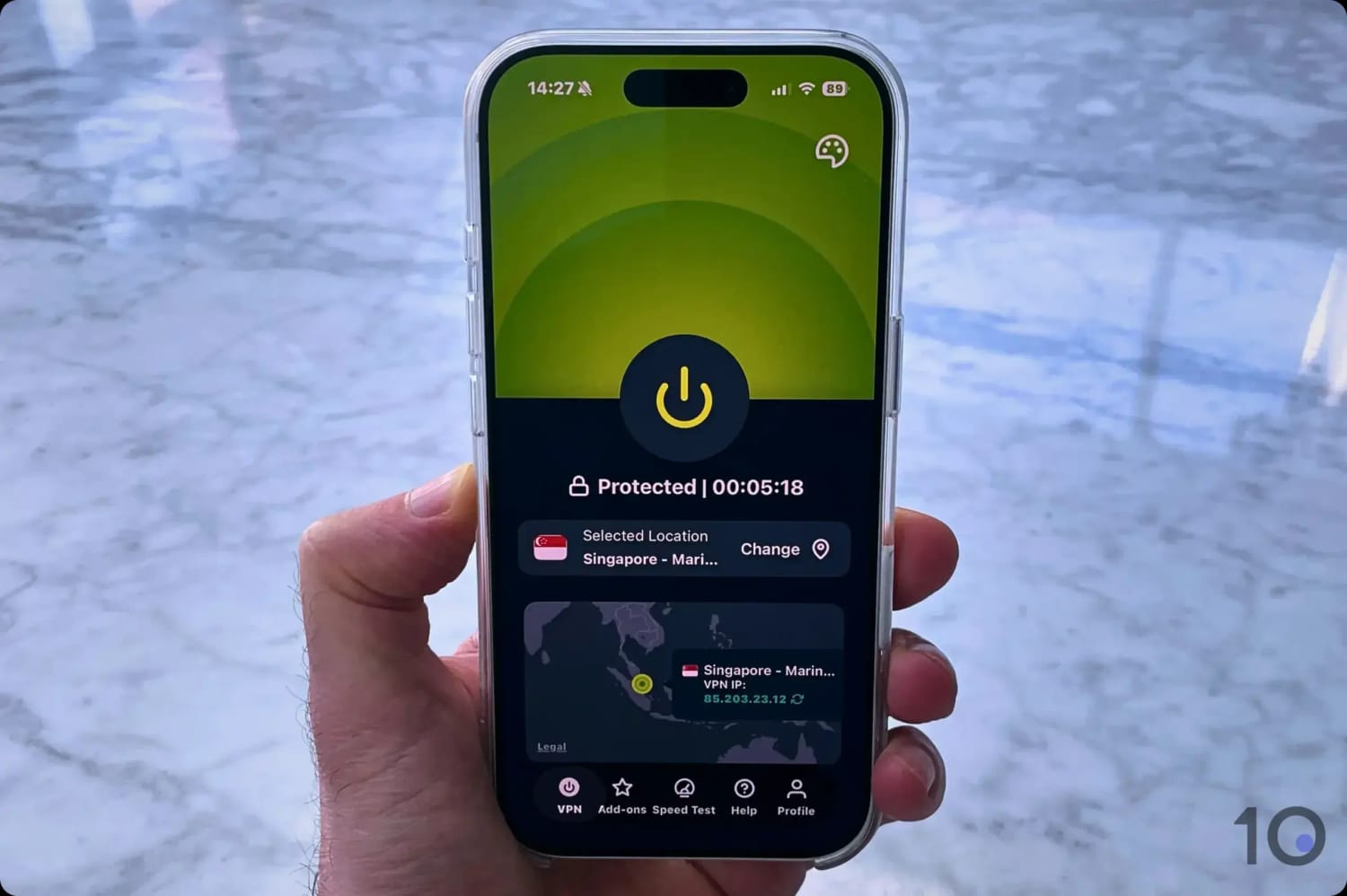
Getting a Singaporean IP address using ExpressVPN.
Unblocks 95% of Streaming Platforms Tested
After thousands of streaming tests, ExpressVPN still outclasses every other VPN I’ve put through the same process.
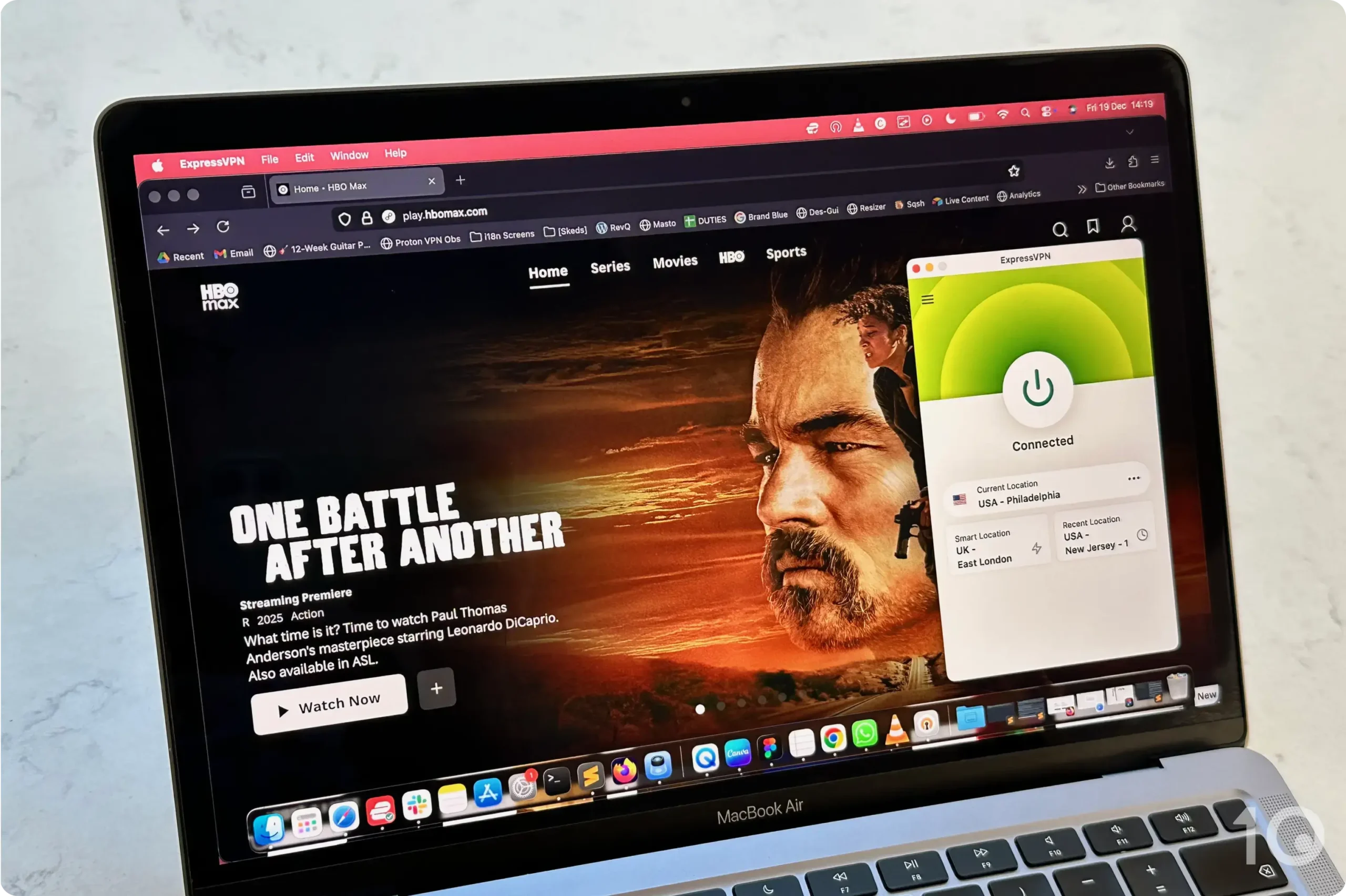
Out of the 120 content platforms I tested it with, it unblocked an incredible 115, including some of the trickiest services: Disney+, HBO Max, Prime Video, BBC iPlayer, and Kayo Sports.
Its VPN servers in India and Korea worked flawlessly for local Netflix titles too. I have to call that out, as it’s one of the few areas where NordVPN doesn’t keep pace.
If you’re outside Singapore, you can also use ExpressVPN’s servers to stream geo-restricted content on mewatch, Viu Singapore, Catchplay, and iQIYI.
Fast Speeds & Lag-Free Gaming
Speed is the other reason ExpressVPN sits at the top of this list. Its long-distance download speeds in and out of Singapore are exceptional.
From my accommodation in Katong, I connected to dozens of locations around the world. On nearby servers my losses stayed in the low single digits, and on connections stretching over 10,000 miles I only lost around 15% of my internet speed.
What impressed me just as much was the consistency. Those speeds barely fluctuated from one test run to the next, which is rarer than it sounds.
All of which makes ExpressVPN a great VPN for gaming, particularly on PC and consoles, thanks to consistently low latency and lag-free gameplay.
Connecting from nearby locations to servers in Singapore and the other 32 Asian countries on offer was instant. Ping and packet loss stayed low, too.
Free Trial via Mobile & 30-Day Refund Policy
The value ExpressVPN offers is hard to dispute: user-friendly apps with advanced built-in security, excellent speeds, and unblocking that works across more devices than most other VPNs.
If you’d rather see that for yourself before committing, you can sign up for ExpressVPN’s 3-day free trial via the Apple App Store or Google Play Store.
Once your free account is set up, you can use it on up to 10 other devices.
In my opinion, the hassle-free 30-day money-back guarantee is an even better way to test run ExpressVPN. And in case you’re wondering, I’ve always received my money back.
Extremely fast connections across its entire network
Specialized P2P & obfuscated servers in Singapore
Unblocks US Netflix, BBC iPlayer, Viu & more
Advanced features like multi-hop & Threat Protection
7-day free trial (website only)
Subscription renews at a much higher price
Apps aren't as smooth as ExpressVPN's
Retains connection timestamps for 15 minutes
No Android GPS spoofing
Pricing Plans
$14.99/mo
$5.49/mo over 12 months
$3.49/mo over 27 months
Money-Back Guarantee
30 Days
Servers
9,000
Countries with Servers
137
Logging Policy
No Identifiable Data
Simultaneous Connections
10
Support
24/7 Live Chat
Compatible with
Windows
Mac
iOS
Android
Linux
Amazon Fire TV
Android TV
Apple TV
Router
Chrome
NordVPN runs ExpressVPN very close across many performance metrics, and its 70 Singapore servers performed almost as well as its main rival.
NordVPN even edged out ExpressVPN on raw connection speeds, and the gap was clearest connecting out of Singapore.
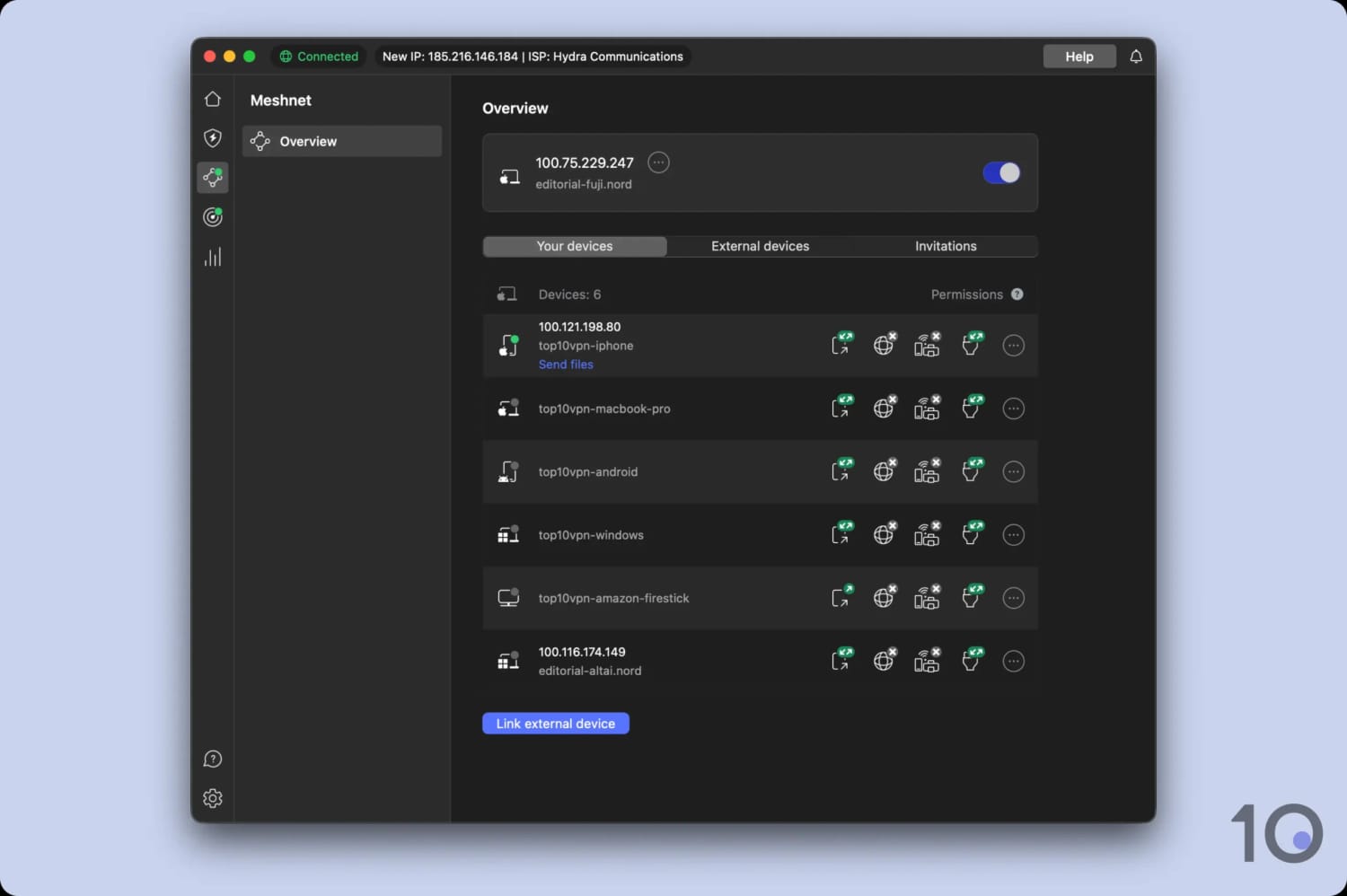
Where NordVPN truly pulls ahead is with its advanced features: if you love tinkering with your VPN, then you’ll enjoy settings like multi-hop servers, the Threat Protection suite, and Meshnet, a unique and free remote-access tool.
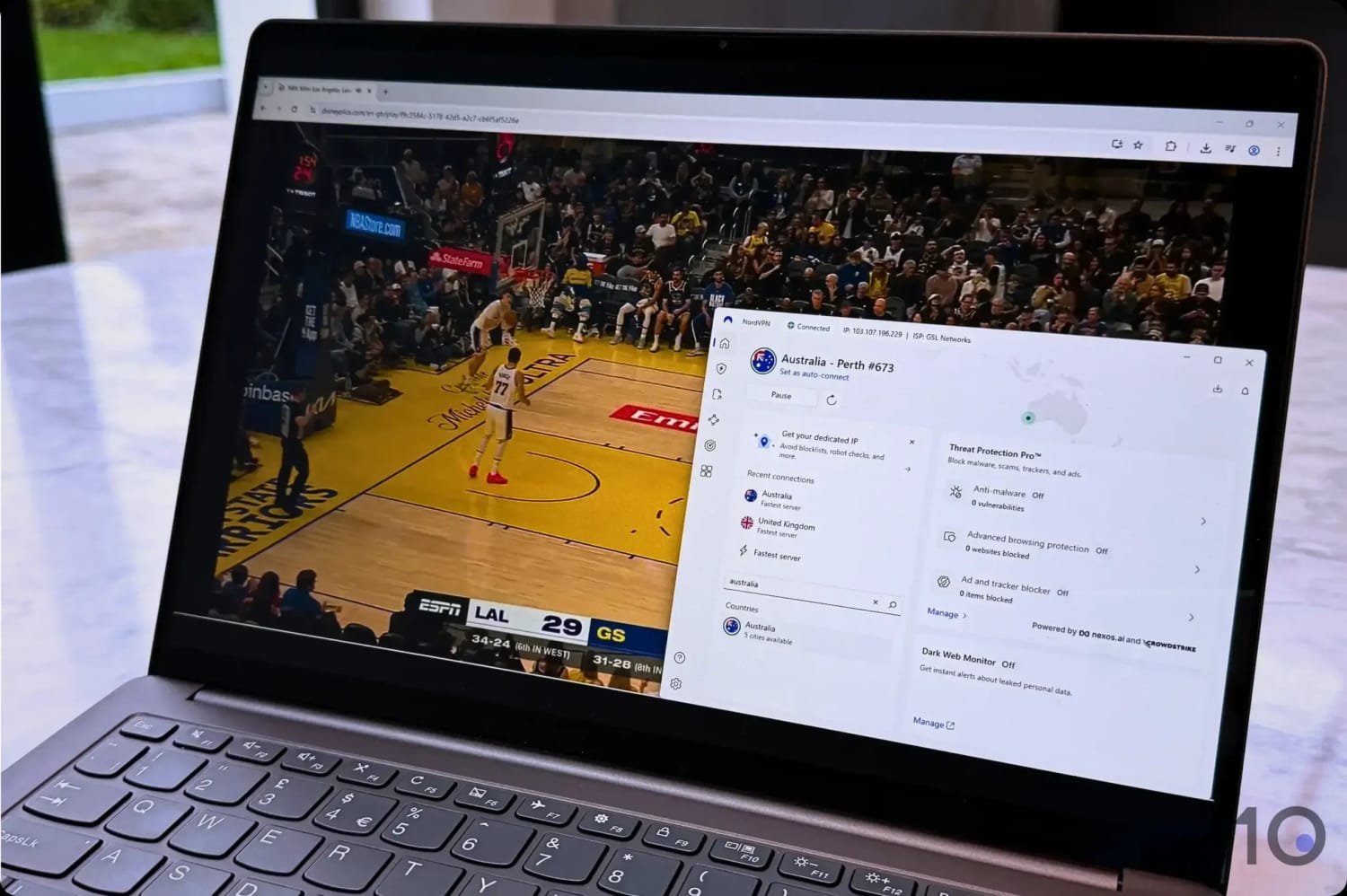
NordVPN can access many different regions on Disney+, including Australia.
Fast Speeds & Great Unblocking Performance
Like ExpressVPN, NordVPN is one of the most effective VPNs I’ve used for bypassing streaming geo-blocks, whether the restriction is Singaporean or foreign.
Credit for that goes to its extensive and regularly refreshed pool of IP addresses across 137 countries, combined with connections that stay fast and stable under load.
The result is smooth, reliable access to most geo-restricted streaming services worldwide.
So if you’re heading to Singapore, NordVPN will keep your usual services within reach: Netflix, Disney+, HBO Max, BBC iPlayer, Kayo Sports, and plenty more.
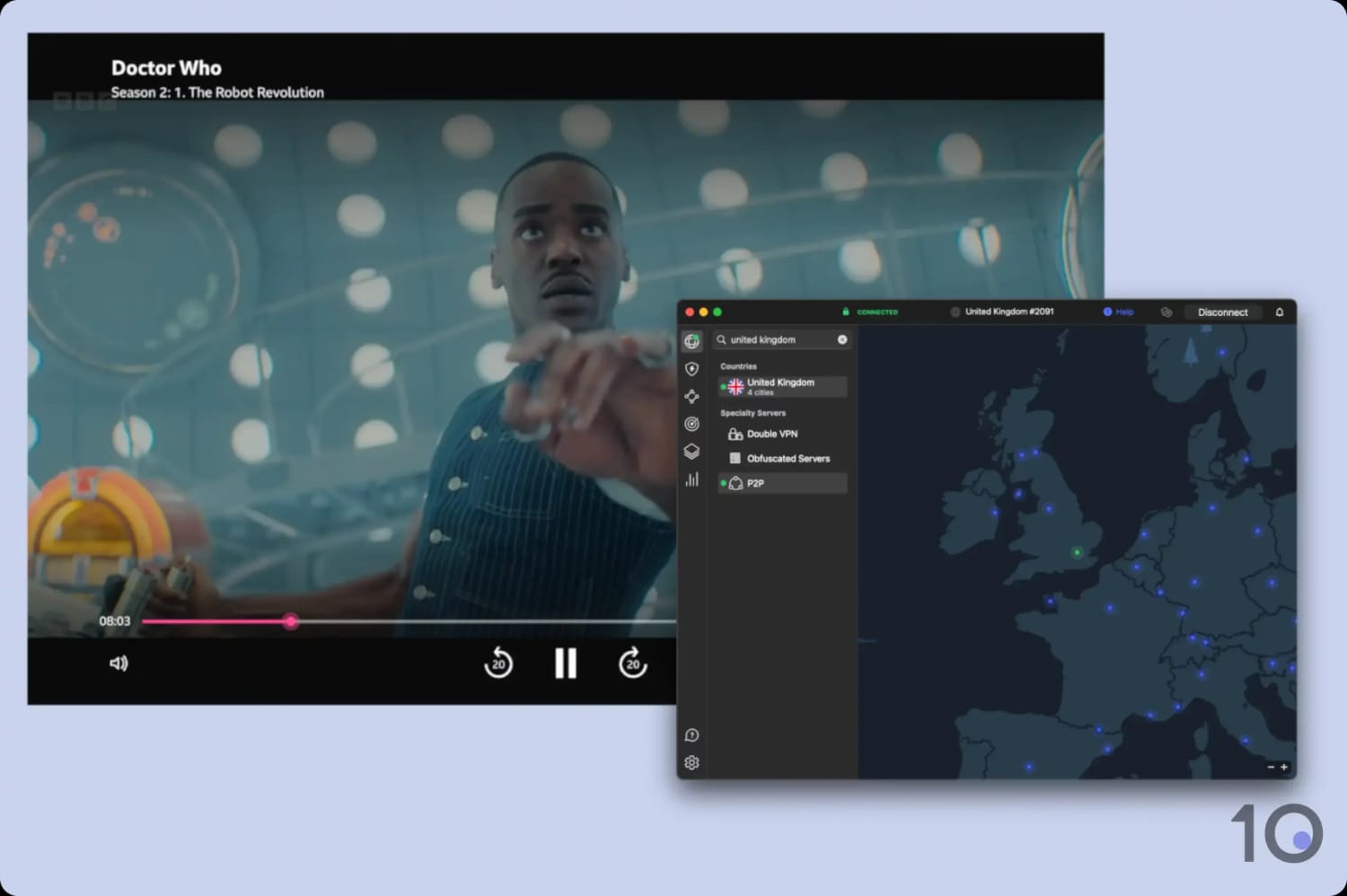
Unblocking BBC iPlayer with NordVPN.
Where NordVPN struggles is bypassing strict national firewalls in authoritarian countries like China. It used to handle them well, but its performance has deteriorated sharply in recent years, as my China VPN tests show.
That won’t affect you in Singapore, but it’s worth knowing if you’re planning on extending your trip to China.
Impressive Country Coverage
NordVPN has expanded its footprint enormously in recent years and now covers 137 countries, 37 of them in Asia.
That’s a good deal more than ExpressVPN’s 113, so if breadth of coverage is your priority, NordVPN is the one to pick.
Connecting across all those locations was quick and smooth for me, with no speed dips or sudden drops.
Having said that, NordVPN’s UI could be better. I found the apps “busier” than ExpressVPN’s, largely because of all the extra features it wants you to use.
I preferred ExpressVPN’s cleaner layout, with fewer distractions on the home screen and fewer tabs to wade through.
Free Additional Features
Those extras are the clearest thing separating NordVPN from ExpressVPN.
The two I’ve spent the most time with are its multi-hop (Double VPN) servers, for an extra layer of privacy and security, and Meshnet, which let me use my home IP address while I was away in Singapore.
With Meshnet you can connect remotely into your home network for free.
If you want to hold onto the same VPN IP address, NordVPN also offers more dedicated VPN IP locations than any other service I’ve reviewed. Bear in mind that these cost extra, and they aren’t anonymous like ExpressVPN’s.
Surfshark made my list for a few reasons: it turned out to be an excellent VPN for mobile gaming thanks to its streamlined iOS and Android apps.
Its security credentials are strong as well, with an independently audited no-logs policy and unusual extras like Android GPS spoofing, dynamic multi-hop routing, and rotating IP addresses.
Surfshark’s also very affordable over the long term, currently at $2.49/mo over 27 months, and there’s a 7-day free trial available on desktop and mobile.
It isn’t flawless, though. Speeds are inconsistent on long-distance connections, the mobile app sometimes drags when connecting, and you may need to disable IPv6 manually to rule out IP leaks.
It runs as long as NordVPN’s, but you can start it from the app stores as well as the website, where NordVPN’s is website-only.
Surfshark’s free trial isn’t offered on the monthly plan, only the longer-term ones, and you’ll need to submit payment details to enroll.
From there the trial starts automatically and you get the run of every feature without being charged.
Just don’t forget to cancel before day seven. I cancel auto-renewal in my account settings the moment I sign up, which takes about thirty seconds and saves the worry.
Great Choice for Mobile Gaming
Surfshark is one of my favorite VPNs for gaming on phones and tablets.
Its Android, iOS, and iPadOS apps are intuitive to navigate, and they come with settings that actually help while you’re playing.
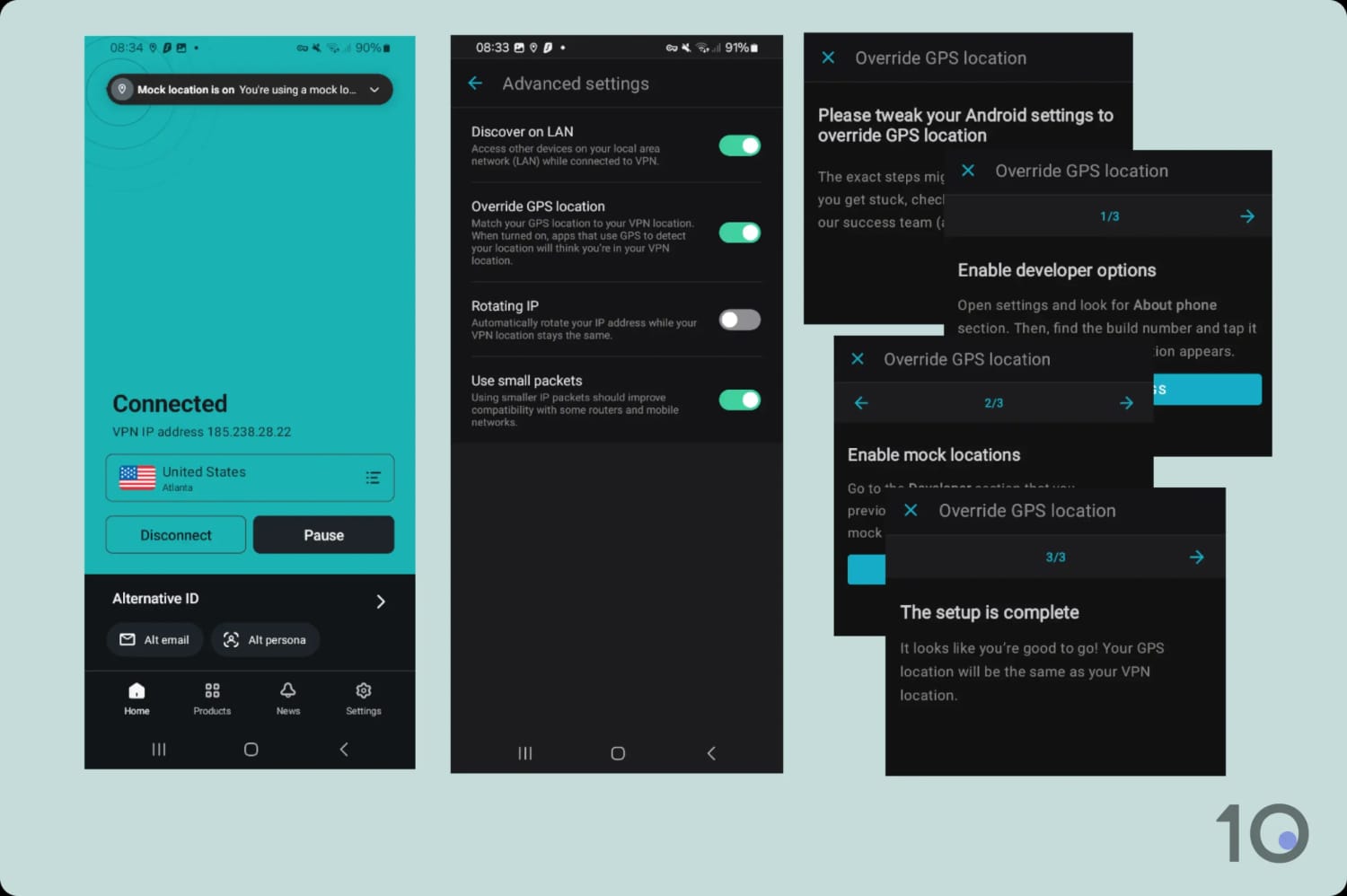
Most mobile VPNs stop at hiding your IP address. Surfshark’s Override GPS Location function on Android goes further and spoofs your phone’s physical coordinates too.
Windscribe’s free Android app offers something comparable, but Surfshark’s proved more dependable in my testing.
Setting up Surfshark’s Override GPS location setting.
Surfshark’s GPS spoofing tool worked flawlessly for me on location-based AR games like Pokémon GO and Monster Hunter Now.
There’s another setting I use when my mobile connection is shaky. Surfshark’s Use Small Packets (MTU) option optimizes data transfers over weaker cellular networks and noticeably reduced jitter for me.
I really saw it come to life on the MRT Downtown Line, where the signal dropped in and out and the setting kept my connection usable.
My only real gripe was that the mobile app took several extra seconds to connect compared to ExpressVPN.
Wide Range of Extra Features
Surfshark is loaded with free extra features beyond the ones above.
Dynamic MultiHop is one of them, which encrypts your connection twice via two different servers.
Rotating IP is another one I’ve found useful. It keeps your IP address changing in the background while your apparent location stays put, much like ExpressVPN’s ShuffleIP technology.
Surfshark also gives you free static IPs, but they’re shared with thousands of users and I often found them grinding my internet speed to a halt.
Underpinning all of it, the provider takes privacy seriously and operates under a strict, independently audited logging policy.
That reassuring stance makes Surfshark a decent option for torrenting, which it supports across its whole network.
It isn’t the best P2P VPN out there, but for occasional torrenting it does the job well.
Ad every 15 minutes to keep the mobile connection running
Very few free server locations
Doesn't stream BBC iPlayer or Disney+ UK
Collects some sensitive data
Data Cap
Unlimited
Servers
Undisclosed
Countries with Servers
3
Simultaneous Connections
1
Support
Online Resources Only
Jurisdiction
US (Five Eyes Member)
Compatible with
Windows
Mac
iOS
Android
Linux
Amazon Fire TV
Android TV
Apple TV
Router
Chrome
Hotspot Shield is a solid free VPN that got around Singapore’s website blocks without any fuss, and without a bandwidth limit hanging over me.
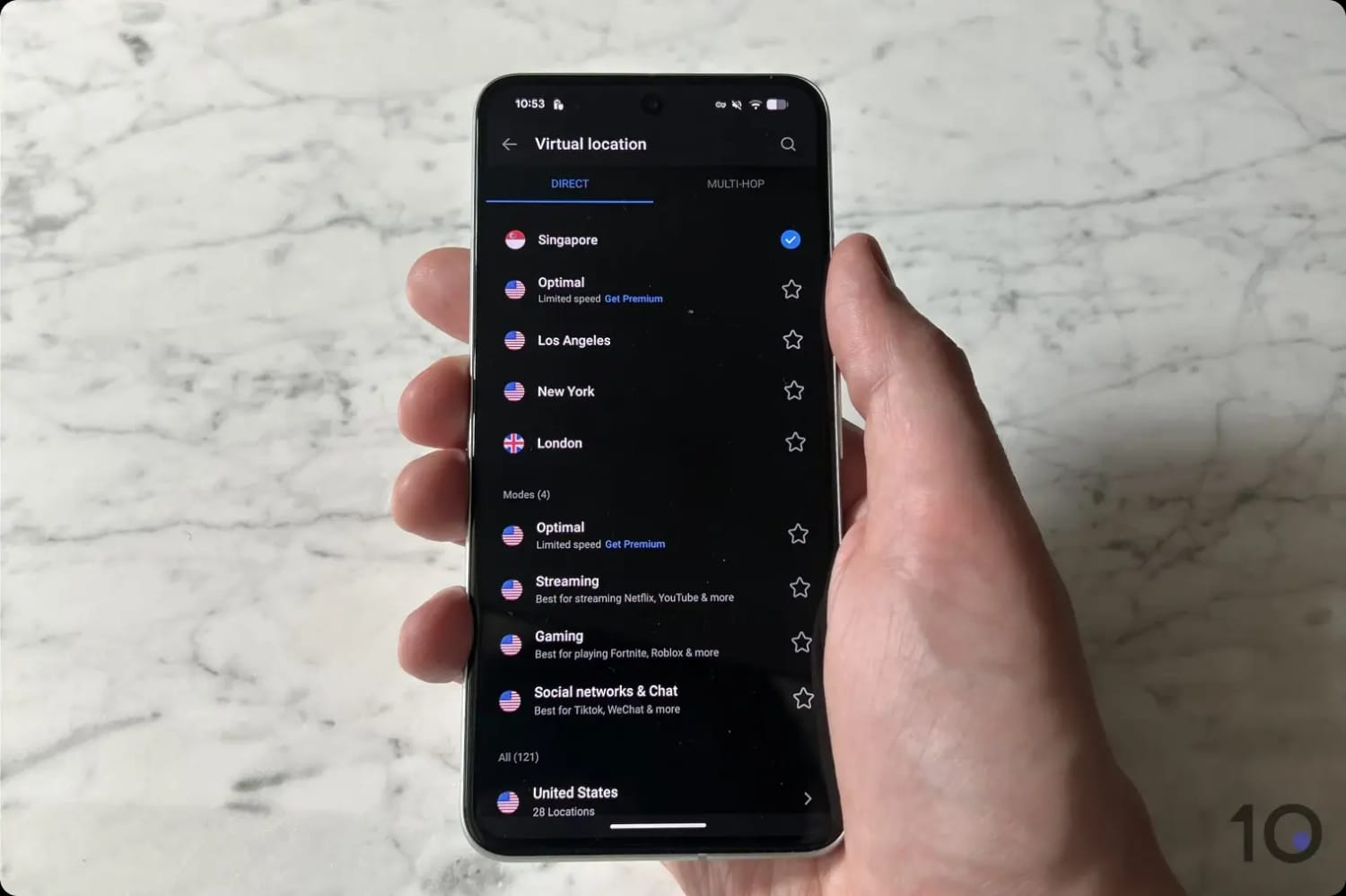
You can connect to servers in the US, the UK, and Singapore. Hotspot Shield is in fact the only safe free VPN I’ve tested that offers a free Singaporean server.
Despite that, Hotspot Shield isn’t the most private service in this guide, and its location list is thin next to Windscribe’s.
Whether or not Hotspot Shield is right for you will come down to why you need a VPN in the first place.
Getting a free Singaporean IP address with Hotspot Shield.
Easy & Streaming-Friendly Apps
Hotspot Shield’s desktop and mobile apps have clearly been built with everyday users in mind.
Finding a server took me no time at all, and connections established almost instantly.
Speed is where it really pulls away, though. No other free VPN comes close right now. Connecting from Singapore all the way to the US, my speeds fell by just 3% on average, which is better than most paid services manage.
I saw the same on its Singaporean and UK VPN servers, where speeds held up just as well.
Better still, those servers beat streaming geo-restrictions that trip up other free VPNs and a fair few paid ones.
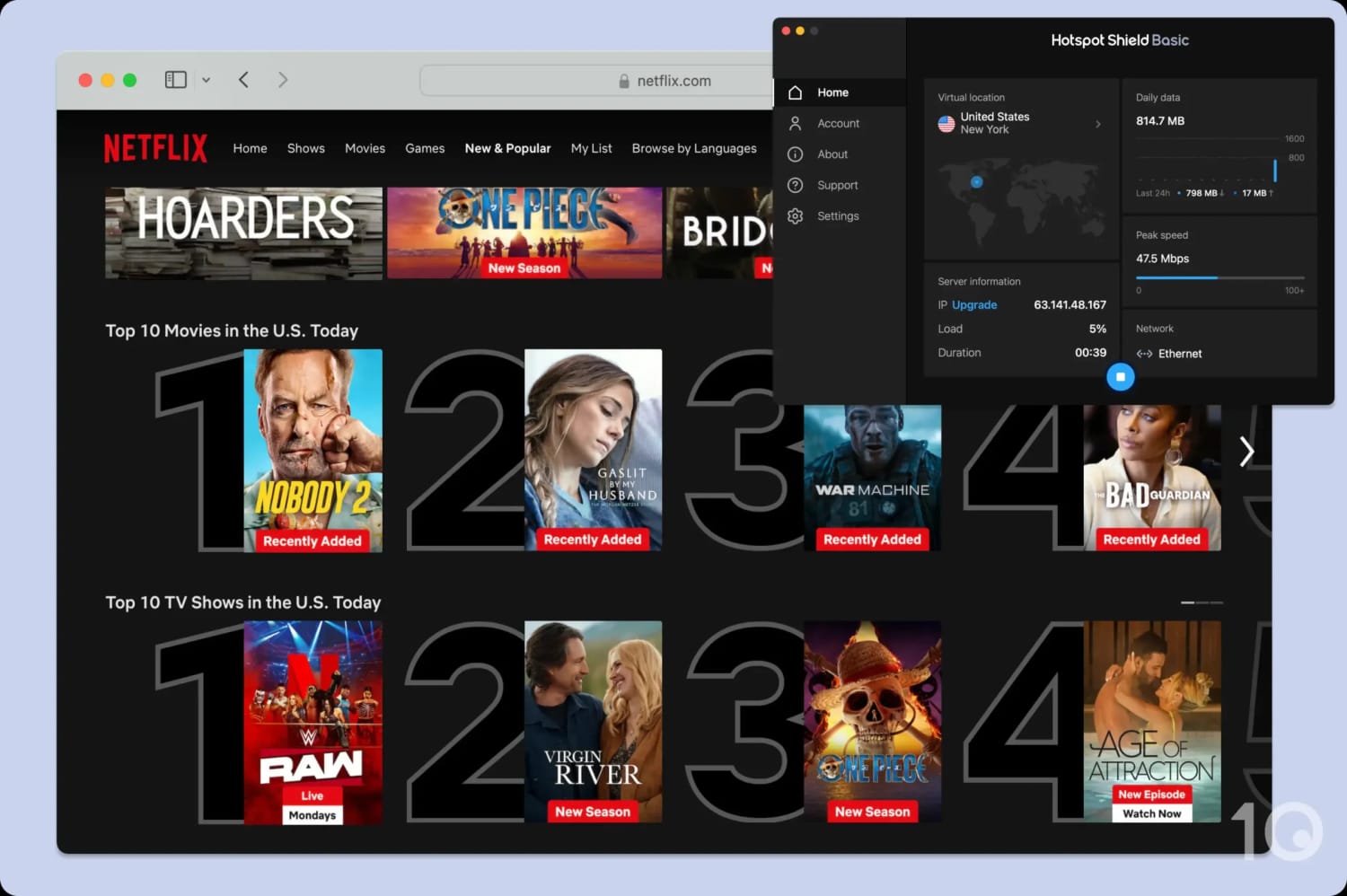
I got into the American Netflix and HBO Max libraries, plus Netflix Singapore, mewatch, and Viu Singapore from abroad.
Hotspot Shield’s free app works with US Netflix.
It was a very different story on the UK servers, though, where the VPN failed to access BBC iPlayer, Disney+ UK, and Sky Go.
Limited Server Network & Privacy
Free servers in only 3 countries is obviously a narrow selection, but that isn’t what disappointed me most.
Privacy is where I expected far better, and the policies caught me off guard instead.
Using Hotspot Shield’s free apps means logging your bandwidth usage, connection timestamps, browsing activity, account information, and your approximate real-world location.
This is limited to the duration of your VPN session and the data is aggregated, but it’s still a lot of information that’s collected.
On top of that, the advertising SDKs in the app use your real originating IP address for marketing purposes.
If you’re concerned by any of this, Windscribe is the more private free option, although it lacks a free Singaporean server.
While we’re on advertising, the mobile app makes you watch an ad every 15 minutes to keep your free connection alive. Your data is unlimited, but on mobile you pay for it in ad breaks. The desktop app is free of this.
Windscribe sets itself apart from Hotspot Shield in two ways: many more free server countries (10 versus 3), and privacy practices I’m far more comfortable with.
It no longer works with US Netflix, but it’s still a strong streaming VPN, handling HBO Max, Disney+, UK Netflix, BBC iPlayer, and Sky Go without complaint.
My biggest frustration is the 10GB monthly data allowance, which won’t stretch far for everyone.
Moreover, Windscribe keeps its Singapore servers behind the paywall, and only Hotspot Shield can give you a free Singaporean IP address.
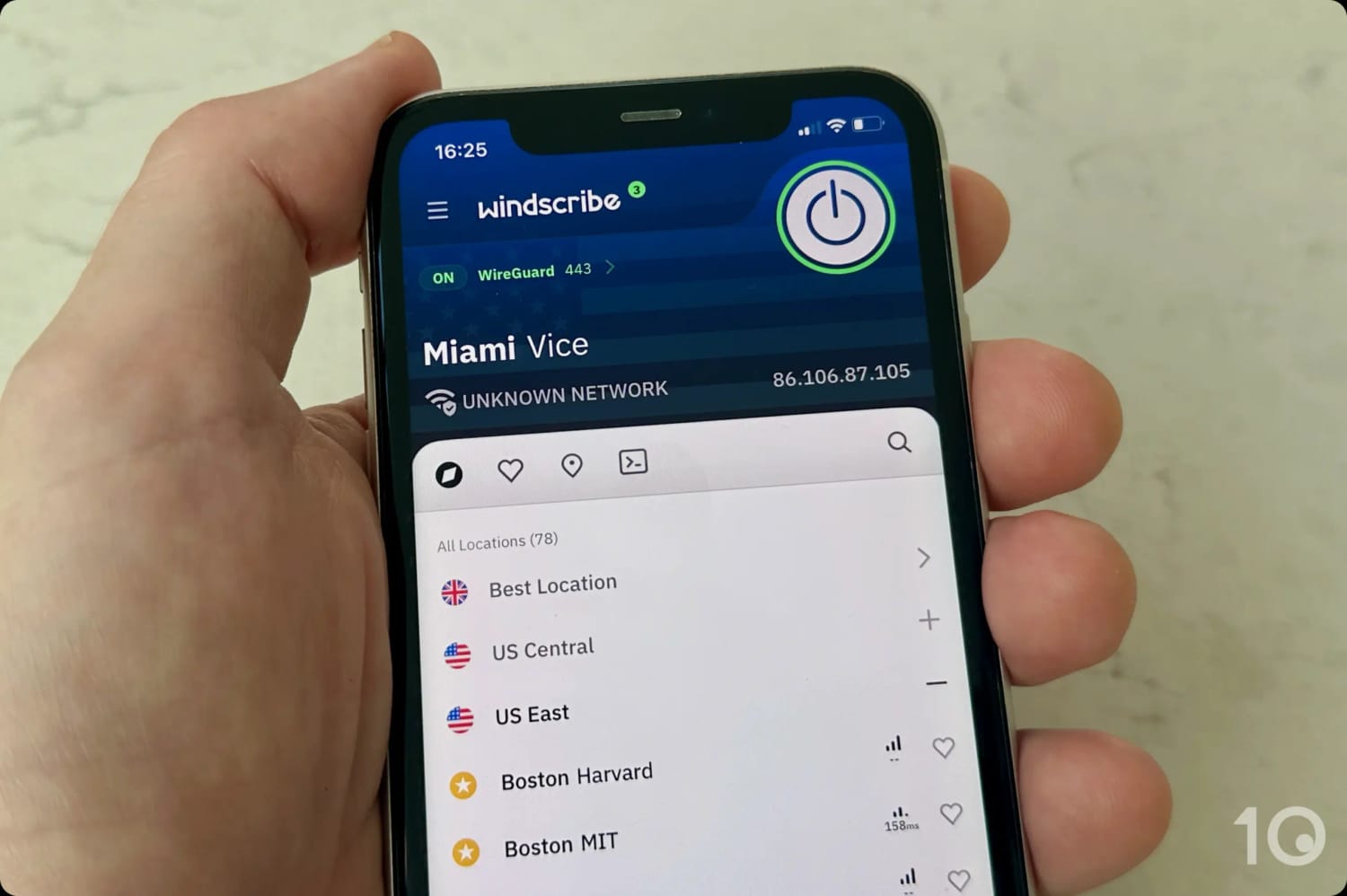
Windscribe gave me several free US locations to choose from.
Bypasses Many Streaming Restrictions
Windscribe’s free tier lets you stream geo-blocked content across 10 countries: Canada, France, Germany, Hong Kong, the Netherlands, Norway, Romania, Switzerland, the UK, and the US.
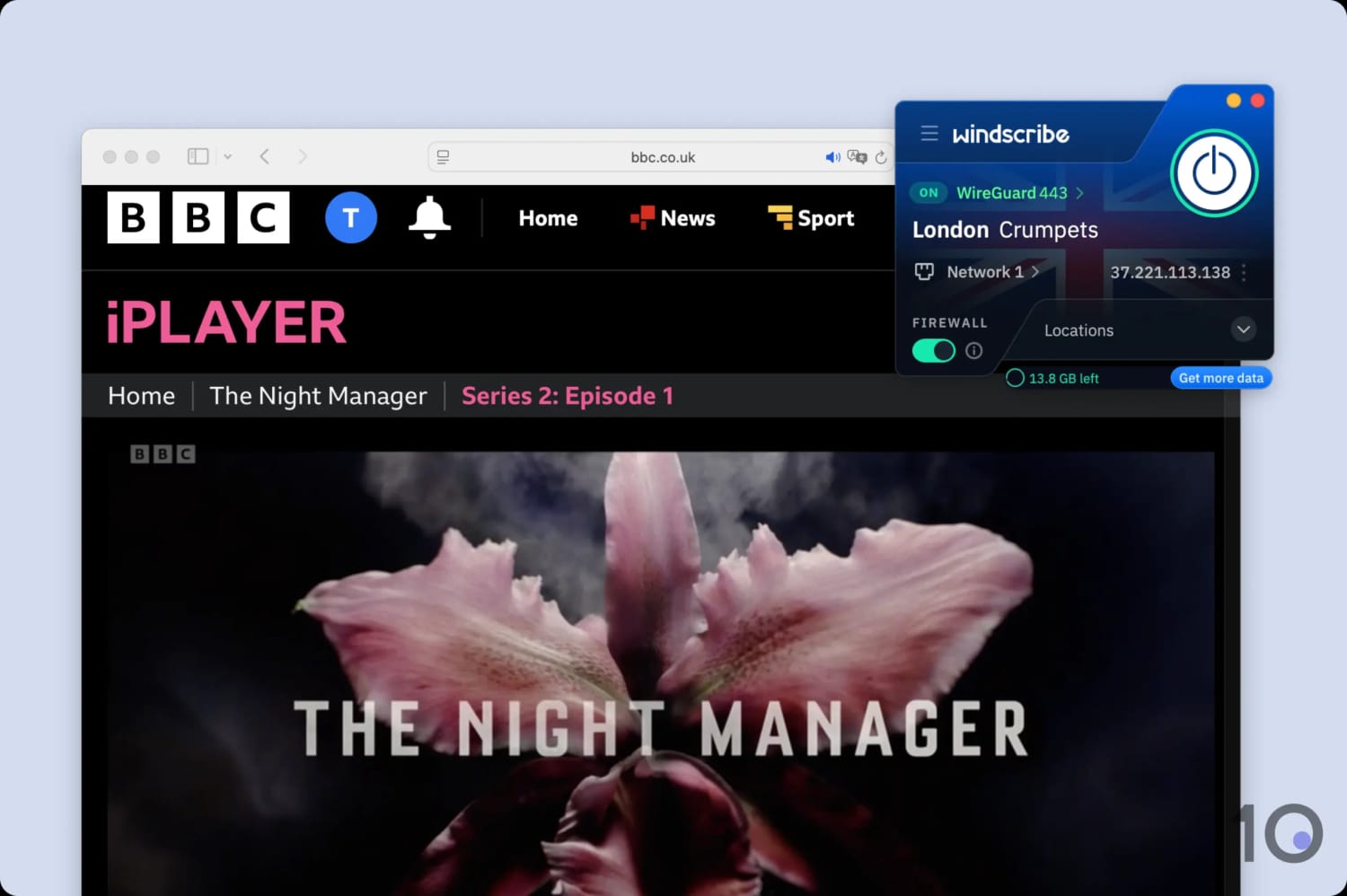
Every one of Windscribe’s free UK servers worked with BBC iPlayer.
The free version handles other tough platforms too, including Sky Go, DAZN, Hulu, and HBO Max, and it unlocks 5 international Netflix regions, Canada and the UK among them.
Just keep the 10GB monthly cap in mind, because that’s roughly four hours of HD streaming and no more.
And if all you want is to get past Singapore’s website blocks, I’d connect to Windscribe’s VPN server in Hong Kong. It’s the closest free location and gave me the fastest speeds by a wide margin.
Secure & Privacy-First Apps
Across every app, Windscribe uses robust AES-256 and ChaCha20 encryption ciphers alongside a dependable set of protocols including WireGuard, OpenVPN, and IKEv2.
Combined with a solid privacy policy, that’s why I’m confident saying your activity won’t be logged or leaked here.
Windscribe also runs RAM-only servers that never write data to a hard drive, so even a seized server would hold nothing about your browsing.
My own testing backed this up. Windscribe suffered no IP or DNS leaks at any point, and the built-in Windscribe Firewall (kill switch) cut my connectivity instantly every time I forced the VPN connection to drop.
Singapore surprises a lot of people. It looks like one of the most advanced, connected societies on the planet, and technically, it is.
Underneath that, though, the government has spent decades building one of the most comprehensive internet control frameworks in Asia.
A growing stack of laws gives authorities the power to block websites, silence online critics, and compel ISPs to monitor what you do online.
All three of Singapore’s major ISPs — Singtel, StarHub, and M1 — are legally required to comply with these laws.
I kept my VPN running for the whole trip.
Here are the three reasons I always use a VPN when I’m in Singapore:
1. Unblock Censored Websites
Singapore has several laws on the books that directly restrict what you can access online, and authorities aren’t shy about using them.
The IMDA’s Blocked Websites List
The Infocomm Media Development Authority (IMDA) maintains a list of over 100 websites that every ISP is required to block. The majority are pornographic sites like Playboy and YouPorn. Try to visit one and you’ll hit an IMDA error page instead.
The Gambling Control Act
Placing bets on unlicensed overseas gambling websites is a criminal offense in Singapore, and it can result in fines and jail time. Since the original gambling law came into force in 2015, hundreds of remote gambling sites have been blocked by ISPs.
Online Safety (Miscellaneous Amendments) Act
In force since February 2023, this law gives the IMDA the power to order a platform to disable Singaporean users’ access to what the law defines as “egregious content.”
If a platform refuses, the IMDA can direct ISPs to block it outright for users in Singapore, and fine it up to S$1 million.
The Online Safety (Relief and Accountability) Act
This is Singapore’s newest online safety law. It set up the Online Safety Commission, which started work in June 2026.
The Commission handles reports of online harms like doxxing and harassment, so it isn’t aimed at everyday browsing. But it can order platforms, ISPs, and app stores to block access when they ignore its instructions.
All of this is why the size of the current blocklist matters less than the potential reach of the laws behind it.
A VPN routes your traffic through a server in another country, so you browse with a foreign IP address and bypass the ISP-level blocks these laws trigger.
2. Hide Your Browsing Activity
Singapore’s government has been monitoring internet activity since 1996. The IMDA licenses every ISP operating in the country and holds them to a strict Internet Code of Practice.
That means your ISP isn’t simply your internet provider. It’s a regulated entity that can be directed by authorities to report on, restrict, or block your activity at any time.
A VPN encrypts your connection so Singtel, StarHub, and M1 can’t see which sites you visit. As a bonus, it also makes it harder for search engines and social platforms to stitch together a profile of your browsing history.
3. Torrent Privately
In Singapore, P2P file sharing is legal, but sharing or downloading copyrighted material is not.
Torrenting sites such as The Pirate Bay and KickassTorrents are blocked, and in February 2022 the Coalition Against Piracy confirmed that illegal streaming sites are blocked too.
None of that changes if you use a VPN, so I’d be clear about the point here: encryption keeps your legitimate P2P traffic private from your ISP, it doesn’t make piracy any less illegal.
How to Get a Singapore IP Address
Getting a private Singaporean IP address from abroad is straightforward as long as you’re using the right VPN. Follow my step-by-step instructions below.
How to Get a Singaporean IP Address
Get a secure VPN with servers in Singapore. I’d go with one of my picks above.
Check the kill switch is turned on. This is what prevents unexpected IP leaks.
Connect to a VPN server in Singapore.
Singapore VPN Testing Methodology
Properly examining a VPN requires time and effort. With the help of my team, I tested 59 VPNs and ran the results through my rating calculator to work out which ones perform best for Singapore.
The chart below shows the categories I weigh in that assessment:
And here’s how my chosen VPNs performed in each test:
Below is more information on what each area covers and why it matters:
1. Global Server Locations (30%)
Test Conducted: Evaluated each VPN’s server network, focusing on the number of servers and the countries covered.
Why It Matters: A large network is key to bypassing geo-restrictions worldwide and to getting the fastest speeds wherever you are.
Optimal Result: Coverage of 100 countries or more, with a solid presence on every continent.
2. Singapore Server Locations (25%)
Test Conducted: Assessed how many servers each VPN offers in Singapore and across the rest of Asia.
Why It Matters: A server in Singapore is essential for getting a Singaporean IP address, which is what unlocks local content and services.
Optimal Result: Multiple servers in Singapore plus wide coverage across Asia.
3. Speed (15%)
Test Conducted: Ran in-house speed tests to measure each VPN’s average international download speed.
Why It Matters: Fast speeds are what make browsing smooth, streaming buffer-free, and gaming lag-free, especially on long hauls from Singapore to somewhere like Mexico for a region-specific library.
Optimal Result: Less than 10% average download speed loss on short connections, and less than 20% across longer distances.
4. Streaming (10%)
Test Conducted: Tested every VPN against global streaming services like Netflix, Disney+, and BBC iPlayer, as well as Singaporean platforms including mewatch and StarHub TV+.
Why It Matters: Geo-restrictions cut both ways, blocking content from outside Singapore and Singaporean shows when you’re abroad.
Optimal Result: Consistent access to international and Singaporean libraries from every server.
5. Privacy (10%)
Test Conducted: Analyzed each VPN’s privacy policy to establish what data is stored and for how long.
Why It Matters: Strong privacy protections keep your activity away from Singapore’s government oversight and data retention laws.
Optimal Result: A verified no-logs policy, diskless servers, and a privacy-friendly jurisdiction.
6. Security (10%)
Test Conducted: Deployed packet sniffers to inspect encryption, ran leak tools to verify DNS protection, and triggered kill switches to see what happens when a connection drops.
Why It Matters: It’s what stops hackers intercepting or stealing your sensitive data.
Optimal Result: Traffic encrypted via WireGuard or OpenVPN (AES-256/ChaCha20) with post-quantum cryptography, RAM-only servers, and advanced security features that actually work.
Data Cap Penalty
Almost every free VPN has a data cap. Being limited by a data cap massively reduces your VPN’s capabilities.
I applied a penalty to a free VPN’s overall Singapore rating based on how restrictive its data cap is:
10GB per month: -20% to the overall rating
500MB per day: -25% to the overall rating
5GB per month: -30% to the overall rating
1GB or 2GB per month: -35% to the overall rating
200MB per day: -40% to the overall rating
500MB per month: -50% to the overall rating
Free VPNs for Singapore to Avoid
While preparing this guide I came across a number of popular Singapore VPNs, most of them free, that are genuinely unsafe. They either log excessive amounts of data, carry malware, or bury you in in-app ads.
Here are the ones I’d steer clear of, particularly as some appear prominently on search engines and in mobile app stores.
Singapore VPN — The VPN Master
Despite its popularity, I wouldn’t trust this VPN with your browsing history or your personal information.
Next Hour, the company behind Singapore VPN — The VPN Master, owns four other VPNs on the Google Play Store.
All of them share the same privacy policy, despite supposedly being separate services.
I also suspect this privacy policy was copied and pasted from another VPN’s website, because it refers to Tap VPN, an entirely different service run by an entirely different company.
The broken blue ‘Get Started’ button on Next Hour’s own homepage does nothing to inspire confidence either.
I’d steer clear of this shady company and its unsafe free VPNs.
Singapore VPN
Developed by helalik, Singapore VPN is another unsafe free service on the Google Play Store.
I read through its privacy policy and found that it logs your IP address and connection timestamps for an unspecified period.
It also describes itself as an “Ad Supported app,” so expect a steady stream of ads while you use it.
Urban VPN
Urban VPN Free presents itself as a VPN, but it’s really a peer-to-peer proxy network. I found that it doesn’t encrypt your data at all, and it collects your IP address and browsing activity.
Urban VPN says its paid subscription opts you out of that network. Without a third-party audit, there’s no way to verify it.
UFO VPN
UFO VPN is neither safe nor trustworthy. It claims to be a no-logs service, but a 2020 data breach proved it was keeping extensive records on its users.
That breach exposed plaintext user passwords, real IP addresses and the servers people connected to, timestamps, location data, and more.
UFO VPN is also based in Hong Kong, which is no longer a safe jurisdiction for a VPN service.
FAQs
Are VPNs Legal in Singapore?
Yes, VPNs are legal for personal use in Singapore. Using one for illegal activity is another matter entirely: cybercrime, accessing banned content, or distributing pirated media all breach the Computer Misuse Act and the Personal Data Protection Act (PDPA), and remain illegal whether or not a VPN is involved.
Are There Free VPNs with Singaporean Servers?
Hotspot Shield is the only free VPN I currently trust that gives you a Singapore server location.
Windscribe does operate servers in Singapore, but they’re reserved for paying subscribers, so its free plan won’t get you a Singaporean IP address.
Will My Singaporean ISP Know I'm Using a VPN?
When you’re connected, your ISP will know you’re using a VPN, but it won’t be able to see what you’re doing online, which sites you visit, or how much data you’re moving.
Can I Use a VPN to Watch Singapore TV from Abroad?
Yes. ExpressVPN, NordVPN, and Surfshark all provide Singaporean IP addresses that bypass geo-restrictions on Viu Singapore, mewatch, Catchplay, and iQIYI.
Hotspot Shield’s free Singapore server also worked for me on Viu Singapore and mewatch, though its coverage is narrower.
Can I Use a VPN for Online Banking in Singapore?
If you’re worried about setting off extra security checks on your DBS/POSB or OCBC portal from abroad, a Singaporean VPN IP address is exactly what you need.
Just make sure it comes from a VPN you trust. This is the last place you want any nasty surprises.